
The complete guide
How to Choose and Fit an Under-Cabinet Wine Glass Rack
The cupboard problem nobody talks about
Wine glasses are the worst thing to store in a kitchen cupboard. They are tall, so they force you to leave a whole shelf half empty above everything else. They are fragile, so you cannot stack them. And when you do stand six of them in a row, the shelf becomes a no-go zone for anything heavy or clumsy.
Most people end up with glasses pushed to the back of a top cupboard, dusty, slightly awkward to reach, and only pulled out when someone comes over. That is a strange way to treat something you probably enjoy using.
An under-cabinet rack flips the problem around. Instead of taking shelf space, it uses the dead air underneath a cabinet, which is space that currently holds nothing. You get the shelf back, the glasses move within easy reach, and the kitchen looks a bit more like a bar.
How this rack works
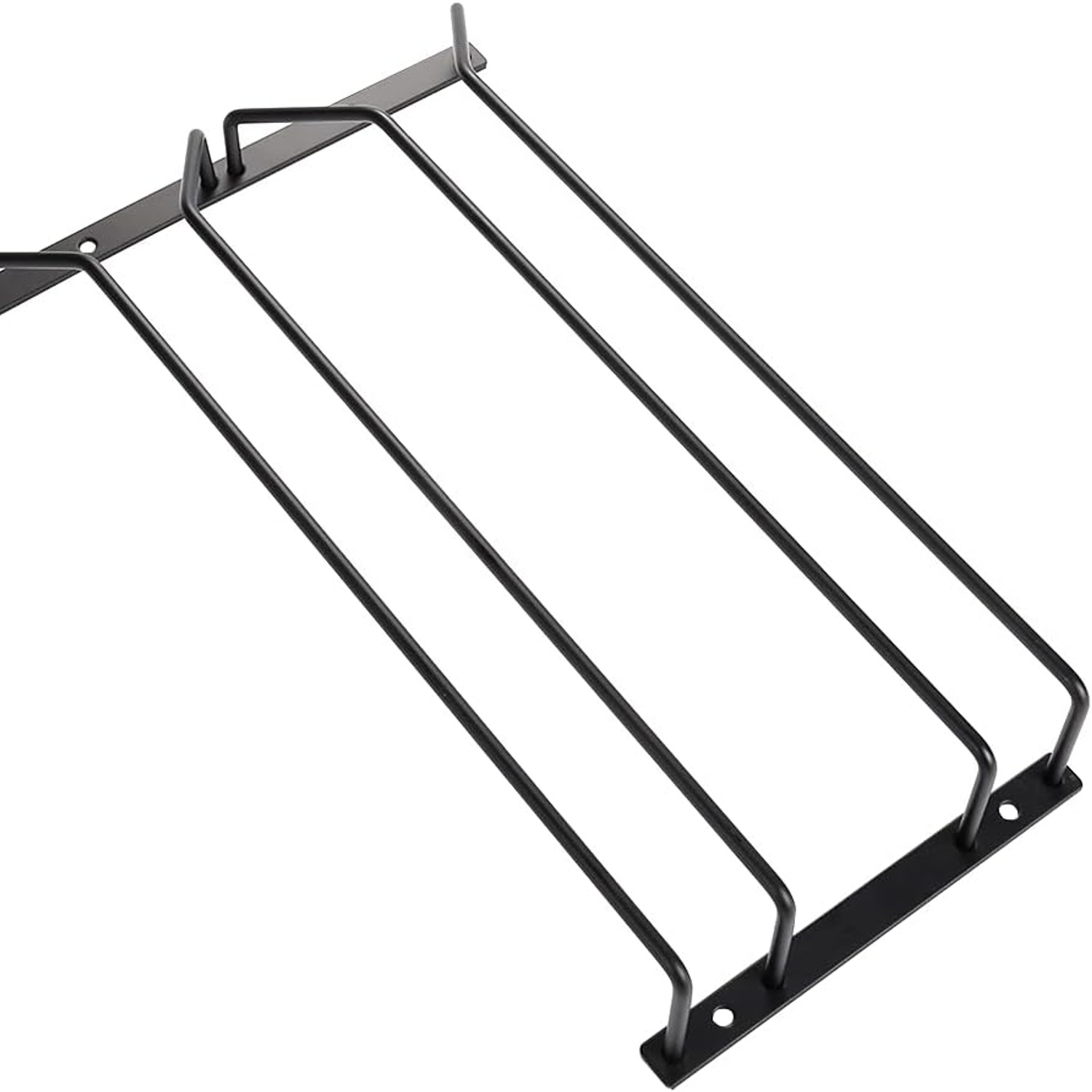
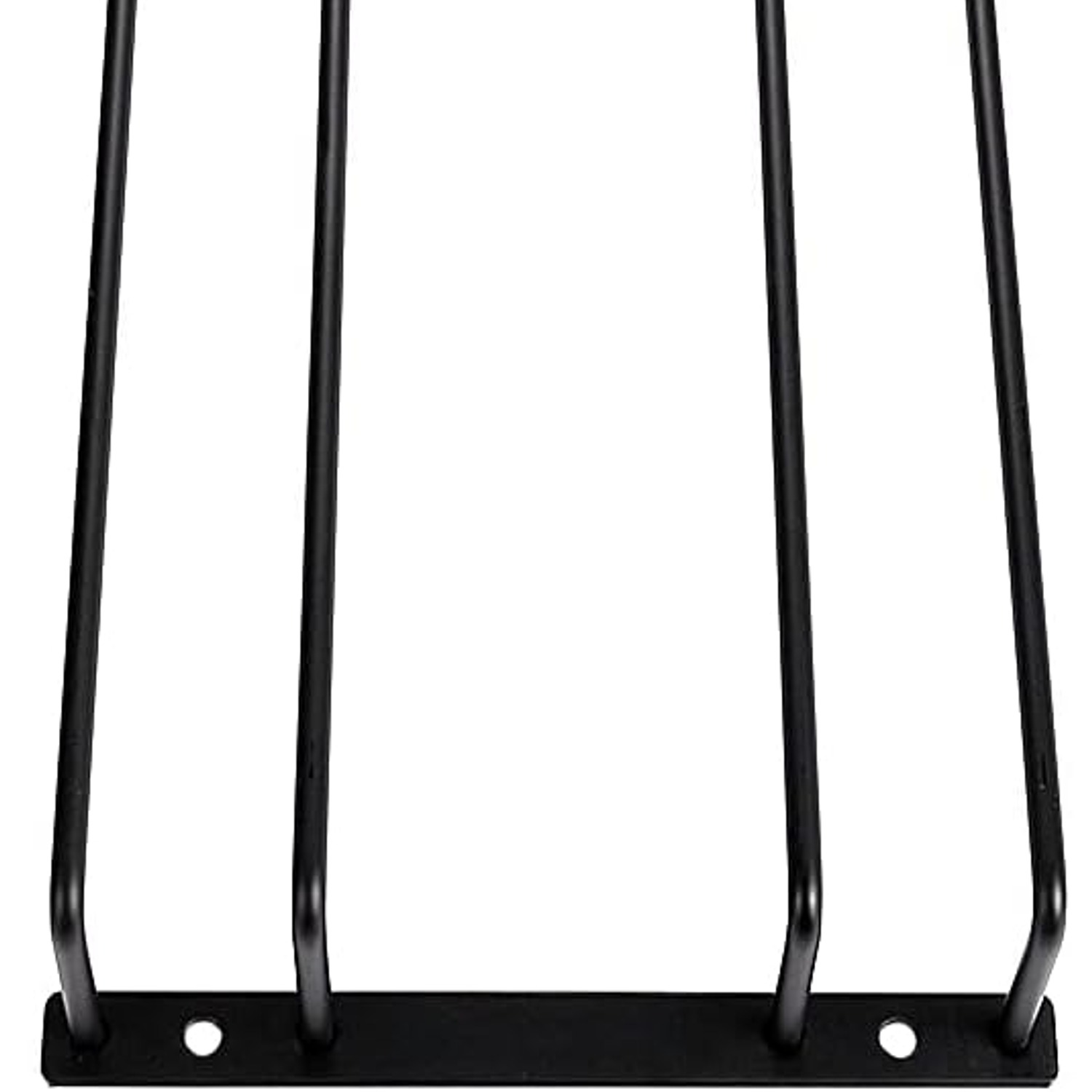
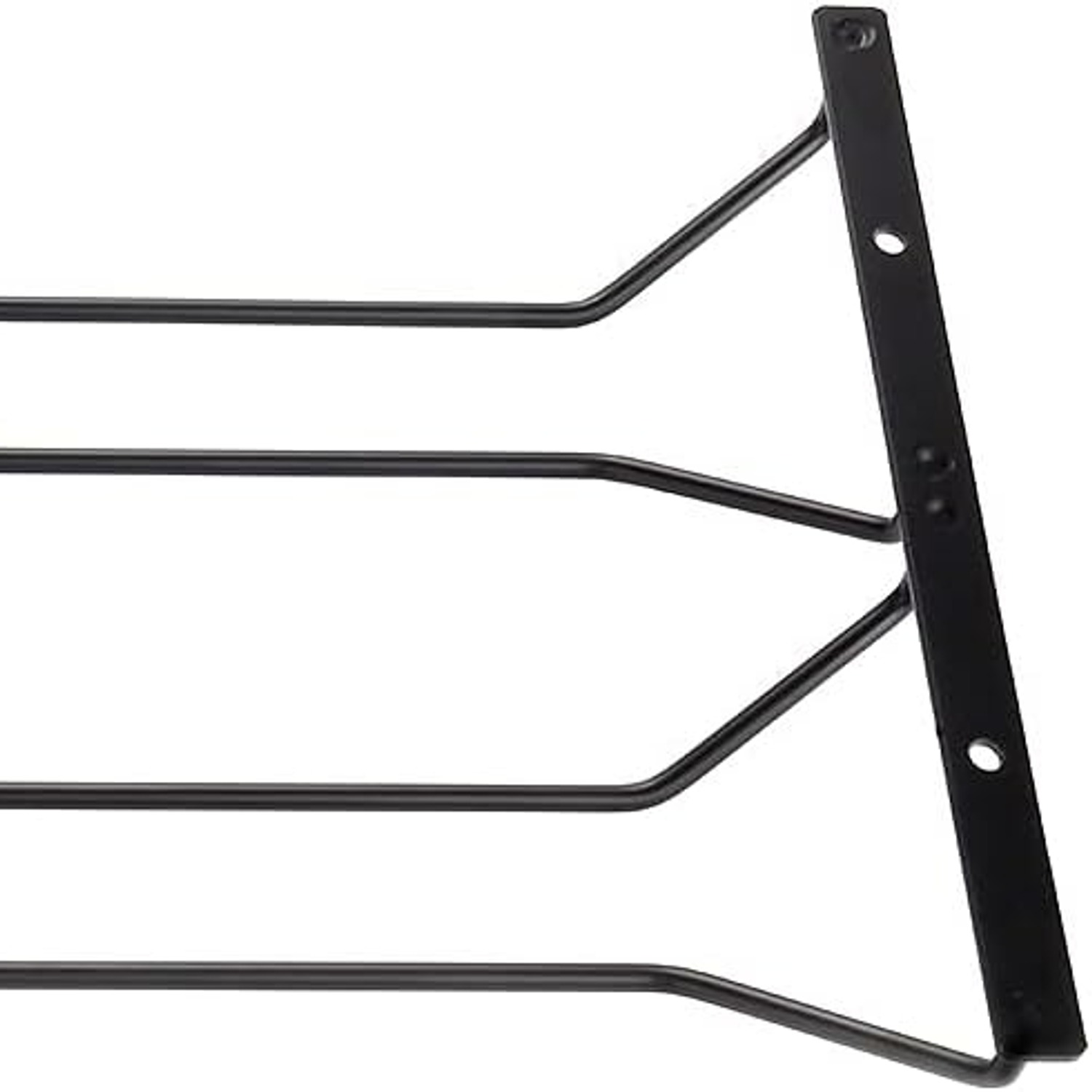
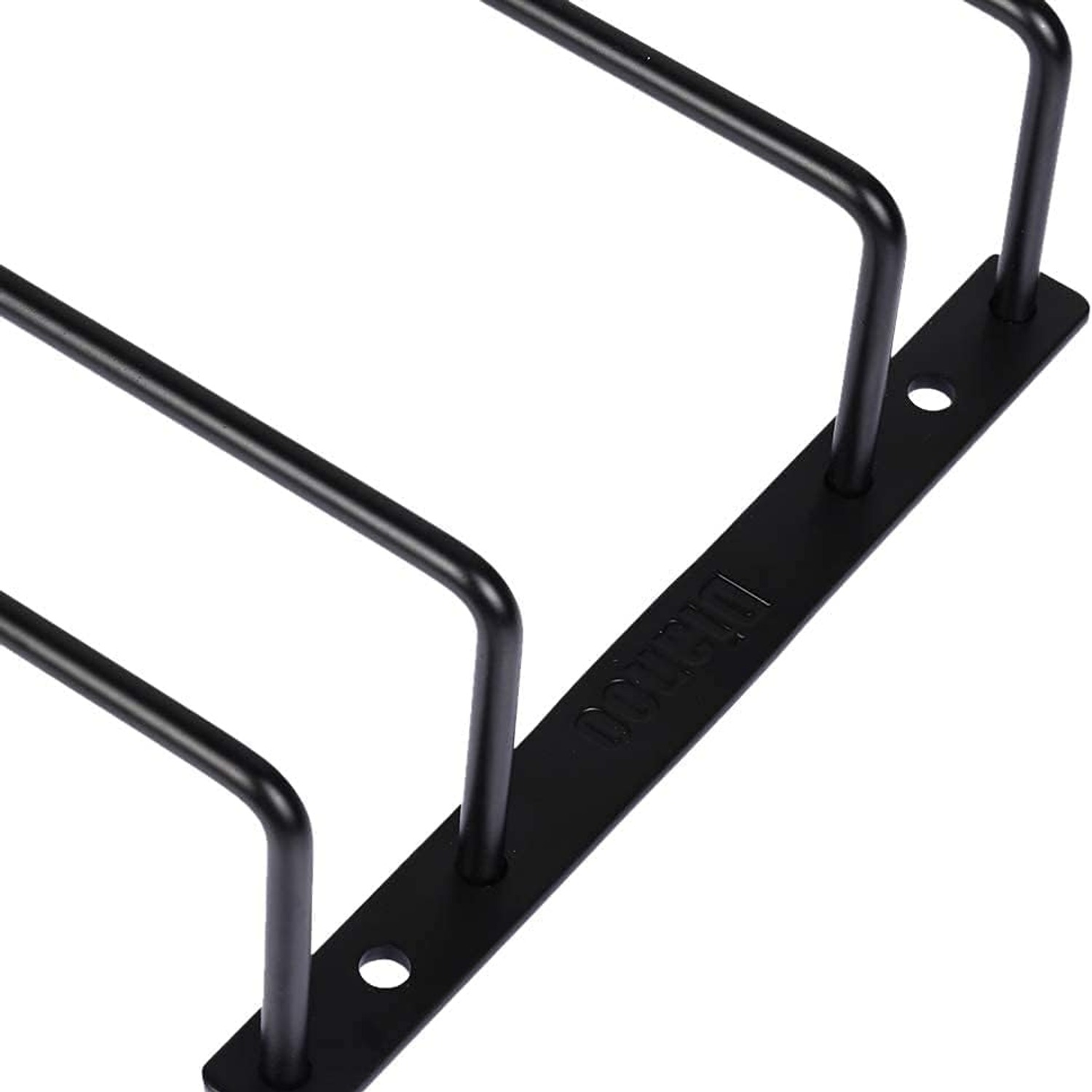
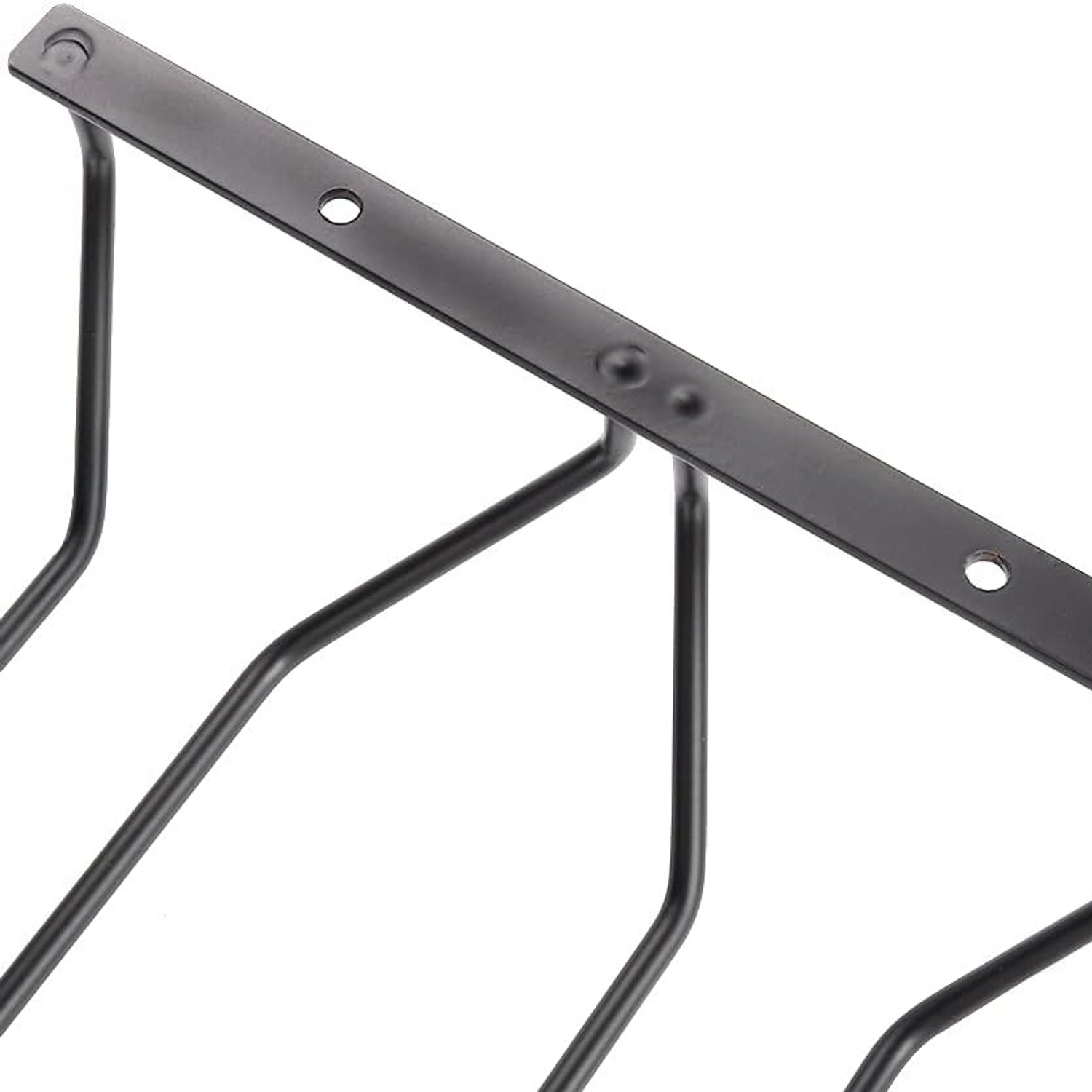
The design is about as simple as hardware gets. Two parallel metal rails run the depth of the rack, with a gap between them. You tilt a glass, slide the stem into the gap, and let the foot rest flat on top of the rails. The bowl then hangs free below. Gravity does the rest.
Because the glass hangs by its foot, there is no clamping and nothing to adjust. You can slide glasses along the rails to pack them in tighter or spread them out. Adding or removing a glass takes about a second.
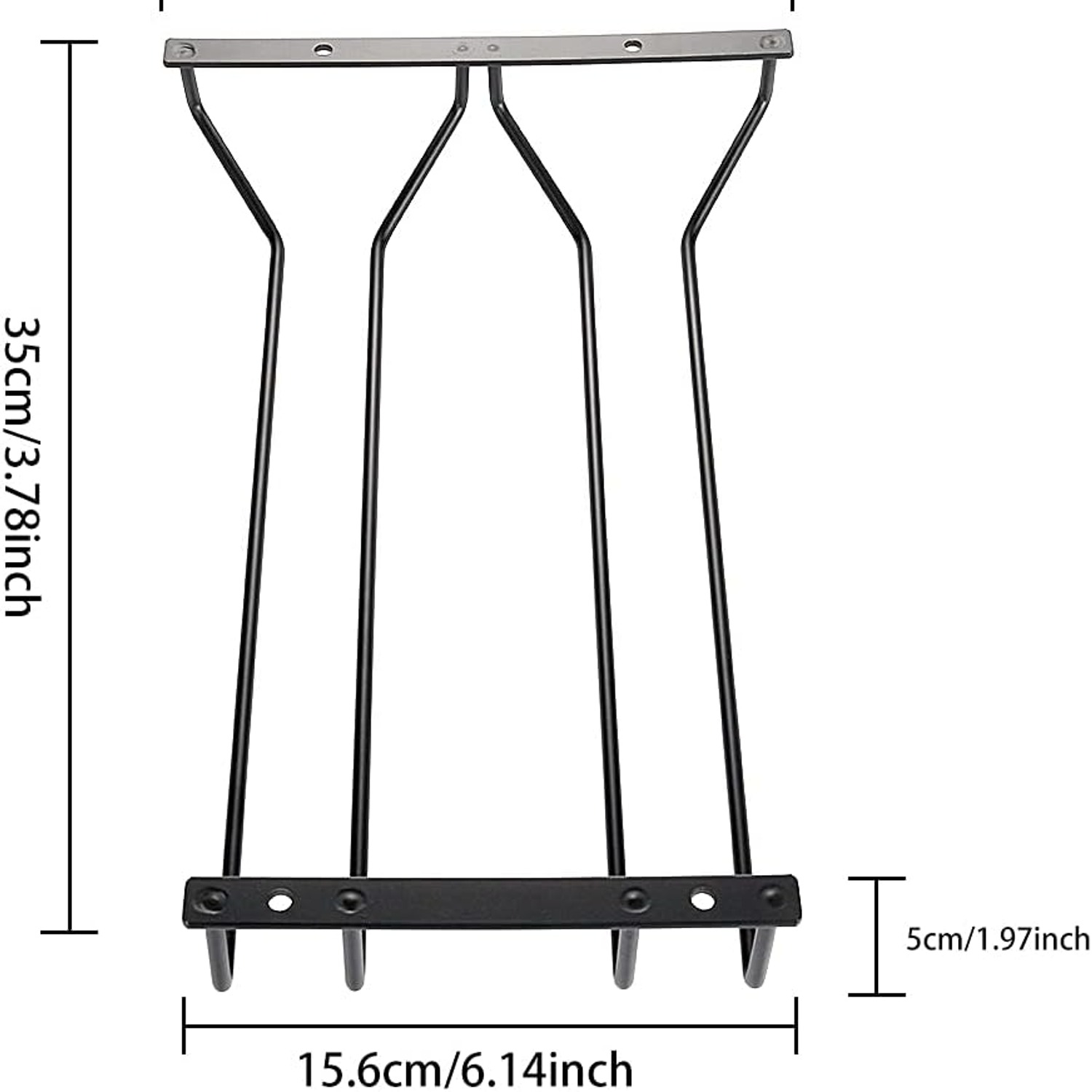
This particular rack is 21.6cm wide, 35cm deep and 5cm high, and weighs 380 grams on its own. Two rows is the sweet spot for a home. One row looks a bit sparse, and four rows starts to crowd the space under a standard cabinet. With two rows you get roughly six to eight glasses, which covers most dinner parties without taking over the kitchen.
That six-to-eight range is not vague for the sake of it. Glass feet vary a lot. A set of slim flutes might all fit with room to spare. A set of big burgundy glasses with wide bases might only give you five. Measure the foot of your widest glass and divide the rail length by that number if you want a precise answer before you buy.
Who it suits
This kind of rack earns its keep fastest in small kitchens. If you are in a flat or a unit where every cupboard is spoken for, moving glassware out of the cupboard entirely is one of the quickest wins available. The same goes for anyone who has started collecting glasses and run out of room.
Home bar builders are the other obvious group. A row of hanging stems under a shelf is half the look of a proper bar, and the black finish reads as modern rather than fussy. If you have a drinks trolley or a sideboard with a shelf above it, the rack turns that into a serving station.
It also works in small venues. Cafes, restaurants and bars use under-shelf racks because staff can grab a glass without opening anything or bending down. Service is faster when the glassware is at eye level. If you are fitting one in a commercial setting, mount it into solid timber and check the screws on a schedule.
Who it does not suit: anyone who mostly drinks from stemless glasses or tumblers. The rack grips the stem, so if your glassware has no stem, this is not the right piece of kit.
Choosing the right spot
Before you drill, think about three things.
First, clearance. Measure your tallest glass from the foot to the rim. Add a couple of centimetres so you are not scraping rims on the worktop. For standard wine glasses, that usually means you want around 25cm of open space below the mounting surface. A rack over a worktop with a toaster underneath will not work.
Second, traffic. Hanging glasses are lovely until someone knocks their head on one. Avoid mounting over a busy prep area, directly beside a hob, or anywhere people lean in. Above a sideboard, a bar section of worktop, or in a corner of the kitchen that is not the main working zone is ideal.
Third, the mounting surface itself. The supplied screws are made for solid timber, which covers the base of most kitchen cabinets and most timber shelving. If you are fixing to something hollow or to plasterboard, you need proper anchors rated for the weight of loaded glassware, and those are not included.
Also give a thought to heat and steam. Directly above a kettle or a dishwasher vent means your glasses get a constant film of condensation, which defeats the point of having them clean and ready.
Fitting it
The job takes about ten to fifteen minutes and needs a drill, a bit, a pencil and a level.
Hold the rack up where you want it and mark the screw positions with a pencil. Take it down, check your marks are level and square to the cabinet front, then drill your pilot holes. Pilot holes matter in timber. They stop the wood splitting and make the screws drive straight.
Offer the rack back up, drive the screws in, and tighten until the rack sits flush without the metal flexing. Over-tightening is the common mistake here. Once it is firm, stop. Then push the screw covers into place to hide the heads.
Test it before you trust it. Hang one glass, give the rack a gentle push, and make sure nothing shifts. Then load the rest.
Living with it
Day to day, there is not much to do. Wipe the rails with a damp cloth when you clean the kitchen and dry them straight away so water does not sit on the finish. Skip the scouring pads and the strong solvents, which can dull black metal over time.
Hanging wet glasses is fine and is actually one of the nice side benefits. Glasses drain and air dry without water spots pooling in the base, the way they do when you stand them up on a tea towel. If drips on the worktop bother you, lay a cloth below for the first hour.
Every few months, reach up and check the screws. Timber moves with humidity and screws can work slightly loose. A quarter turn is usually all it takes.
One habit worth building: if the rack sits unused for weeks, rinse the rims before you pour. Hanging bowl-down keeps the inside of the glass clean, but the rim is exposed, and a quick rinse takes five seconds.
Getting more capacity
If six to eight glasses is not enough, two racks mounted side by side is the normal answer. Leave a gap between them wide enough for your hand plus the widest bowl you own, so you are not knocking neighbouring glasses when you reach in.
You can also mix rack sizes along a long shelf, or run one rack above a worktop and a second one inside a drinks cabinet. Keeping everyday glasses in the easy spot and special-occasion stems somewhere less exposed is a sensible split.
The short version
If your wine glasses are eating a cupboard shelf and you have solid timber under a cabinet, this rack solves the problem for very little money and about fifteen minutes of work. It holds six to eight stems across two rows, comes with its screws and covers, and the black metal finish suits most modern kitchens without drawing attention.
Measure your tallest glass, pick a spot out of the main traffic path, drill carefully, and you will wonder why you waited. Just remember it needs stemmed glasses to work, and it is built for indoors.