



The complete guide
How To Choose A Countertop Wine Rack That Actually Fits Your Kitchen
The problem with wine and worktop
Wine storage goes wrong in a predictable way. You buy a few bottles, there is no obvious home for them, so they end up spread across the kitchen. Two behind the kettle. Three in the cupboard with the baking trays. One on its side in the hall because someone brought it to dinner and nobody opened it.
The result is not just untidy. You forget what you own, you buy duplicates, and bottles get knocked over because they are standing upright in places that were never meant for them. A countertop wine rack fixes a small, specific annoyance: it gives wine a single address.
That is the job this rack does. Nine bottles, one spot, visible labels, no hunting.
How a honeycomb rack works
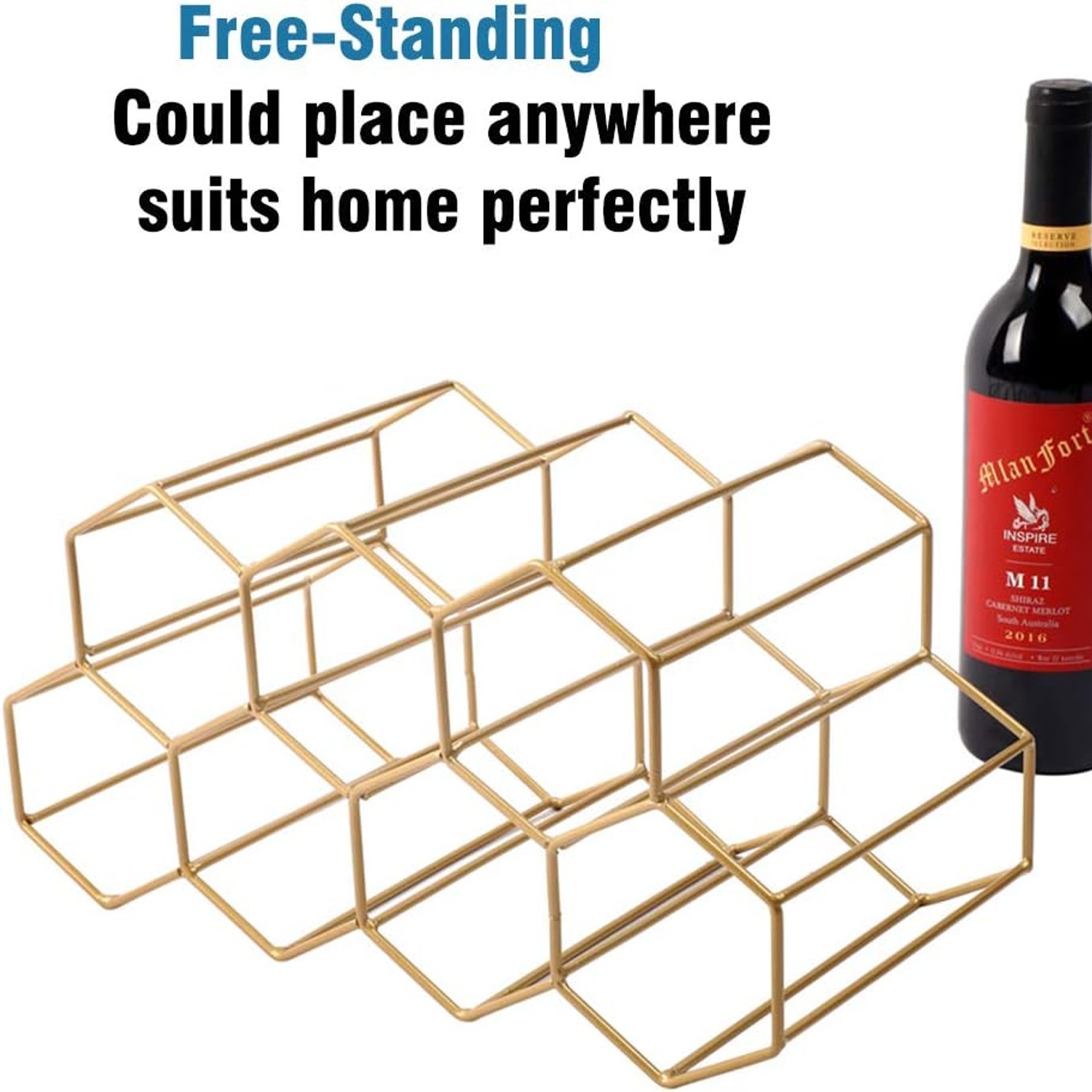
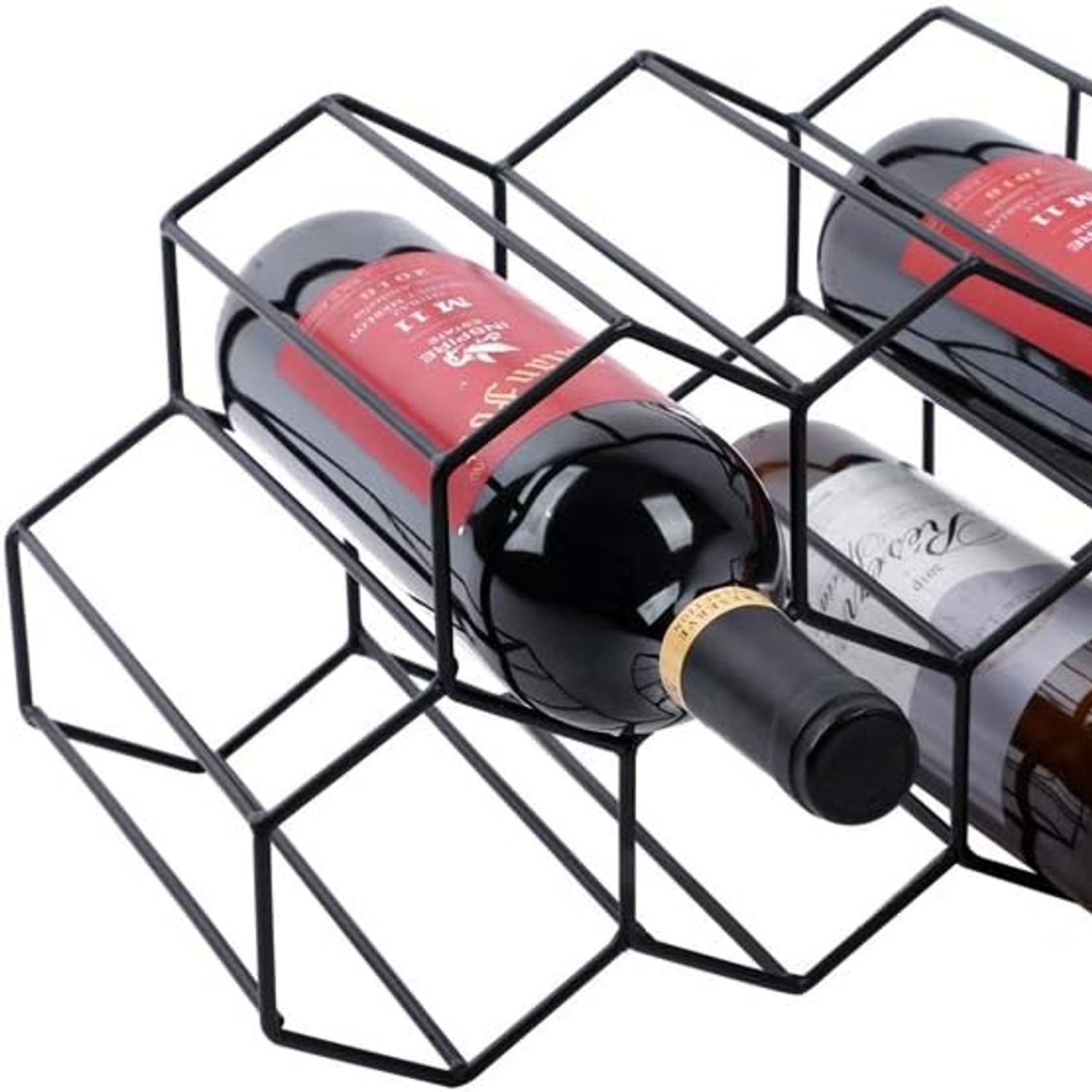
The honeycomb design is older than it looks. Hexagonal cells pack together without wasted space, which is why the shape shows up in everything from packaging to storage. In a wine rack, each cell cradles a bottle on its side at two points, the neck and the body, so the bottle cannot roll.
Lying bottles down does two things. It uses less vertical space than standing them up, and it keeps the wine touching the cork. A dry cork shrinks and lets air in, which is how a bottle you were saving turns into vinegar. For anything you plan to drink inside a month this barely matters. For anything older, it does.
This rack has seven cells plus a flat top section that holds two more bottles. The top is useful because it takes the shapes that do not fit tidy cells. Champagne, prosecco and some heavy-bottomed reds are wider than standard, and rather than wedging them in, you lay them across the top.
Nothing needs building. The rack comes as one piece, so there is no bag of screws and no instruction sheet to decode.
Who it suits
This is a rack for people with limited space and a modest collection. If you keep between six and a dozen bottles at any time, nine slots covers you with a little room to breathe.
It fits well in a few specific situations. Apartment kitchens where every centimetre of worktop is already spoken for. Open shelving where the rack is on display as much as it is in use. Bar carts, where the shallow 19.3 cm depth sits neatly on a lower tier. Pantry shelves, where it turns a jumble of bottles into a row you can scan in a second.
It is less suited to serious collectors. If you are storing fifty bottles or ageing wine for years, you want something larger in a cool dark room. A kitchen worktop gets warm, catches sunlight and vibrates every time the dishwasher runs. None of that is good for long-term ageing. For a working supply of wine you will actually drink, though, a worktop rack is exactly right.
It also makes a reasonable gift. The lack of assembly matters here. Giving someone furniture they have to build is a mixed blessing, while a rack that works straight out of the box does not.
Getting the size right
This is where most wine rack purchases go wrong, so measure before you buy.
The rack is 36.8 cm wide, 19.3 cm deep and 19.3 cm high. Take a tape measure to the spot you have in mind and check all three. Depth is usually the one that catches people out, since a standard kitchen worktop is around 60 cm deep but much of that is taken up by the splashback, the kettle and whatever else has colonised the back edge.
Height matters if the rack is going under a wall cabinet. The 19.3 cm frame will clear most standard gaps, but add the diameter of a bottle if you intend to use the top section. Two bottles lying on top push the overall height up, and there is no point owning a nine bottle rack if you can only use seven slots.
If you are putting it on a shelf, check the shelf can take the load. Nine full bottles is a real weight, and the rack itself only adds 748 g. Floating shelves with light brackets are the usual weak point.
One more practical note. Leave a hand's width of clearance on at least one side so you can get your fingers around a bottle neck. Racks jammed hard against a wall are awkward to load.
Loading it properly
There is a right order. Fill the lower cells first and work up. Keeping weight low makes the whole thing harder to tip, which matters on an open worktop.
Put the bottles you will drink soonest at the front where you can reach them, and the ones you are saving toward the back. Turn labels outward. It sounds fussy but it is the difference between a rack that looks considered and one that looks like a pile.
Lift bottles out rather than dragging them. Dragging is what wears the finish on any metal wine rack over time, and it is an easy habit to avoid.
If you are using the top section, lay those bottles in the same direction as the ones below. Crossed bottles look messy and are more likely to roll when someone bumps the worktop.
Looking after the finish
Brushed gold is forgiving about fingerprints and less forgiving about chemicals. The manufacturer care instruction is simple, wipe with a damp cloth.
In practice that means a soft cloth, slightly damp with water, then dry straight away. Do not leave moisture sitting on the metal. Skip scouring pads, cream cleansers and anything with bleach or ammonia, because abrasives cut into a brushed surface and leave shiny patches you cannot undo.
Dust is the real maintenance job. Open racks collect it on the top edges of every cell, and it shows more on a warm gold tone than on black. A wipe every few weeks keeps it sharp.
If wine spills on the rack, clean it quickly. Sugar in wine gets sticky and then attracts more dust, so a damp cloth at the time saves a longer job later.
Comparing your options
Before you commit, it helps to know what else is out there.
Wooden racks look softer and warmer, but they take up more room for the same bottle count because the timber has to be thick enough to hold weight. Wall-mounted racks free up worktop space entirely, though they mean drilling and finding studs, and they are permanent in a way renters often cannot accept. Stackable modular racks grow with your collection but tend to look utilitarian on an open worktop.
A metal honeycomb rack sits in the middle. It gives you decent capacity in a small footprint, it needs no tools, and it is light enough to move house with. If you are weighing up the best countertop wine rack for a rental or a small kitchen, those three points usually decide it.
The trade-off is that it is not extendable. What you buy is what you get. If your collection grows past nine bottles, a second rack beside the first works fine and reads as intentional.
The short version
This Urban Deco rack holds nine bottles in a 36.8 cm by 19.3 cm space. Seven lie in the honeycomb cells, two rest on top. It is metal, brushed gold, modern in shape and weighs 748 g empty.
No assembly, no tools, no wall fixing. You set it down and use it.
Measure your gap first, load the bottom cells first, wipe it with a damp cloth and keep harsh cleaners away from the finish. Do that and it will keep your wine tidy and visible for a long time.