

The complete guide
How To Choose A Countertop Wine Rack That Actually Fits Your Kitchen
The problem with bottles that have nowhere to live
Wine storage is one of those small household problems that never quite gets solved. You buy a couple of bottles for the weekend, one gets left over, and suddenly there are four of them standing in the corner of the worktop next to the fruit bowl. They get knocked. They collect dust on the shoulders. Somebody puts a hot pan down too close.
The other common approach is worse. Bottles go into the back of a low cupboard, standing upright, and are forgotten entirely. Six months later you find a red you meant to drink and the cork has dried out.
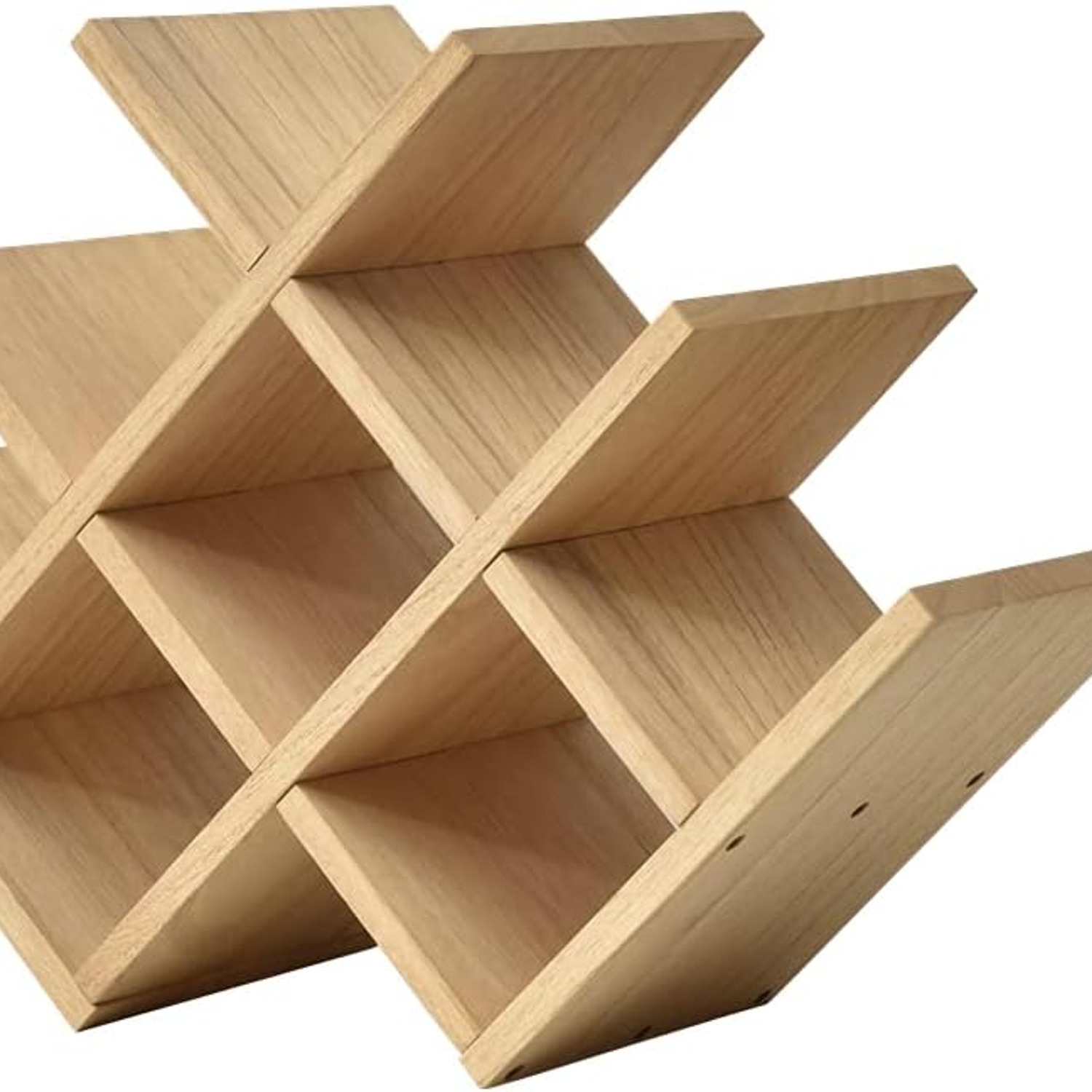
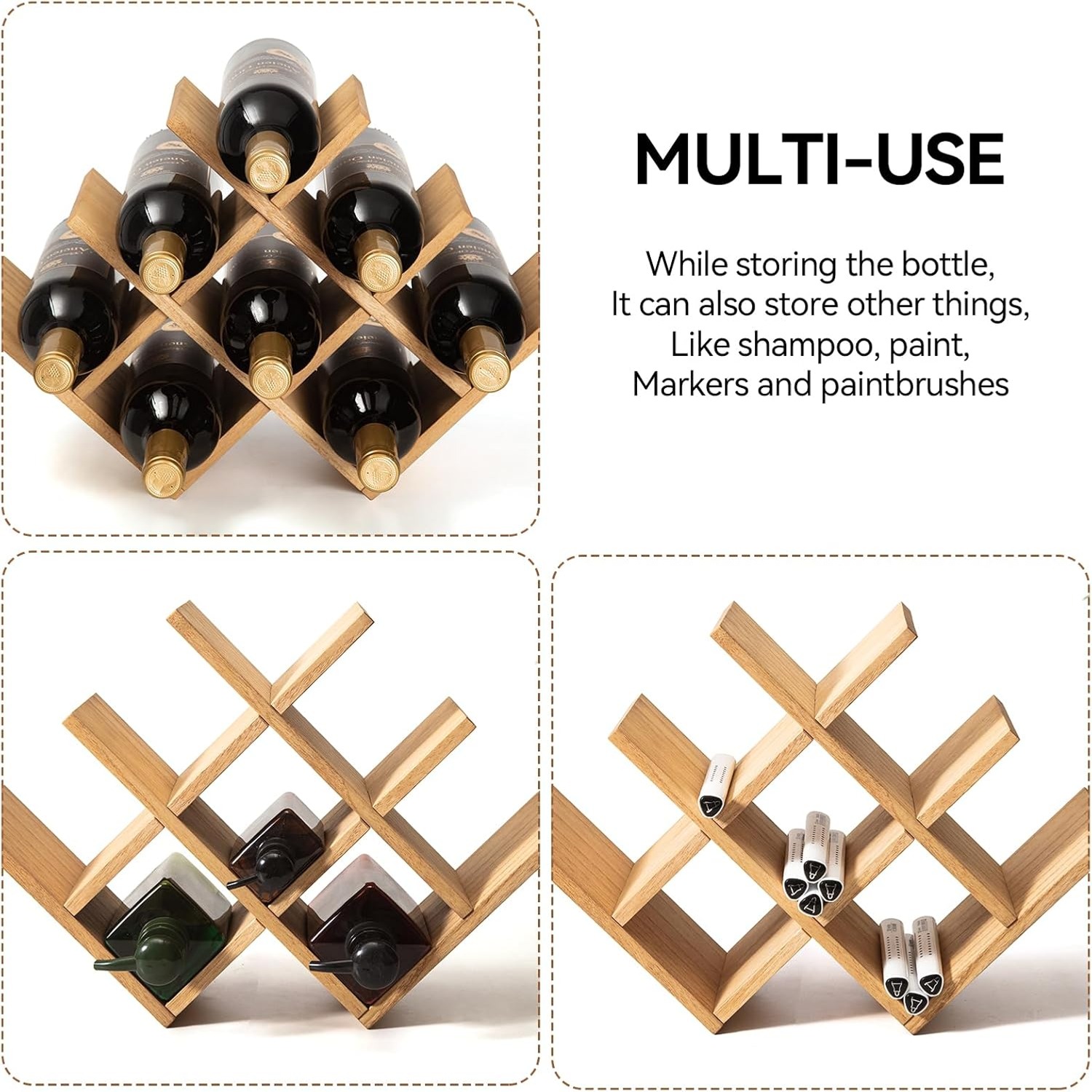
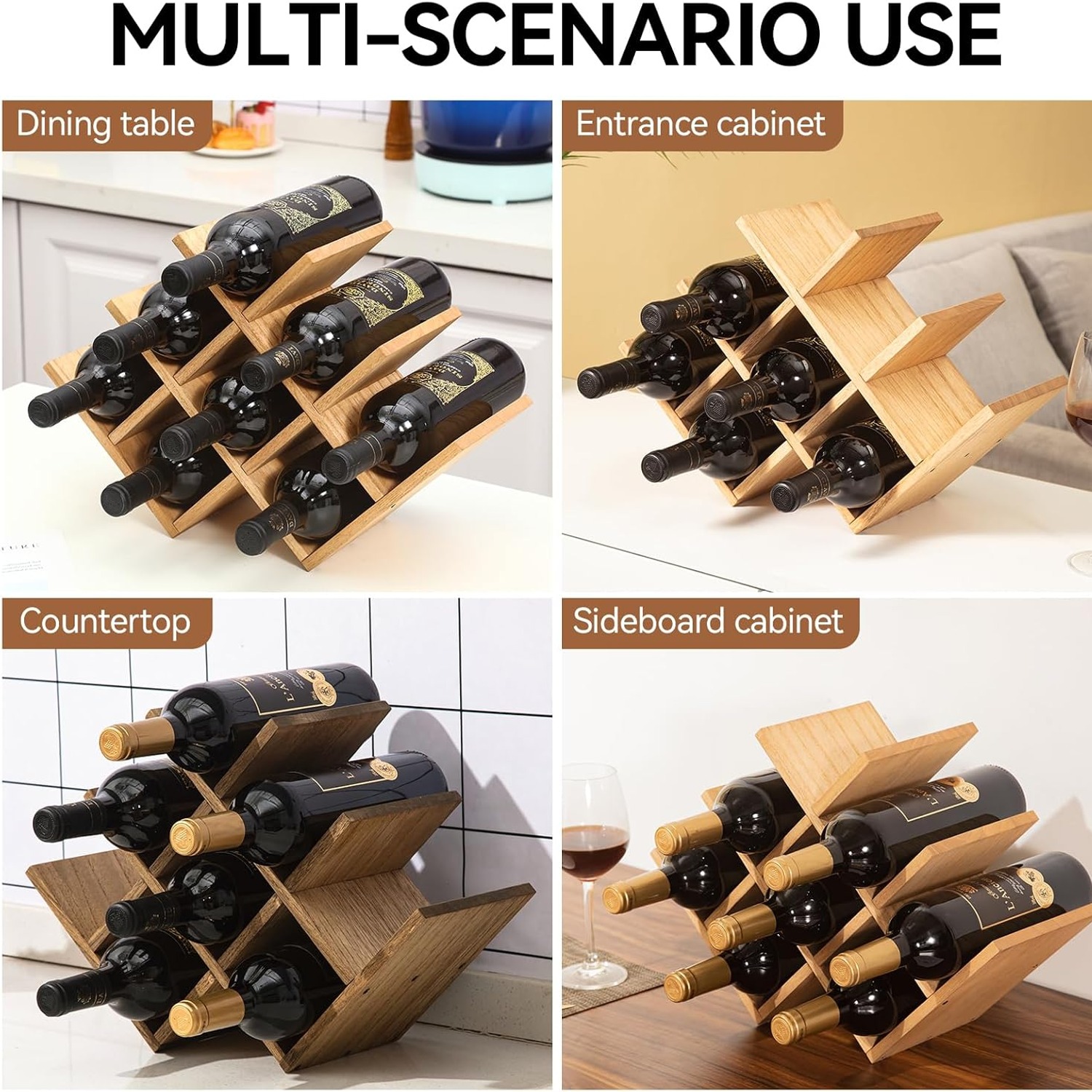
A countertop wine rack fixes both issues with very little fuss. It gives bottles a defined spot, keeps them horizontal, and puts the labels where you can read them. This particular rack holds eight standard bottles across three tiers in a frame that is 42.5 cm wide, 15 cm deep and 28.3 cm tall. That is small enough to live on a worktop corner and big enough to cover a normal household's everyday drinking.
How a tiered rack works
The design is simple on purpose. Three open tiers, each with lattice openings, let bottles rest on their side with the neck pointing out. The weight sits on the timber frame rather than on the bottles below, so nothing is bearing down on glass.
Horizontal storage matters more than people think. When a bottle lies flat, the wine stays in contact with the cork. A cork that stays damp keeps its seal. A cork that dries out shrinks, lets air in, and the wine goes flat and dull well before it should. If you drink everything within a fortnight this barely matters, but if a bottle might sit for a few months it makes a real difference.
There is a practical benefit too. Lying bottles down means you can fit eight of them into 28.3 cm of height. Standing them up, you would need nearly 30 cm just for one row. The tiered layout is the most efficient use of a shallow shelf you can get without building something into the wall.
Who this suits
Apartment kitchens are the obvious match. When worktop space is limited, a rack with a 15 cm depth sits against the splashback and leaves room in front. It is one of the better small wine rack for apartments formats because it does not require a floor plan change or a wall fixing.
It also works for people who keep a small home bar. Pair it with glassware on the shelf above and you have a drinks corner that looks deliberate rather than accidental. On a bar cart, the rack slots onto the lower shelf and keeps bottles from rolling every time you wheel it.
Renters do well with freestanding racks generally. Nothing gets drilled, nothing gets patched, and the whole thing lifts out when you move. At 0.74 kg empty it is genuinely light.
Finally, it suits anyone who buys by the half case. Eight bottles is roughly what most households cycle through in a month or two, which is the sweet spot this rack is built for.
Getting the size right before you buy
This is where most returns come from, so take two minutes with a tape measure.
Width is the first number. You need 42.5 cm of clear run, plus a little extra so the bottle necks are not pressed against a wall or a kettle. Call it 48 cm to be comfortable.
Depth is 15 cm. Standard kitchen worktops are around 60 cm deep, so that is no problem on a counter. Pantry shelves and cabinet interiors vary more, so check yours. If you are putting it inside a cabinet, measure the clear height under the shelf above. You need at least 28.3 cm, and more if you want to slide bottles in from the front comfortably.
Then think about bottle shape. The rack is built around standard-size wine bottles. Champagne bottles, magnums and some heavy Shiraz bottles are wider than standard and may not fit the compartments. If your collection leans that way, measure the diameter of your widest bottle before ordering.
What the wood finish does for a room
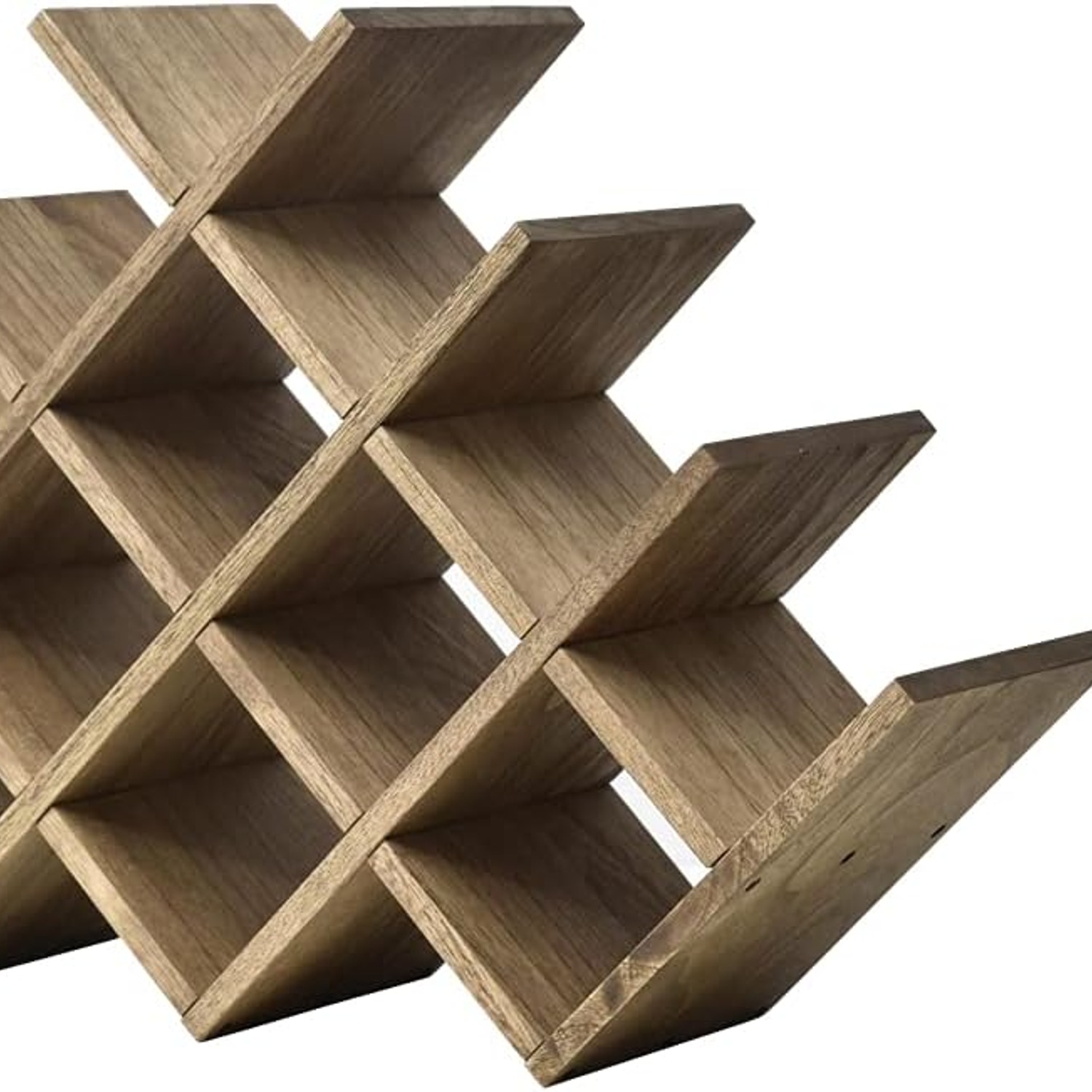
Material choice in a wine rack is mostly about how it reads in the space. Metal racks look industrial and tend to draw the eye. Acrylic disappears but scratches. Wood with a natural stain sits in the middle. It picks up the tone of timber worktops and cutting boards, and it softens stone or painted cabinetry.
The finish on this one is listed as a natural wood stain in a natural colour, with a modern style. The open lattice keeps it from looking bulky. Fill it with eight bottles and the wine itself becomes the colour, with the timber as a frame rather than a feature.
If you are after the best natural wood wine rack look, keep the area around it uncluttered. A rack surrounded by appliances and jars loses the effect. Give it a clear patch of worktop and it earns its spot.
Putting it together
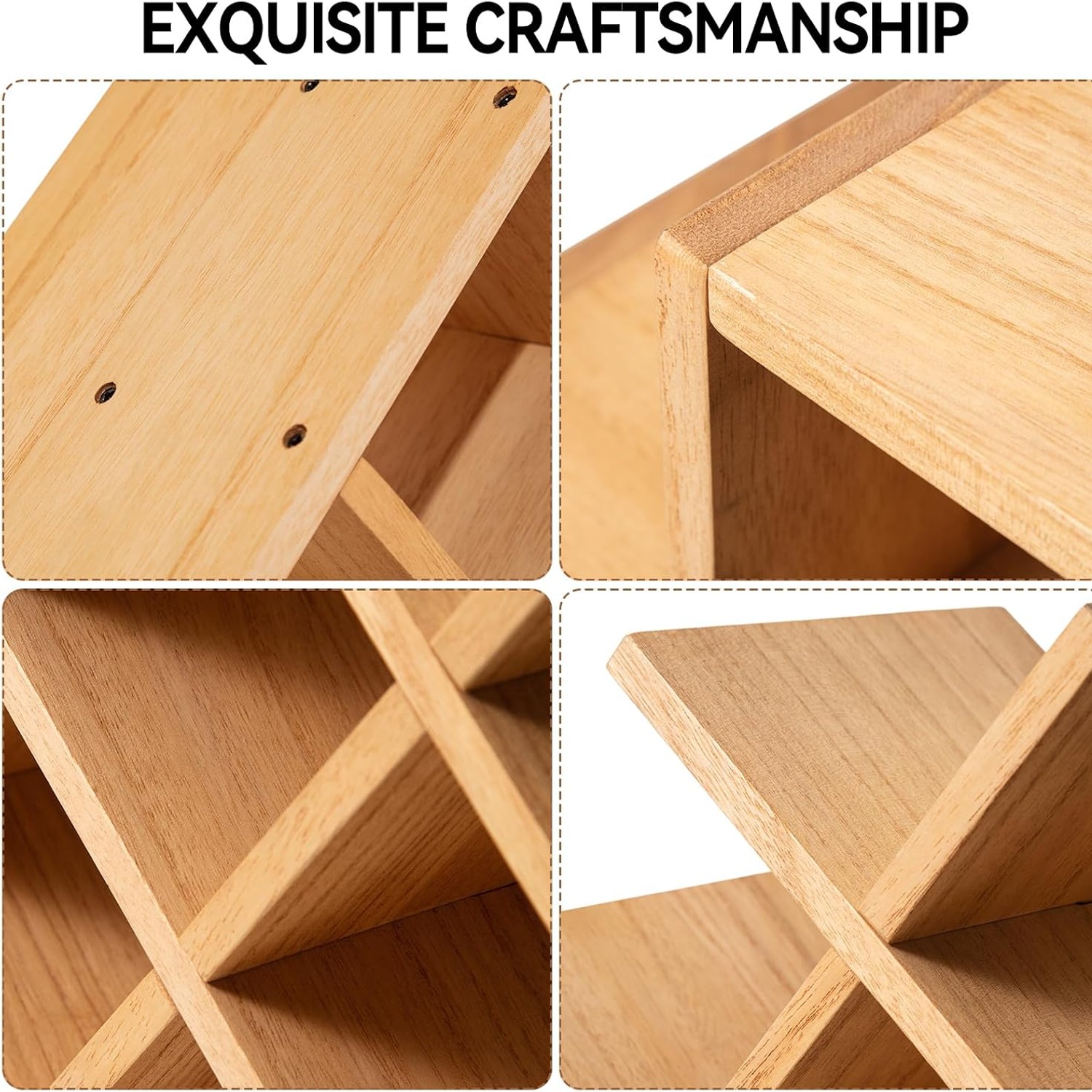
Assembly is required, which is normal for flat-packed timber. The supplier lists six wood boards, twelve screws with two spares, and an instruction manual.
A few tips make it go smoothly. Lay everything out on a flat surface first and check you have all six boards. Start the screws by hand before tightening so you do not cross-thread anything. Tighten firmly but do not force, since overtightening into timber can strip the hole.
Once it is built, place it on a level surface and give it a gentle push to check for wobble. Load from the bottom tier up. Keeping the heaviest weight low makes the whole thing more stable, which matters if there are kids or a dog in the house.
Looking after it
The care instruction is simple. Wipe with a dry cloth.
That means no soaking, no spraying cleaner directly onto the timber, and no scrubbing. Dust settles on the top edges, so a quick wipe when you dust the worktop is enough. If a bottle drips or something spills, blot it straight away rather than letting it sit, because standing moisture is what damages a stained wood finish over time.
Placement helps too. Keep the rack away from the oven, the dishwasher vent and direct sunlight through a window. Heat and UV are harder on both the timber and the wine than anything else in a kitchen.
Every few months, check the screws. Timber moves slightly with humidity and a screw can work loose. A quarter turn with a screwdriver sorts it.
A note on what it is not
Worth being clear. This is a storage rack, not a wine cellar. It will not control temperature or humidity. Bottles you intend to age properly for years want a cool dark place with stable conditions, ideally a cellar or a wine fridge.
What this rack does well is handle the bottles you are actually going to drink. That is most of them, for most people. Keeping a dozen everyday bottles organised and reachable is a different job to cellaring, and this is built for the first one.
The short version
Eight bottles, three tiers, wood with a natural stain finish, in a frame 42.5 cm wide by 15 cm deep by 28.3 cm high. It weighs 0.74 kg empty, needs assembling with the included screws, and sits freestanding on a counter, shelf, cabinet or bar cart.
Measure your space, check your bottles are standard width, build it on a flat surface, and load it from the bottom up. Wipe it with a dry cloth and keep it out of direct heat and sun.
If you want your wine tidy, visible and easy to grab without rearranging your kitchen, this does the job without drawing attention to itself.