
The complete guide
How to Choose and Fit an Under Cabinet Stemware Rack
The problem with storing wine glasses
Wine glasses are badly behaved in a cupboard. You cannot stack them, you cannot lie them down without risking the stems, and a single row of six eats a whole shelf that could be holding plates or bowls. Push them to the back and you stop using them. Leave them on the worktop and they collect dust and get knocked.
Most people end up with glasses scattered across two or three places. A few in the cupboard, a couple draining by the sink, the nice ones in a box somewhere from the last time you moved. When someone drops by and you want to pour a drink, you are hunting.
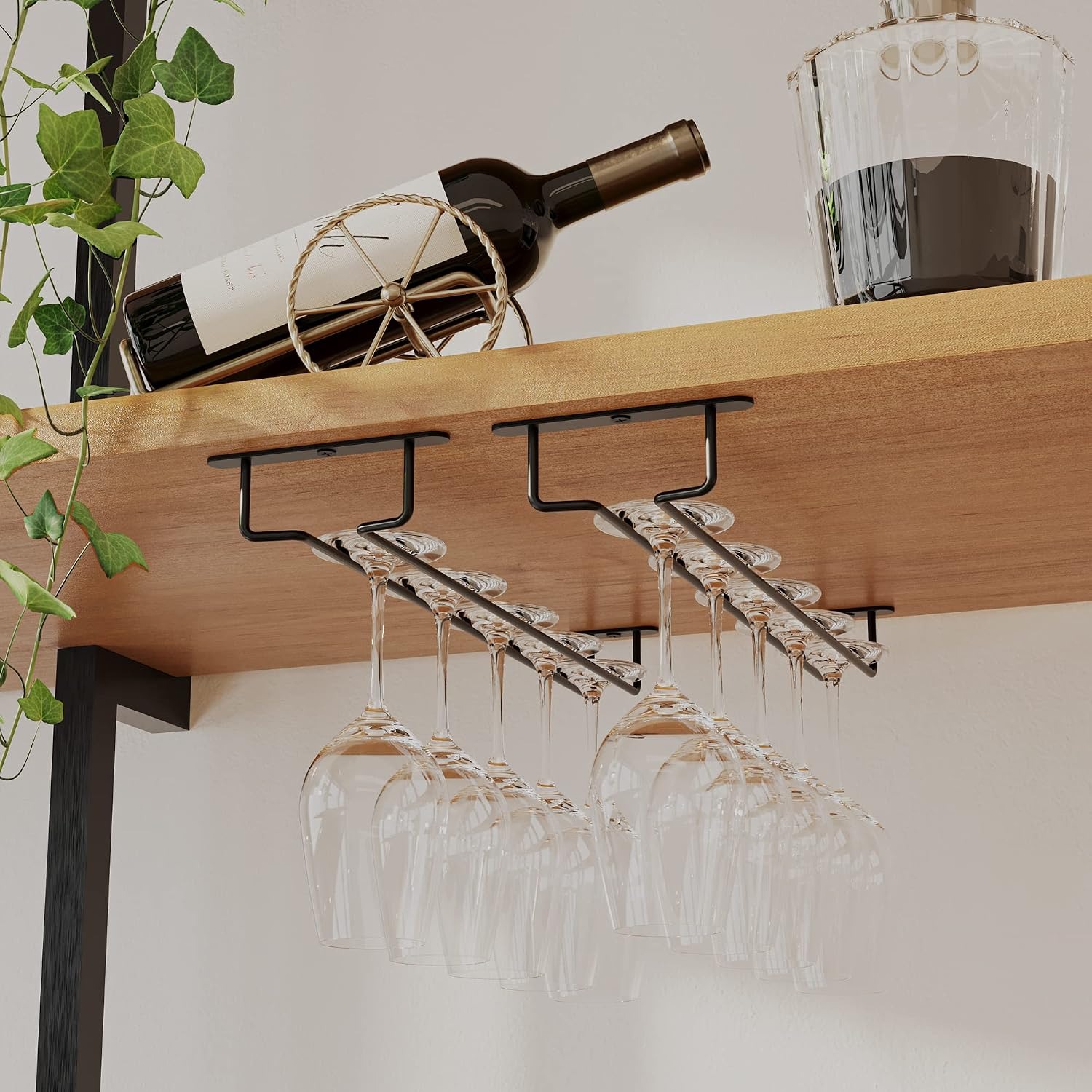
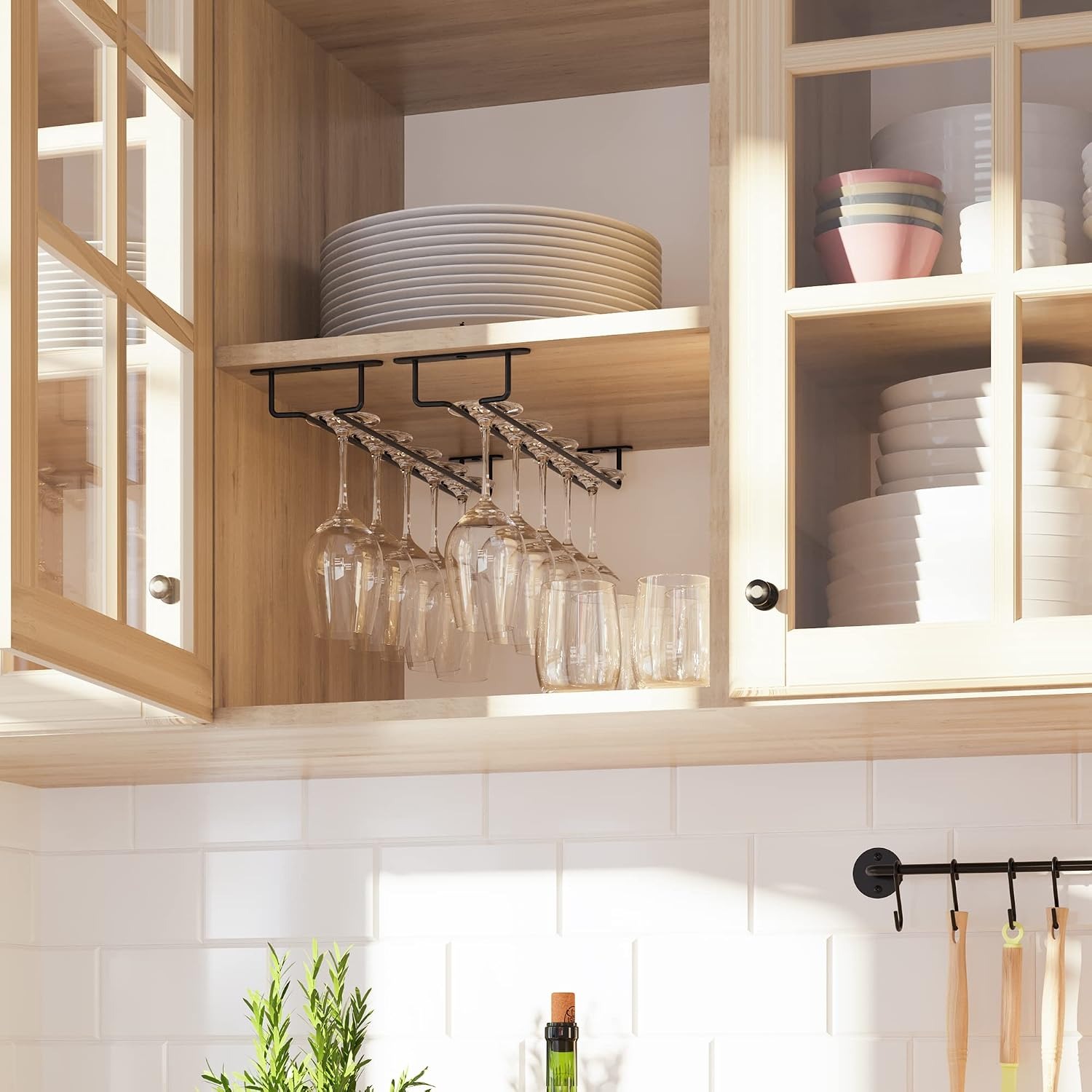
An under cabinet glass holder fixes this in the simplest way possible. It uses the gap of air under your overhead cabinets, a space you are already paying rent or mortgage on and currently doing nothing with. The glasses hang stem down, visible, clean and ready. The cupboard shelf comes back to you.
How a hanging stemware rack actually works
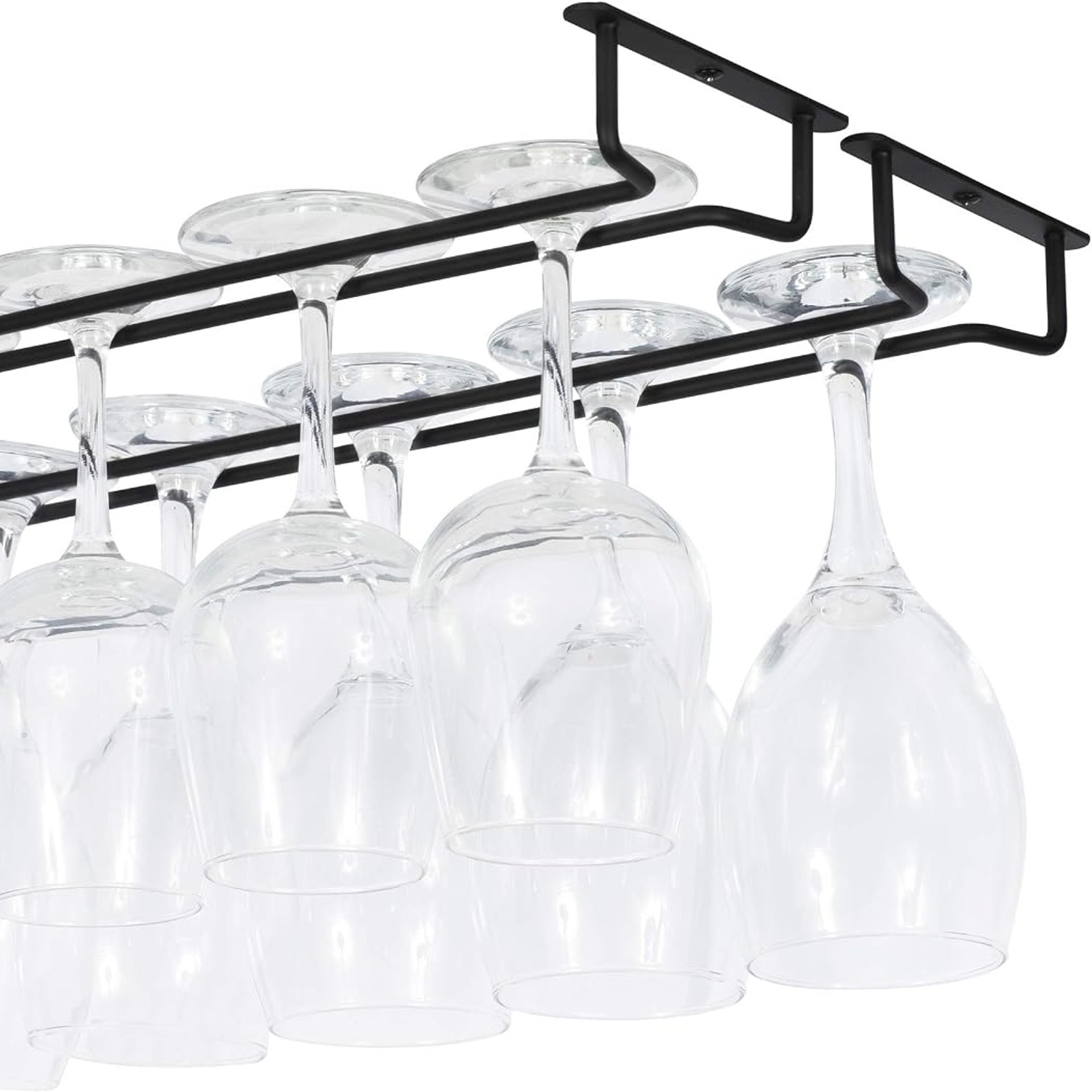
The mechanics are not complicated, which is part of the appeal. The rack screws to the underside of a cabinet, shelf or overhang. Each row forms a narrow channel. You slide the foot of a wine glass into the channel from the open end, and the stem sits in the gap while the foot is trapped above. The glass hangs upside down.
That upside down position is doing two jobs. It keeps the rim covered so dust does not settle inside the bowl, and it lets a freshly washed glass drain and air out properly. People often buy one of these as a wine glass rack and then find they use it as a glass drying rack half the time too.
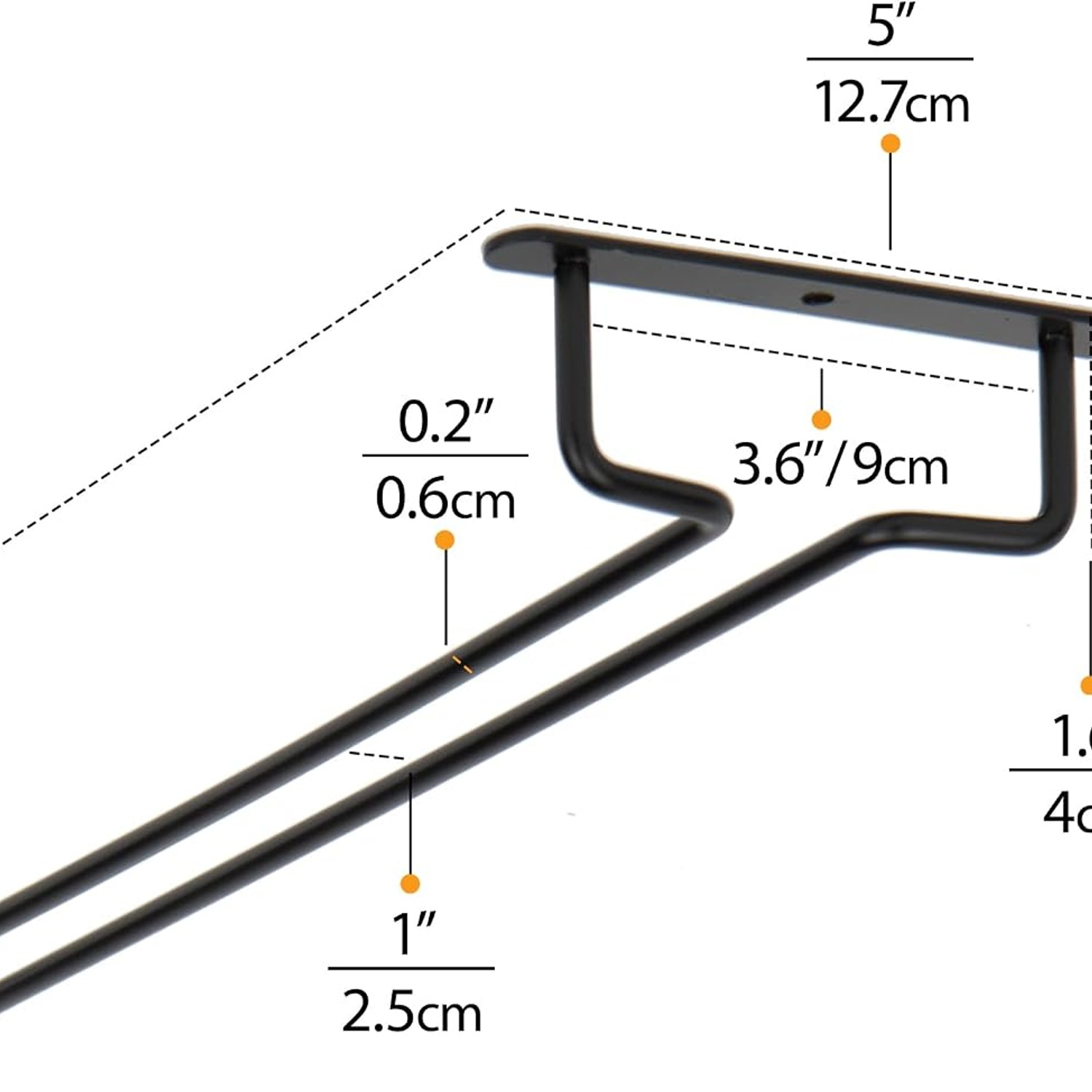
This particular set gives you two racks, each with two rows. Each rack is 43.2 cm wide and 12.7 cm deep, and stands 4.1 cm high, so it sits close to the cabinet base rather than hanging down into your working space. Weight capacity is listed as 5 pounds, roughly 2.3 kg, which is a glassware load rather than a general storage load.
How many glasses fit depends on your glasses, not the rack. A set of slim champagne flutes will pack in far tighter than six large Burgundy bowls. Before you order, turn one of your most used glasses upside down and measure the widest point, usually the base or the bowl. That tells you more than any number we could print.
Who this suits
Small kitchens benefit most, because the gain is proportionally bigger. Clearing a shelf of glassware in a tight cupboard is a real change, not a marginal one.
Hosts benefit for a different reason. If you pour drinks for people regularly, having the glasses visible and reachable in one movement changes how the evening runs. No crouching, no reaching to the back of a cupboard with wet hands.
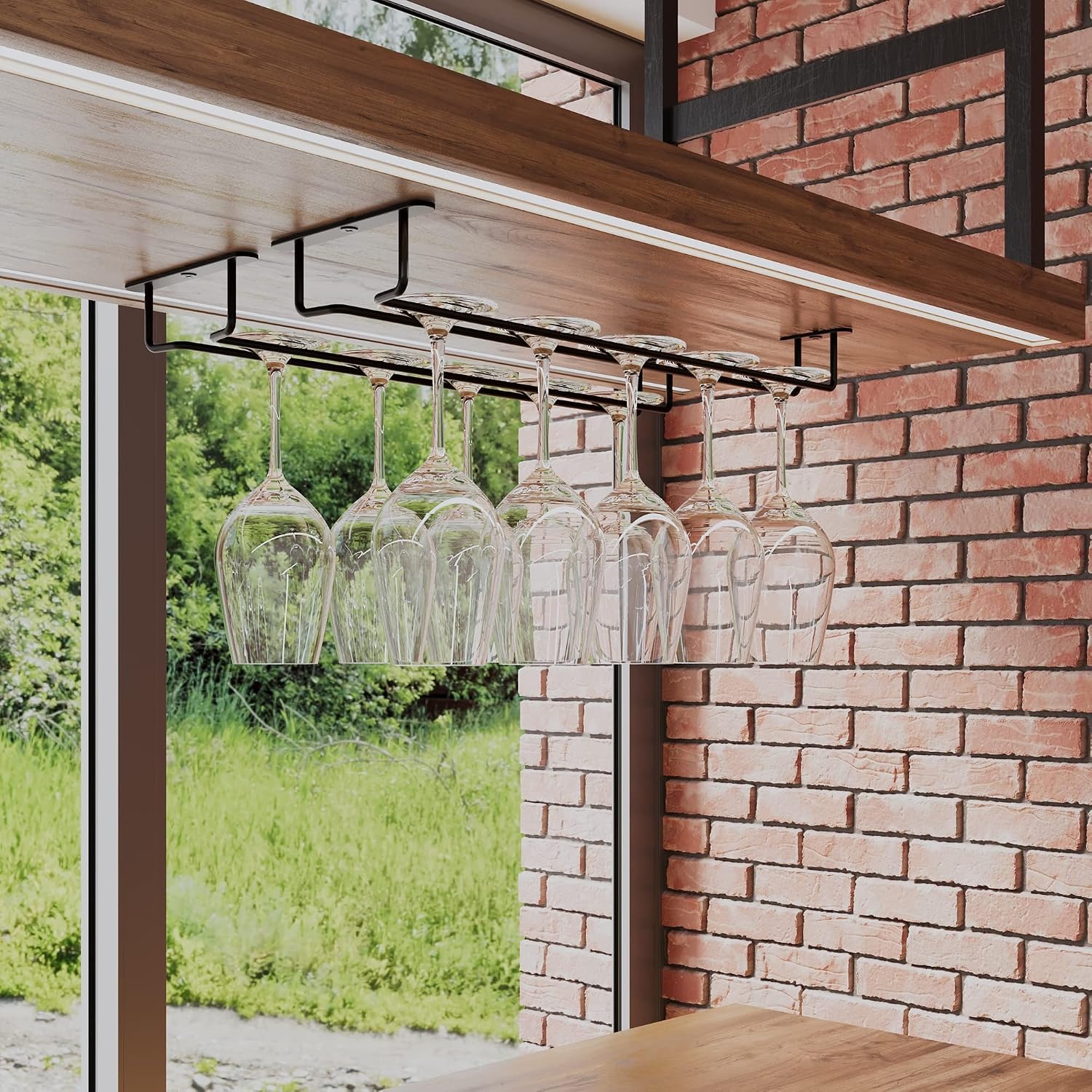
It also suits anyone building a home bar area. Because you get two racks, you can keep one in the kitchen and use the other under a buffet, hutch or bar shelf. A bar cart glass rack under a sturdy cart shelf works too, as long as the shelf is thick enough to take a screw.
Renters should think it through. This mounts with screws, so there will be fixing holes in the underside of the cabinet. They sit out of sight, which most people and most landlords are relaxed about, but it is worth knowing before you start rather than after.
Measuring before you buy
Three measurements matter, and they take two minutes.
First, the depth of your cabinet underside. The rack is 12.7 cm deep, so you need at least that much solid material, ideally with a little to spare so the rack is not sitting right at the front edge.
Second, the clearance below. Measure from the cabinet base down to your worktop, shelf or worktop appliances. Take your tallest glass, measure it, add a few centimetres for lifting it clear, and compare. This is where most people get caught out, usually by a kettle or a toaster sitting directly underneath.
Third, the width of the run you want to fill. At 43.2 cm per rack, two racks mounted end to end give you around 86 cm of hanging space with a small gap between them.
Fitting it properly
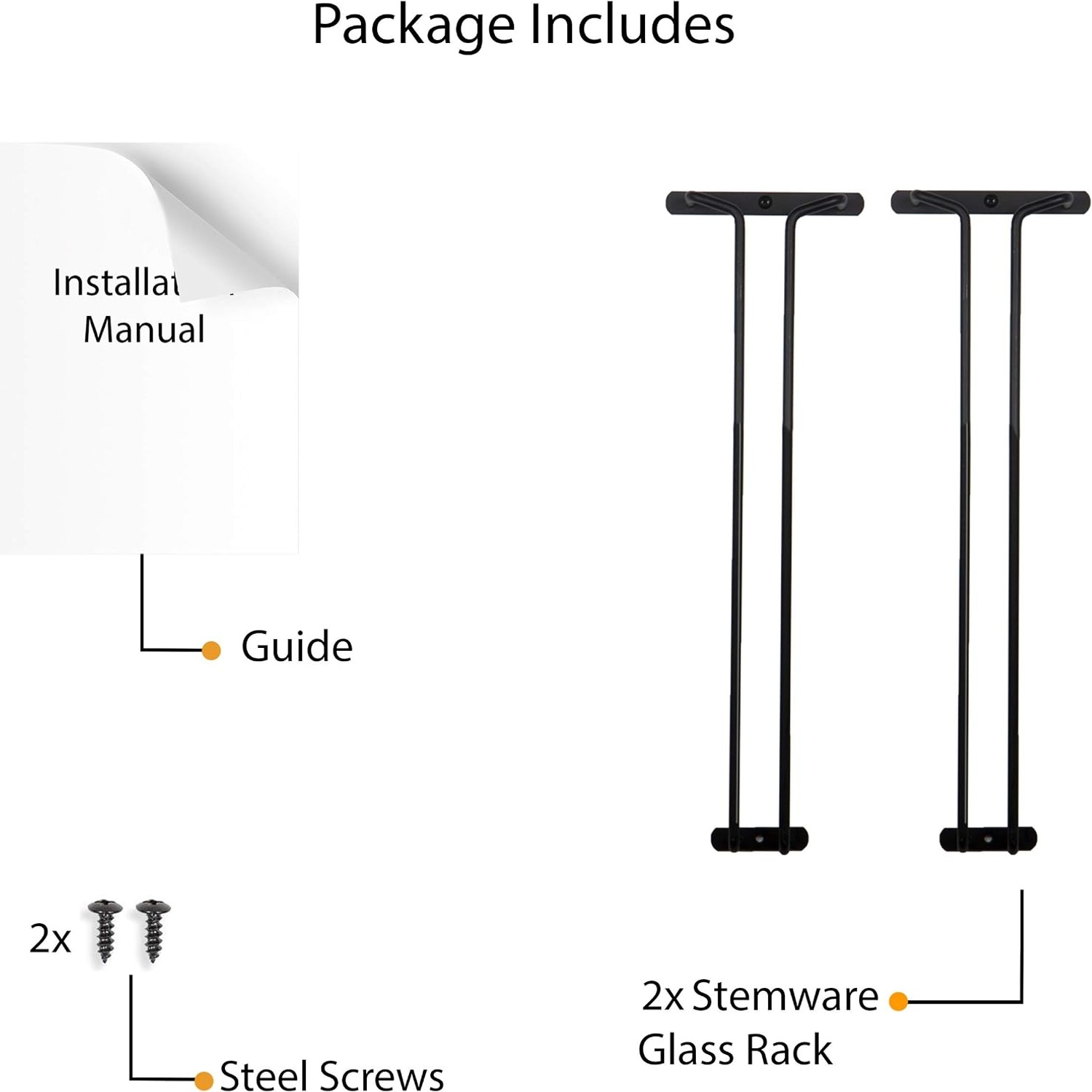
The rack is supplied with hardware and the job is mounting rather than assembly. Still, a few minutes of care at the start saves you from drilling twice.
Hold the rack in position and mark the screw holes with a pencil. Check it with a small spirit level, because a rack that is slightly off level is surprisingly obvious once glasses are hanging from it. If the cabinet material is dense, drill pilot holes slightly smaller than the screws.
Pay attention to what you are screwing into. A solid cabinet base or a frame rail is ideal. A thin decorative panel is not, and it will work loose eventually under load. If your cabinet base is flimsy, fix a timber batten across it first and mount the rack to that.
If you are fitting both racks in one run, mount the first one, check it, then use it as your reference for the second. Consistent spacing is what makes the finished result look built in rather than bolted on.
Living with it day to day
Load it sensibly. The 5 pound capacity is per rack, so glassware only. It is not a place for mugs, bottles or anything with real heft.
Slide glasses in and out rather than lifting and forcing them. Stems snap when they are twisted, not when they are hanging.
Cleaning takes seconds. Wipe the rack with a soft damp cloth when you clean the worktop, and dry it off. Skip abrasive pads and strong chemicals, since those are what wear a painted finish down over time. The rust resistant finish is there to cope with kitchen steam, but it will last longer if you are not scrubbing it.
Every few months, give the screws a quick check. If anything has loosened, a quarter turn with a screwdriver sorts it before it becomes a problem.
One practical note on placement. If you plan to use it as a drying rack, think about what sits directly underneath. Hanging wet glasses above a worktop appliance is a mistake you only make once.
What not to put in it
Stemless glasses will not work, since there is no stem to hang from. The same goes for tumblers, mugs and anything with a flat base and no foot.
Very heavy or very wide bowled glasses need a sanity check. If the bowl is wider than the gap allows, or if the glass is unusually heavy, test a single one before you commit the whole set.
Anything that is not glassware belongs somewhere else. Utensil hanging, tea towels and kitchen tools will exceed what this is built for.
The short version
This is a set of two black, under cabinet stemware racks, each with two rows, measuring 43.2 cm wide by 12.7 cm deep by 4.1 cm high. The finish is painted and rust resistant, hardware is included, and each rack takes up to 5 pounds of glassware.
Measure your cabinet depth, measure the clearance below, and measure your widest glass. If those three numbers work, fitting is a ten minute job with a screwdriver and a pencil, and you get a shelf back in your cupboard.
For a small kitchen, a home bar corner or anyone who pours a glass of wine more than once a week, it is a small purchase that changes how the space works every day.