
The complete guide
Wall Wine Rack Buying Guide, How To Choose And Mount A Six Bottle Display
The problem with bottles on the worktop
Wine has a habit of piling up in the wrong places. A few bottles live on the kitchen worktop, one leans in the pantry behind the pasta, and a couple end up in a cupboard where you forget they exist. None of those spots are good for the wine or for the room. Bottles standing upright on a warm worktop dry out their corks. Bottles hidden in a cupboard get opened last, which is the opposite of what you want if you bought something nice.
A wall mounted wine rack solves that in the plainest way possible. It gets the bottles up off horizontal surfaces, lays them on their side, and puts the labels where you can see them. You stop losing track of what you own. You get your worktop back. And the wall, which was doing nothing, starts earning its keep.
How a six tier wall rack works
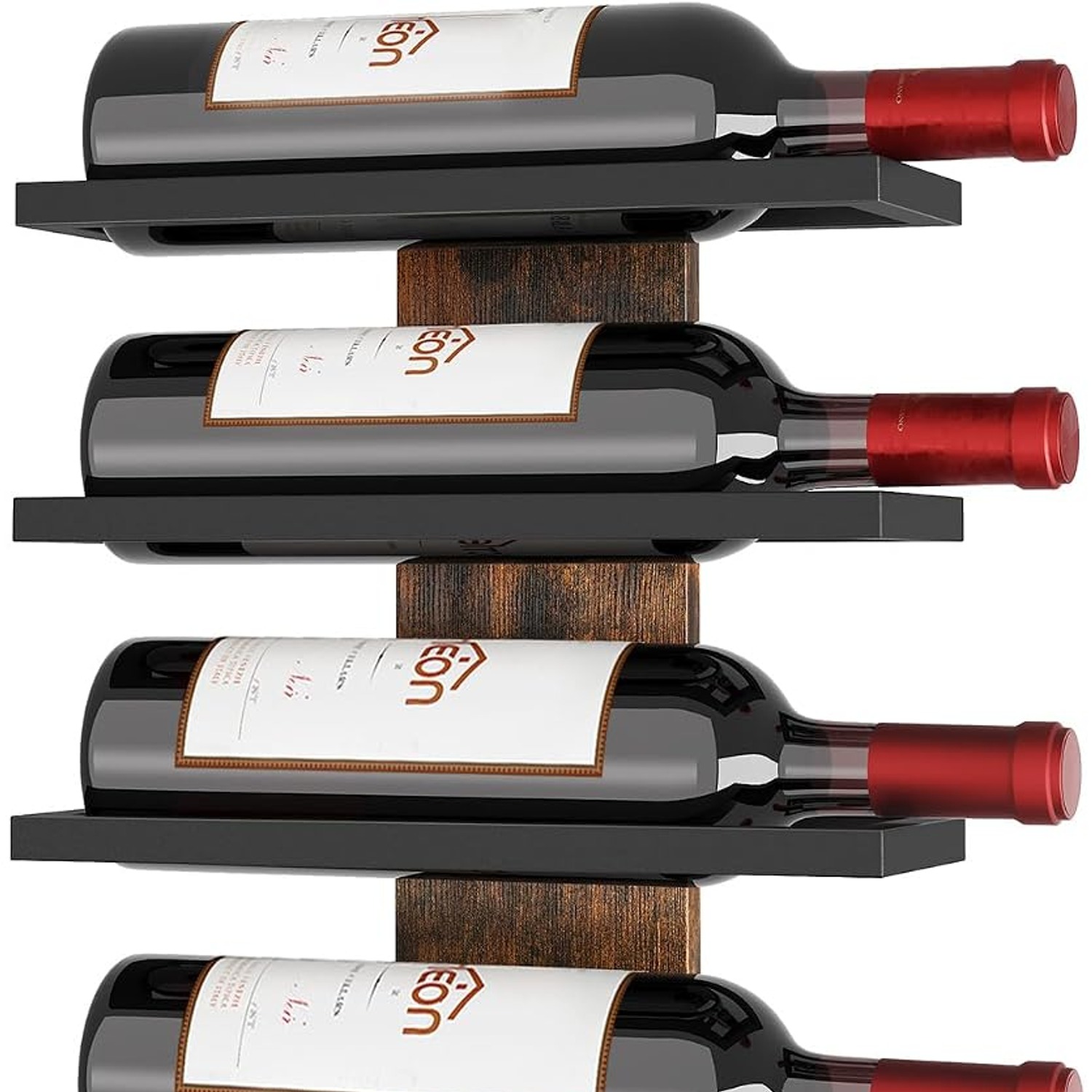
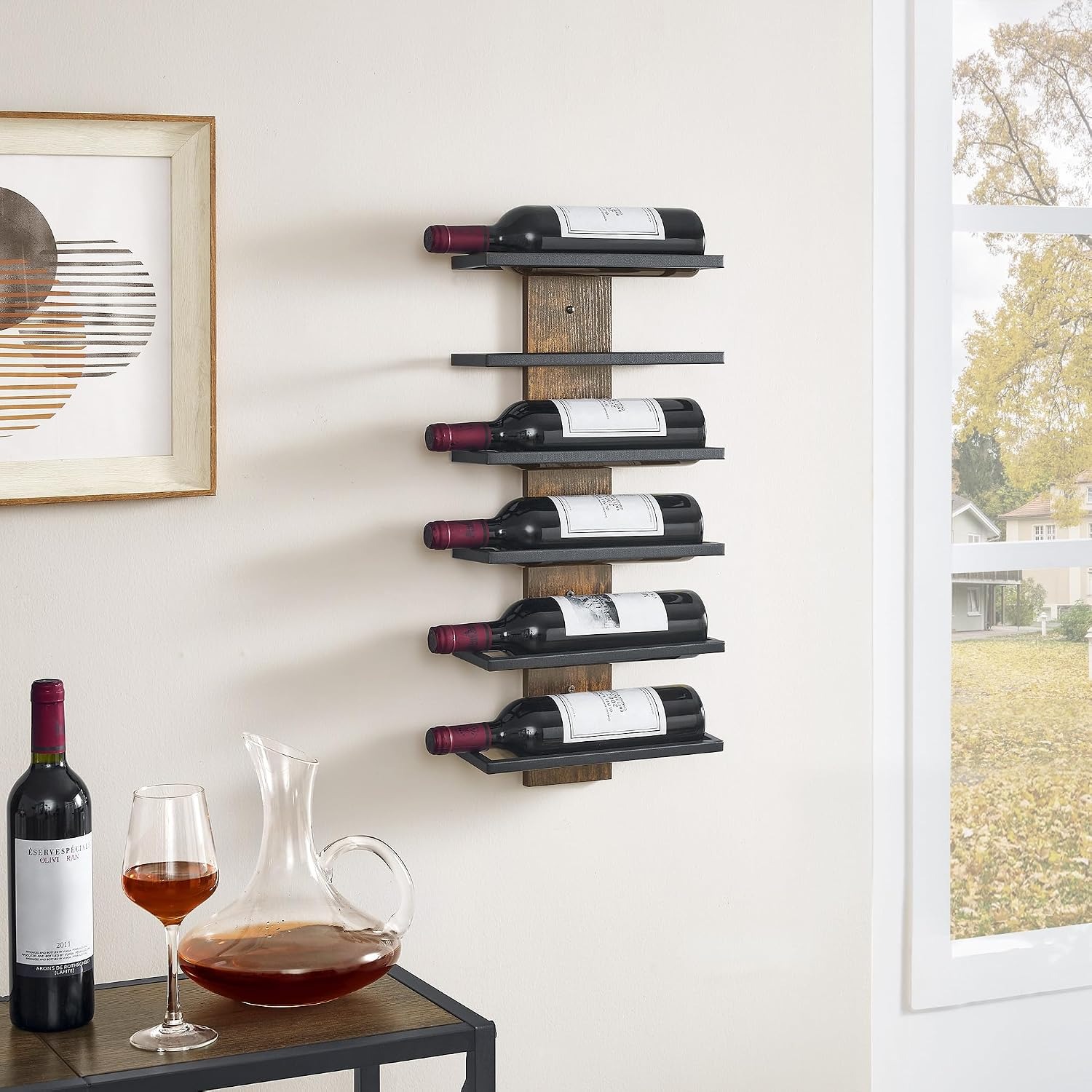
This rack is a vertical column of six tiers, each holding one bottle. Total height is 60 cm, width is 27.5 cm, and depth is only 10.2 cm. That depth number matters more than people expect. Ten centimetres is about the thickness of a hardback book, so the rack sits close to the wall and does not catch shoulders or elbows in a narrow kitchen.
Bottles lie flat. There are two good reasons for that. The first is cork contact. A natural cork stays sealed when it stays damp, and a bottle on its side keeps wine against the cork. The second is simpler. Horizontal bottles show their labels, so choosing a bottle takes a glance instead of a search.
The construction mixes timber shelves with a metal frame. Wood brings grain and warmth, metal brings strength with a finish made to resist rust. Together they give the rustic brown look that suits a farmhouse kitchen, a share house dining room, or a tidy modern apartment without much effort. The whole unit weighs 1.26 kg empty, so holding it against the wall while you mark your drill points is a one person job.
Who it suits
If you have a cellar and a hundred bottles, this is not your main storage. It is for the far more common situation of six to twenty bottles rattling around a normal home.
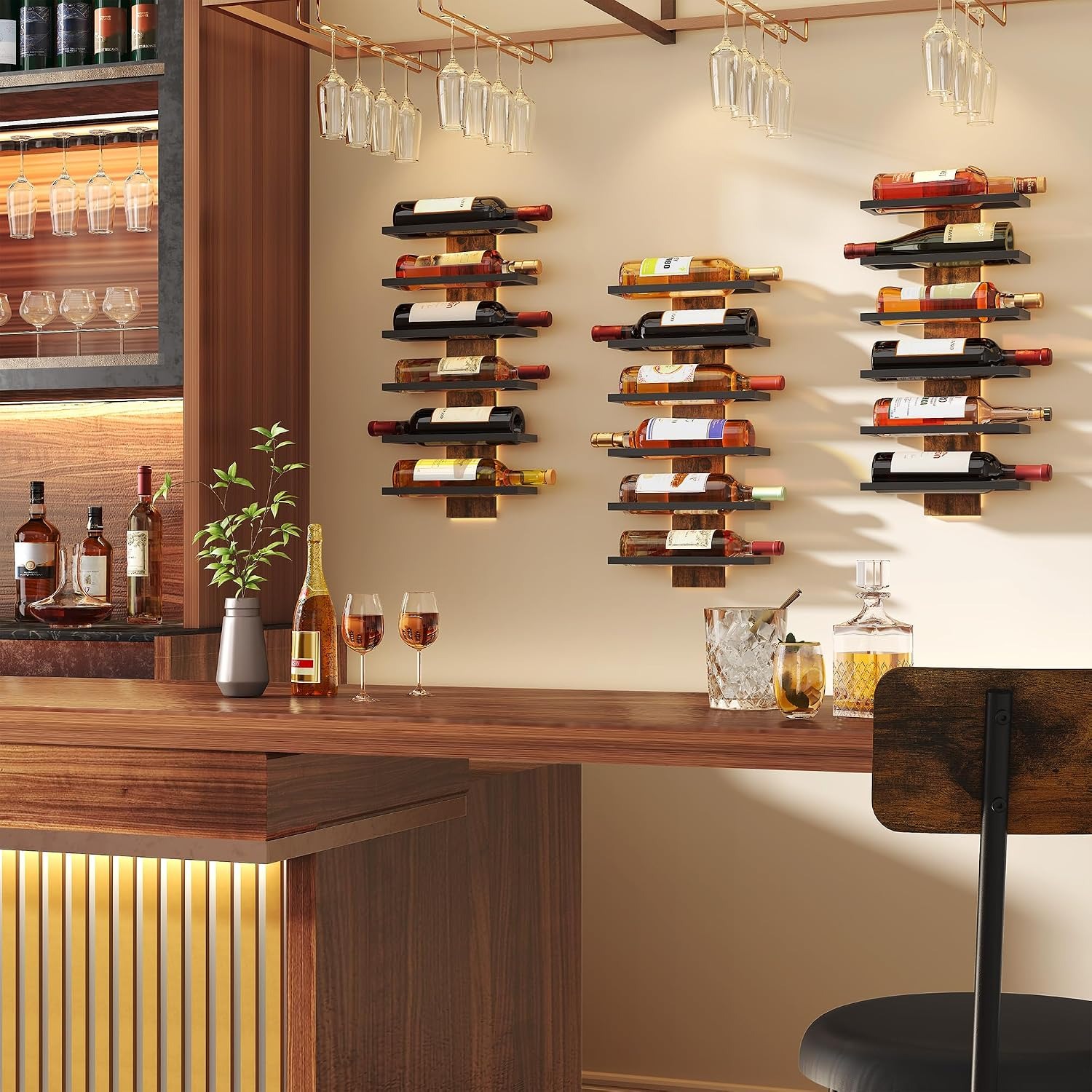
Renters like it because the footprint is tiny and the fixing holes are small. Apartment dwellers like it because there is no floor space to give up. Anyone with a galley kitchen likes it because 10.2 cm of depth does not get in the way. It is also a good pick for a home bar corner, where the bottles themselves do the decorating.
There is a second audience worth mentioning. The same tiers hold rolled towels neatly, which makes the rack a quiet option for a bathroom wall or a spot beside a laundry sink. If you decide later that wine is not the job you want it to do, it still has a use.
Choosing the right spot
Start with the tape measure, not the drill. You need a clear run of wall at least 60 cm tall and 27.5 cm wide, plus a bit of breathing room on each side so it does not look crammed. Common winners are the strip beside a fridge, the gap between a doorway and a corner, the end of a run of cabinets, and the wall above a sideboard.
Height matters too. Put the lowest tier above worktop height so bottles clear counters, kettles and toasters. On a 60 cm rack, that generally lands the top tier somewhere near eye level, which is comfortable to reach without a stretch.
Then think about light and heat. Wine does not like direct sun or warm air. Avoid a wall that catches afternoon sun through a window, and keep clear of the space directly above an oven or beside a heating vent. A shaded interior wall is the quiet best choice for everyday bottles.
Getting it on the wall properly
The rack fixes with multiple screws rather than a single hook, which spreads the load across several points. That is the part that makes a wall mounted rack feel solid instead of nervous.
Your wall type decides your fixings. Timber studs are the easiest and strongest option, so run a stud finder across the area first and mark anything you find. Masonry and brick need the right plugs and a masonry bit. Plasterboard with no stud behind it needs proper anchors rated for the load, not the small plastic plugs that come in a junk drawer. Six full bottles is a real weight once you add it up, and the anchors are what carry it.
Parts come numbered with an installation guide and tools in the box, so the build itself is straightforward. Take two minutes with a spirit level before you commit. A rack that is 2 mm out of level is invisible on its own and glaringly obvious once six bottles are sitting in it.
Building a bigger display
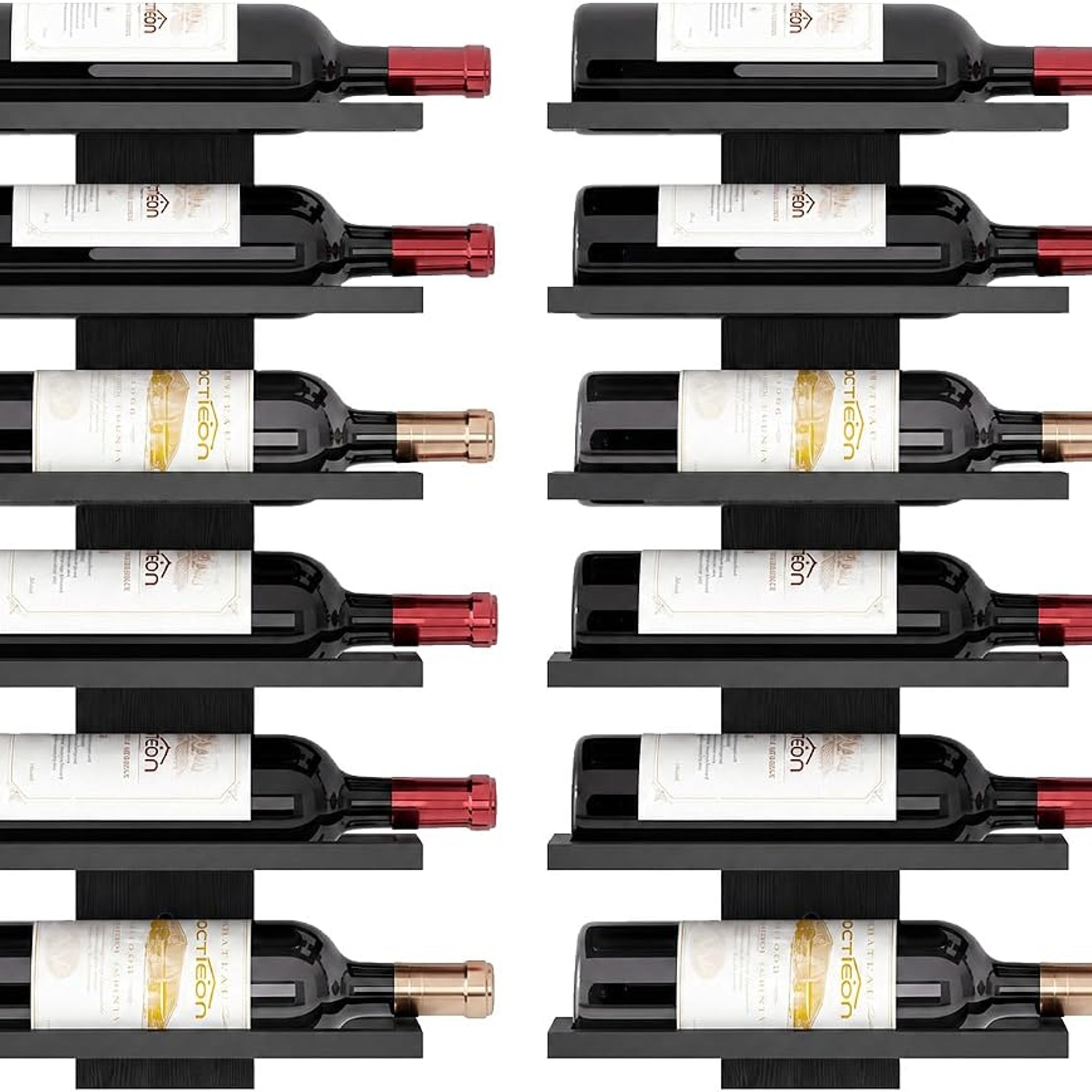
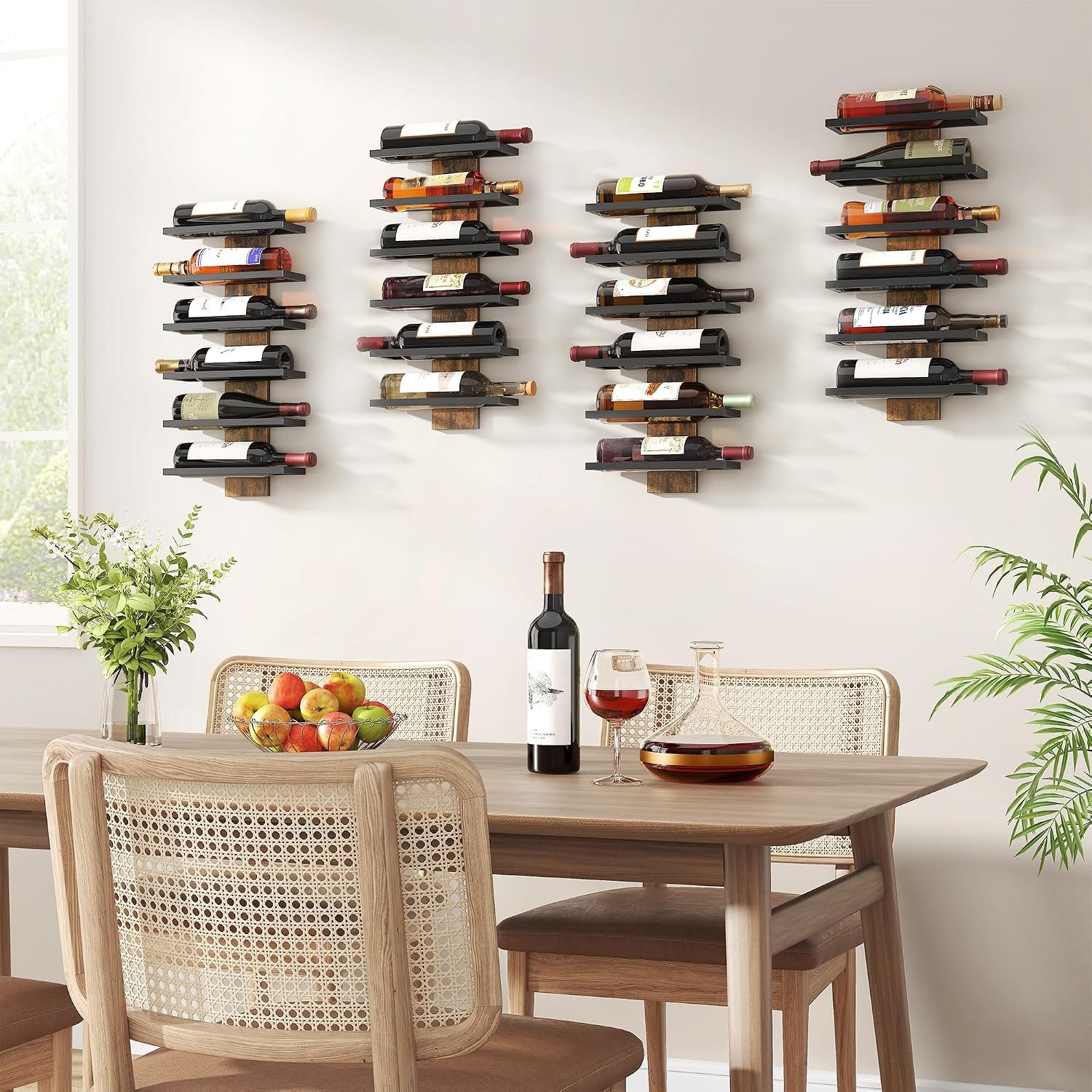
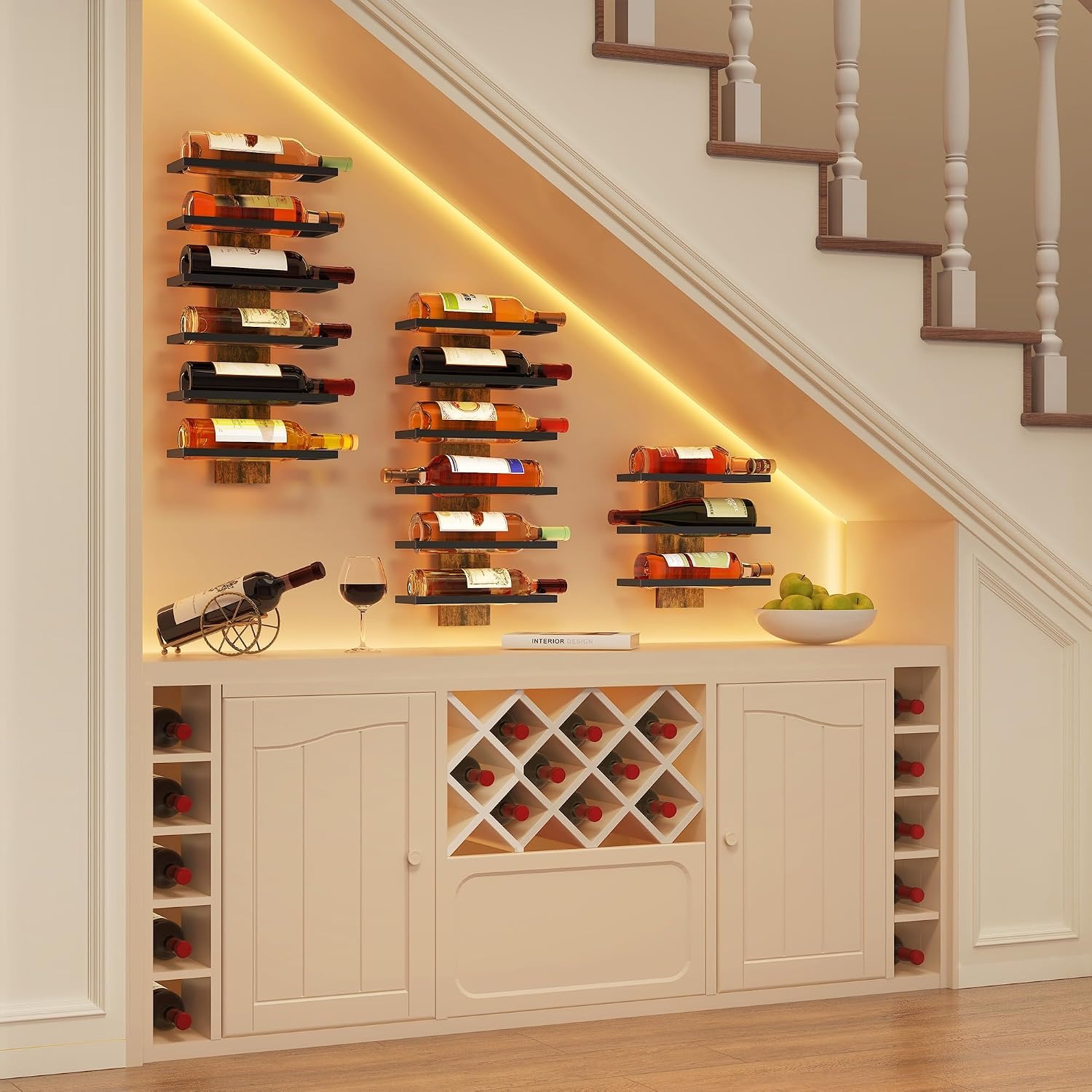
One rack holds six bottles. If your collection is bigger, the easiest answer is more racks. Two units side by side give you twelve bottles in a block. Three in a row turn a blank wall into a feature. You can also stagger them at different heights for a looser, less formal look.
Spacing is the thing to get right. Leave enough gap between units that you can slide a bottle in and out without knocking the neighbour. Mark everything out with painter's tape on the wall first so you can see the arrangement before drilling anything.
Looking after it
Care is simple. Wipe the timber and metal with a dry cloth. If something sticky needs attention, use a barely damp cloth and dry the wood immediately after, because timber does not enjoy sitting wet. Skip harsh solvents and abrasive pads, which will dull the finish.
Give the wall screws a check every few months, especially in the first year. Timber moves a little with the seasons and screws can work slightly loose. A quarter turn with a screwdriver is all it usually takes.
Handle the bottles with a bit of care as well. Lift them out rather than dragging them across the tiers, and push them fully home when you load them back in. The rack lives longer and so does the finish.
A note on what to store there
Everyday drinking bottles are the natural fit. These are wines you plan to open within the next few months, where the point is access and visibility rather than long ageing. Rotate them as you go, putting new bottles at the bottom and pulling from the top, so nothing sits forgotten for a year.
Serious cellaring wines want stable cool temperatures and darkness, which no wall in a normal kitchen reliably provides. If you own something you intend to hold for a decade, keep that elsewhere and let the wall rack handle the working stock.
The short version
Six bottles, six tiers, 60 cm tall and only 10.2 cm deep. Wood shelves, metal frame, rustic brown. Assembly required, with numbered parts, an instruction guide and tools in the box, and a 1.26 kg empty weight that makes installation easy.
Measure your wall, pick fixings that match the wall type, mount the lowest tier above worktop height, and keep it out of direct sun. Do those four things and you have your worktop back, your labels visible, and a wine bottle display that looks deliberate rather than improvised. Add a second rack whenever the collection outgrows the first.