
The complete guide
How to Choose a Countertop Wine Rack That Actually Fits Your Kitchen
The problem with loose bottles
Wine has a habit of colonising a kitchen. One bottle lives next to the fruit bowl, two are stacked sideways in a cupboard where they roll every time you open the door, and there is usually one in the laundry because somebody decided it was the coolest room in the house. None of this is a disaster. It is just untidy, slightly risky, and it means you never quite know what you have.
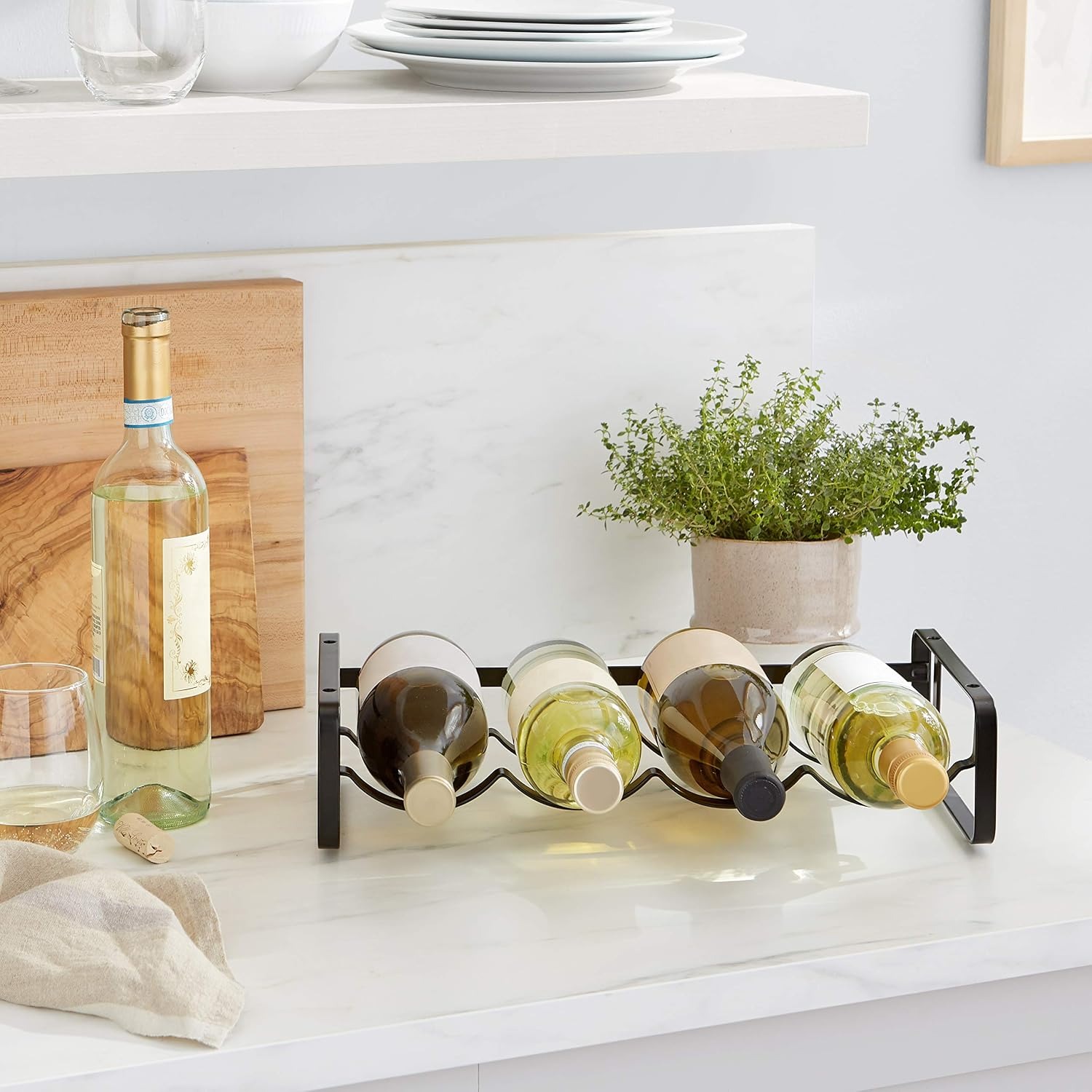
A countertop wine rack solves a small problem well. It gives four bottles a fixed address on a flat surface, keeps them lying down, and stops them touching each other. You can see the labels without crouching. You can grab one without the other three shifting. And when you unpack a delivery, there is an obvious place for the bottles to go.
That is the entire job. It is worth saying plainly, because wine storage gets talked about as if every bottle needs a temperature-controlled cabinet. Most of the wine in most homes gets drunk within a month or two of arriving. What it needs is somewhere sensible to sit.
How this rack holds bottles
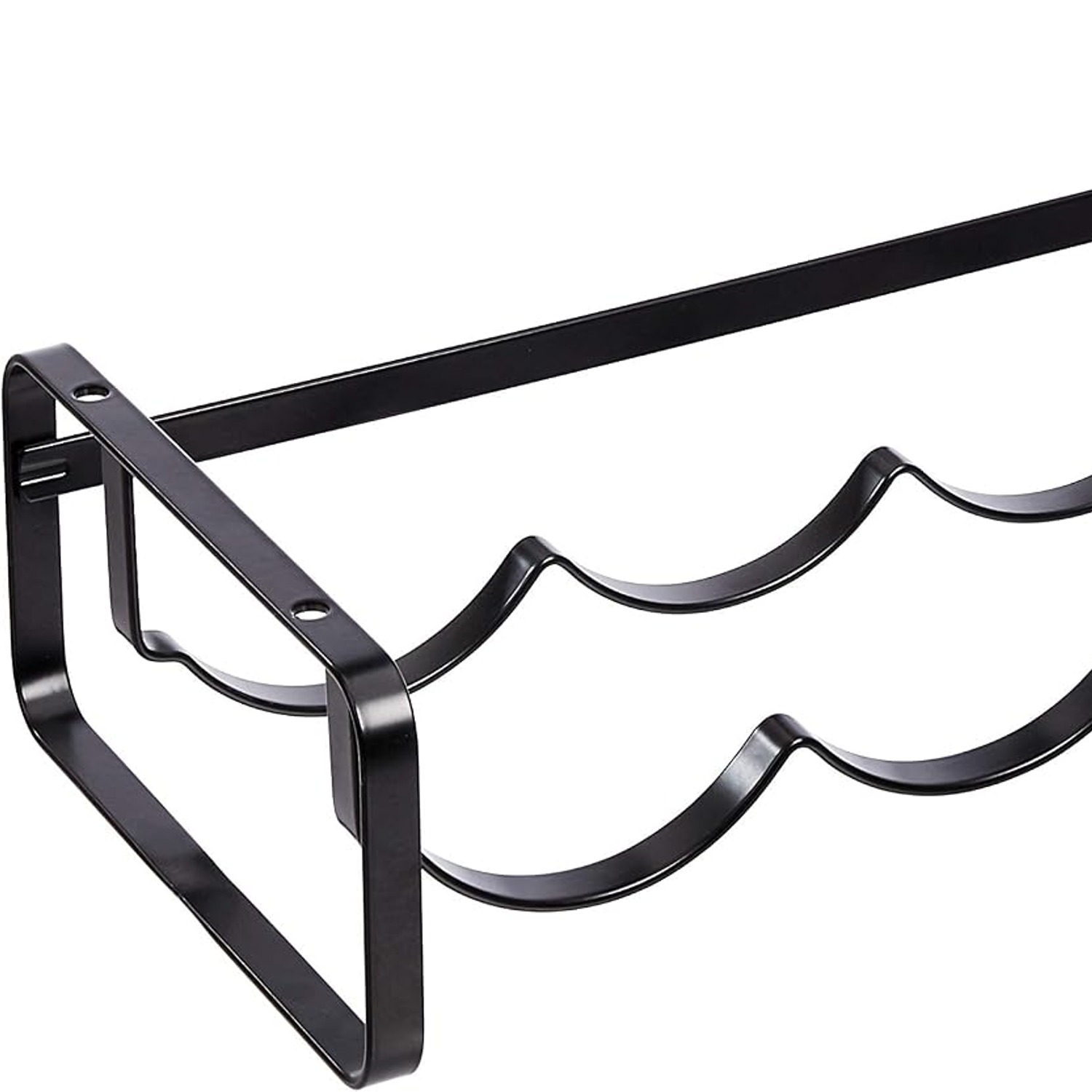
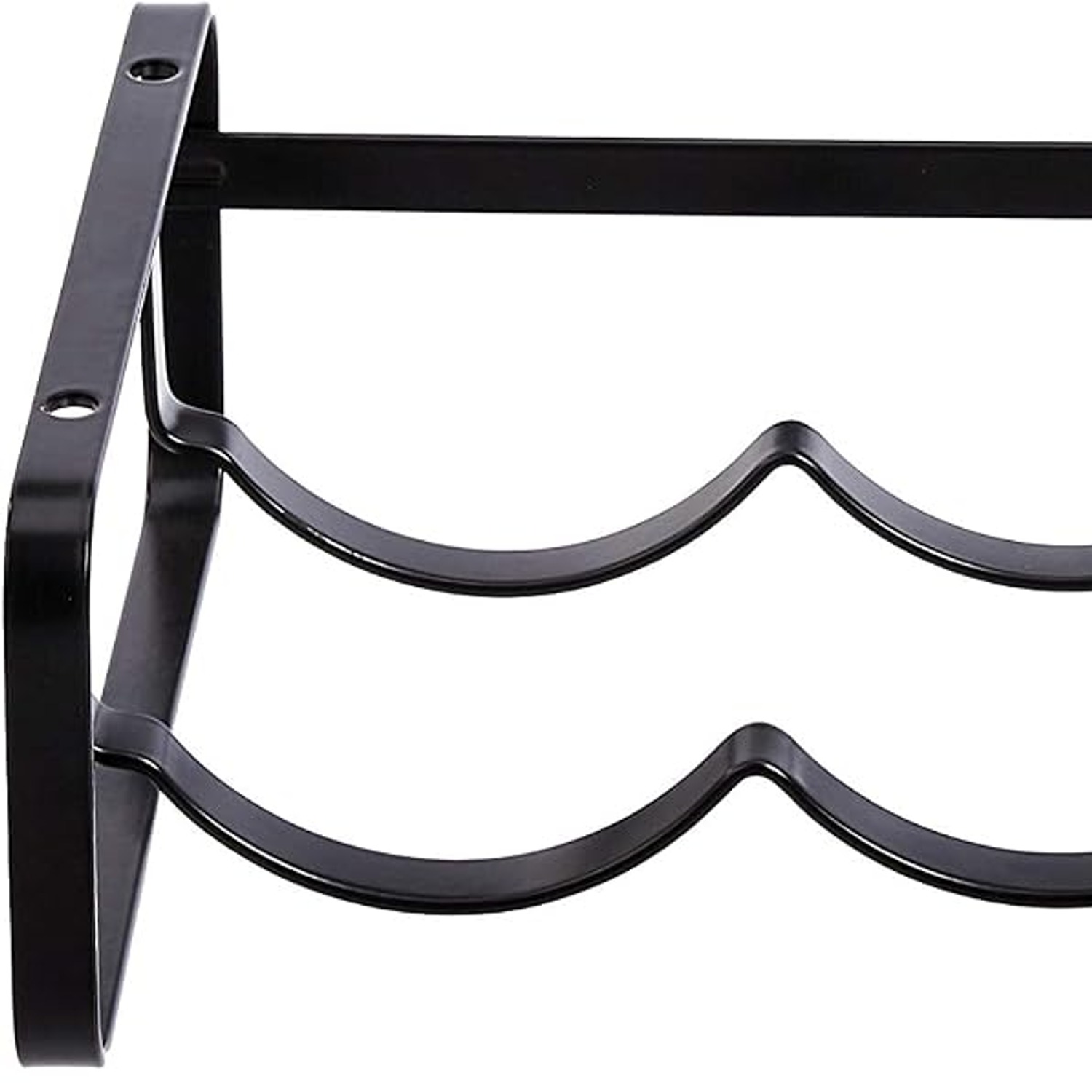
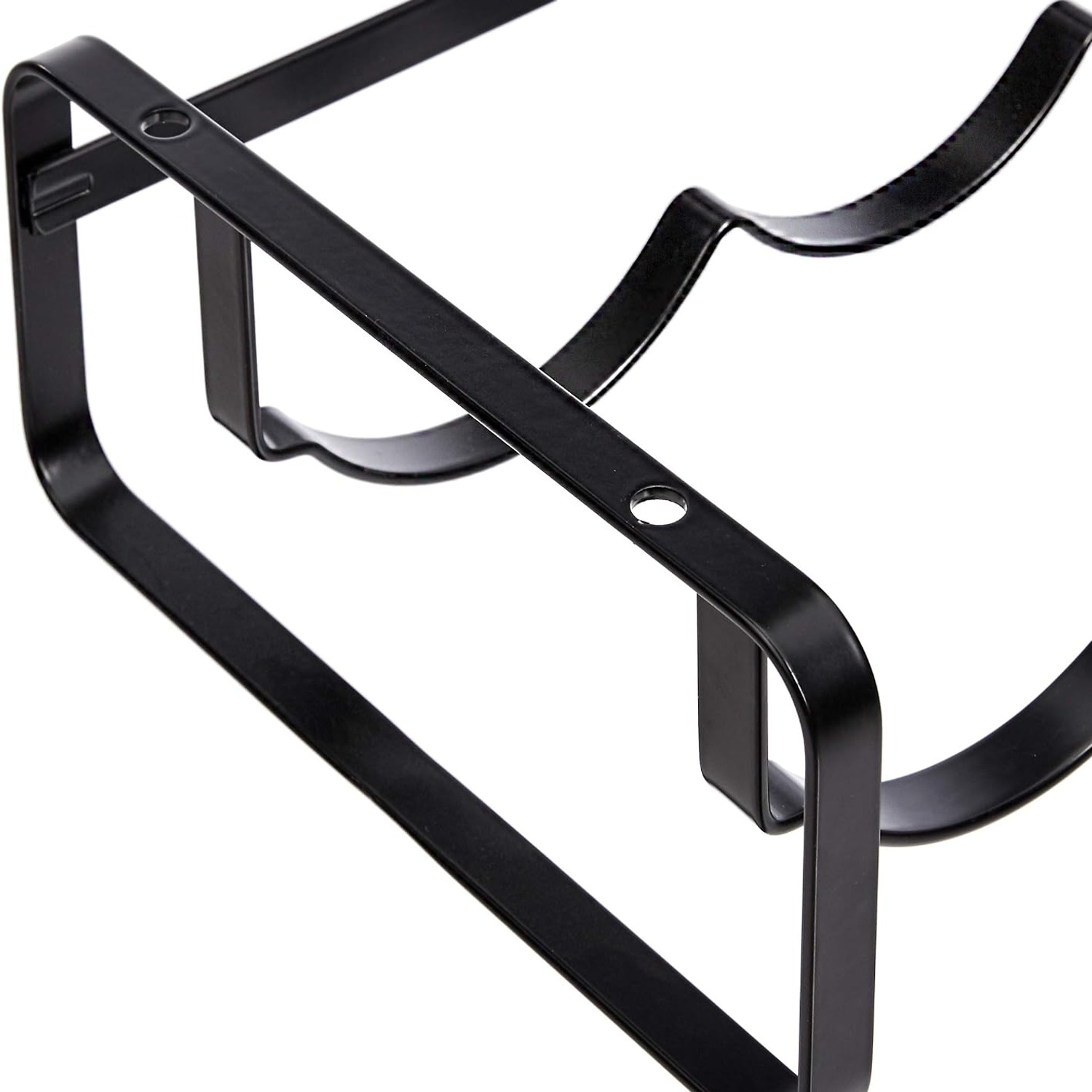
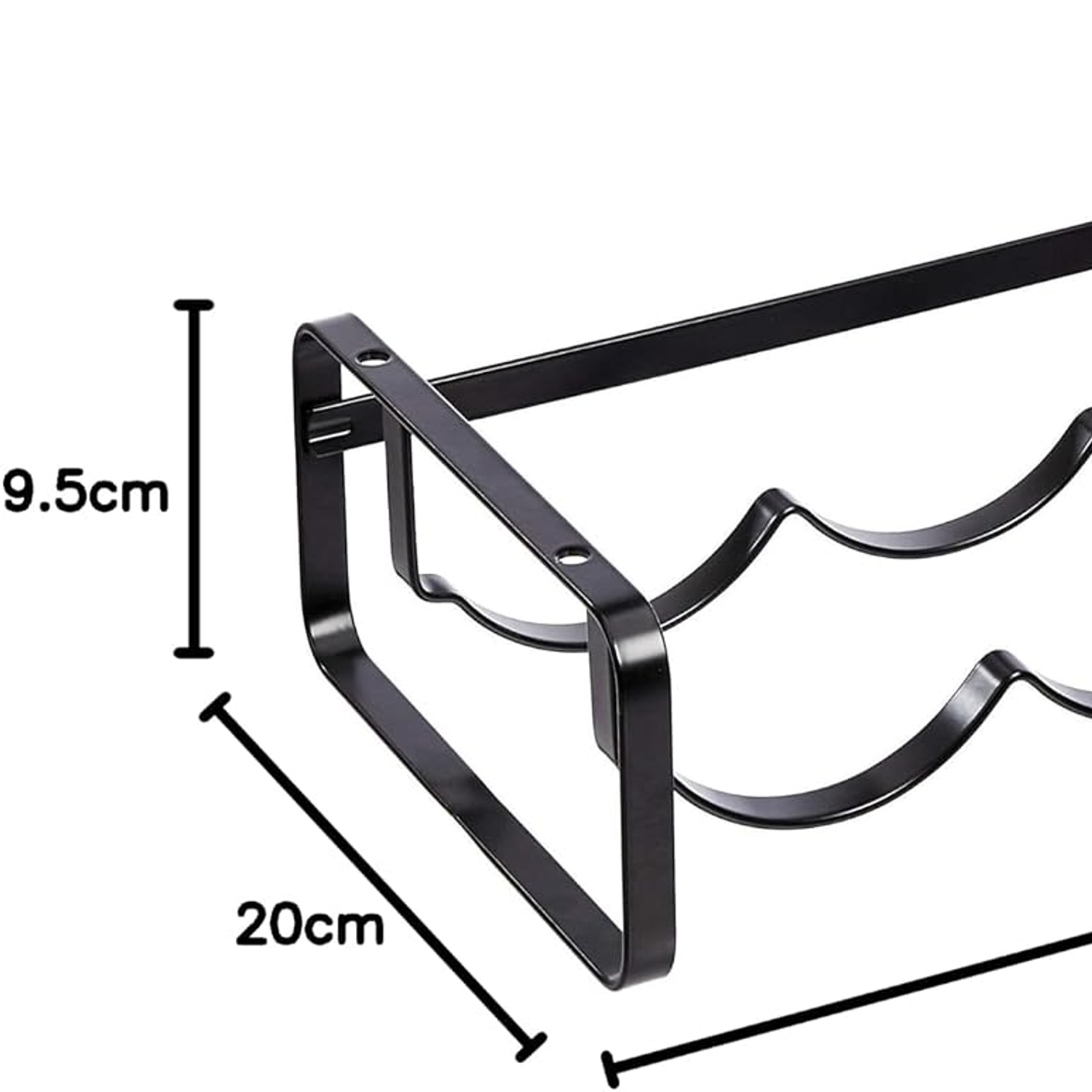
The important detail is the shape of the surface. A flat shelf lets a round bottle roll, and a rolling bottle is how you end up with glass on the tiles. This rack uses a wave profile instead, with four recessed cradles along a 40 cm span. Each bottle drops into its own dip and stays seated.
It sounds minor until you take a bottle out of a crowded rack. On a flat shelf, pulling one bottle lets the others shift into the gap. With recessed seats, the remaining bottles do not move. Nothing leans, nothing nudges a neighbour off the end.
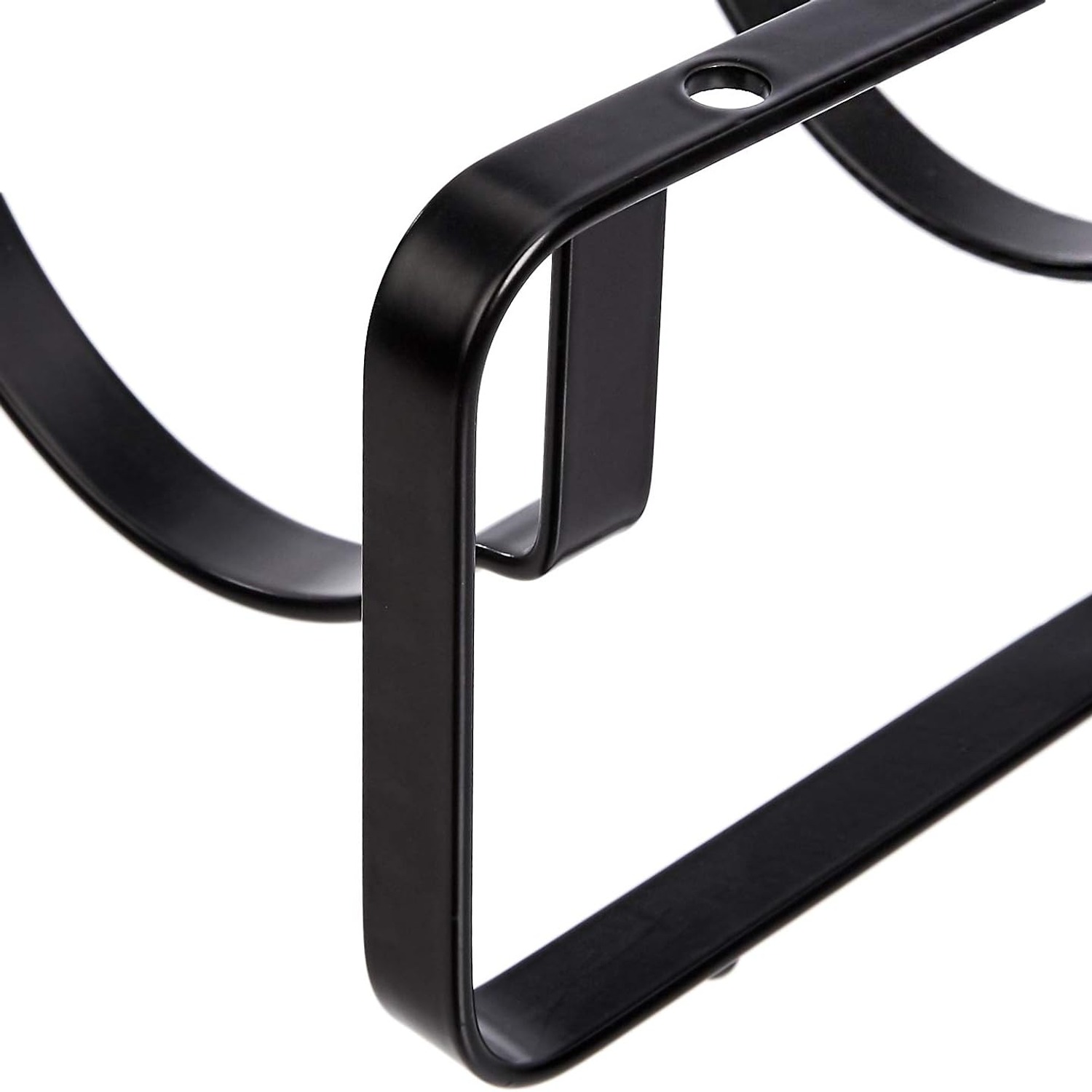
The frame is metal alloy steel in black, and at 635 g the rack has a bit of heft to it. That weight does useful work. Light plastic racks tend to come with you when you pull a bottle free. Steel stays put.
The depth is 9.5 cm, which is the number worth checking before you buy anything. Plenty of kitchen worktops lose most of their usable depth to a kettle, a toaster and a knife block. A rack under 10 cm deep sits in the strip of worktop that usually goes to waste against the splashback.
Who it suits
This is a good fit if you keep a handful of bottles on hand rather than a cellar. Four bottles covers a working supply of reds and whites for most households, plus whatever you were given at the last dinner party.
It suits renters and apartment dwellers particularly well. There is no wall mounting, no drilling, no bracket, no landlord conversation. It sits on a surface you already have and it leaves with you when you move. For anyone hunting for the best small wine rack for apartments, that lack of commitment is half the appeal.
It also works for people who buy in bursts. A case arrives, the four best bottles go on the rack, and the rest wait in the cupboard. As the rack empties, you restock from the box.
Where it is less suited is long-term cellaring. If you buy wine to keep for five or ten years, a kitchen worktop is the wrong environment regardless of which rack you choose. Heat and light are the enemies there, and no rack fixes that.
Stacking instead of upgrading
Most people underestimate how much wine they will end up storing. The usual response is to buy a bigger rack a year later and throw out the first one.
Stacking avoids that. These racks sit on top of each other up to three tiers, so a second rack doubles you to eight bottles and a third takes you to twelve. The footprint on the worktop does not change at all. It just goes up to roughly 60 cm tall at three levels, which is the figure to check against your overhead cupboards.
A quick tip if you plan to stack: buy the second rack sooner rather than later, and note the model number WK111899-1 so you get a match. Mismatched racks from different ranges rarely stack cleanly.
Choosing a spot
Three things matter when you pick a location. Flat, stable, and out of the sun.
Flat is obvious, but worth testing. Worktop near a sink sometimes have a slight fall for drainage, and a rack on a slope is a rack you will be straightening forever.
Stable means the surface does not get knocked. The end of a worktop near a doorway is a bad spot. So is a narrow sideboard that wobbles when someone walks past.
Sunlight is the one people forget. Direct sun will heat a bottle quickly and light damages wine over time. A north-facing window with afternoon sun on it is the worst place in the house for bottles, even though it often looks the best. Pick a shaded stretch of worktop, a pantry shelf, or the lower level of a bar cart instead.
Also give some thought to appliances. Keep the rack away from the oven, the back of the fridge and anywhere the dishwasher vents steam. Those spots run warm and damp, which is unhelpful for both the wine and the metal.
Looking after it
Care is about as simple as it gets. Wipe it with a dry cloth when it gets dusty. If a drip has dried on, use a cloth that is barely damp and then dry the metal straight away rather than leaving moisture sitting on the finish.
Avoid abrasive pads and scouring powders. They will scratch a coated finish and the marks show up badly on black. Harsh solvents are the same story. A dry cloth handles ninety percent of it and a damp cloth handles the rest.
When you load and unload bottles, lift rather than drag. Sliding a bottle base across the cradle is how small scuffs start. The same applies to the rack itself on a stone or timber worktop. Pick it up to move it, and if your worktop is precious, pop a felt pad or placemat underneath.
Finally, give the empty rack a wipe every few months. Dust collects in the dips where the bottles sit, and it is far easier to clean when the rack is empty than to work around four full bottles.
A few things to measure first
Before ordering, take two measurements and one look.
Measure the usable depth of the worktop or shelf, from the front edge to whatever is behind it. You need the full 9.5 cm sitting on the surface with nothing hanging over. Then measure the clear height. One rack needs 20 cm, and if you think you might stack later, check you have room for two or three levels under any overhead cupboard.
The look is at your bottles. If most of your wine is standard 750 ml shapes, you are fine. If you mostly buy heavy sparkling bottles with wide bases, or large format bottles, check the diameter before you commit, because the cradles are sized for conventional bottles.
The short version
This is a four bottle steel rack in black that sits on a worktop, shelf or bar cart and holds bottles in recessed cradles so they cannot roll. It measures 9.5 by 40 by 20 cm, weighs 635 g, needs no assembly, and stacks up to three tiers if four bottles stops being enough.
It is not a cellar and it does not pretend to be. What it does is take the bottles that are currently scattered around your kitchen and give them one tidy spot where you can see them. For most households, that is exactly the right amount of wine storage.