

The complete guide
How To Choose A Countertop Wine Rack That Actually Fits Your Kitchen
The problem with keeping wine in a normal house
Most of us do not have a cellar. We have a kitchen, maybe a sideboard, and a cupboard that already holds the slow cooker. Wine ends up wherever there is a gap. Two bottles behind the cereal, one on the worktop beside the fruit bowl, another lying flat on a pantry shelf where it rolls every time the door shuts.
That creates three small annoyances that add up. You cannot see what you have, so you buy another bottle of the same thing. Bottles get knocked, and sooner or later one goes over. And the kitchen looks cluttered, because loose bottles never look deliberate.
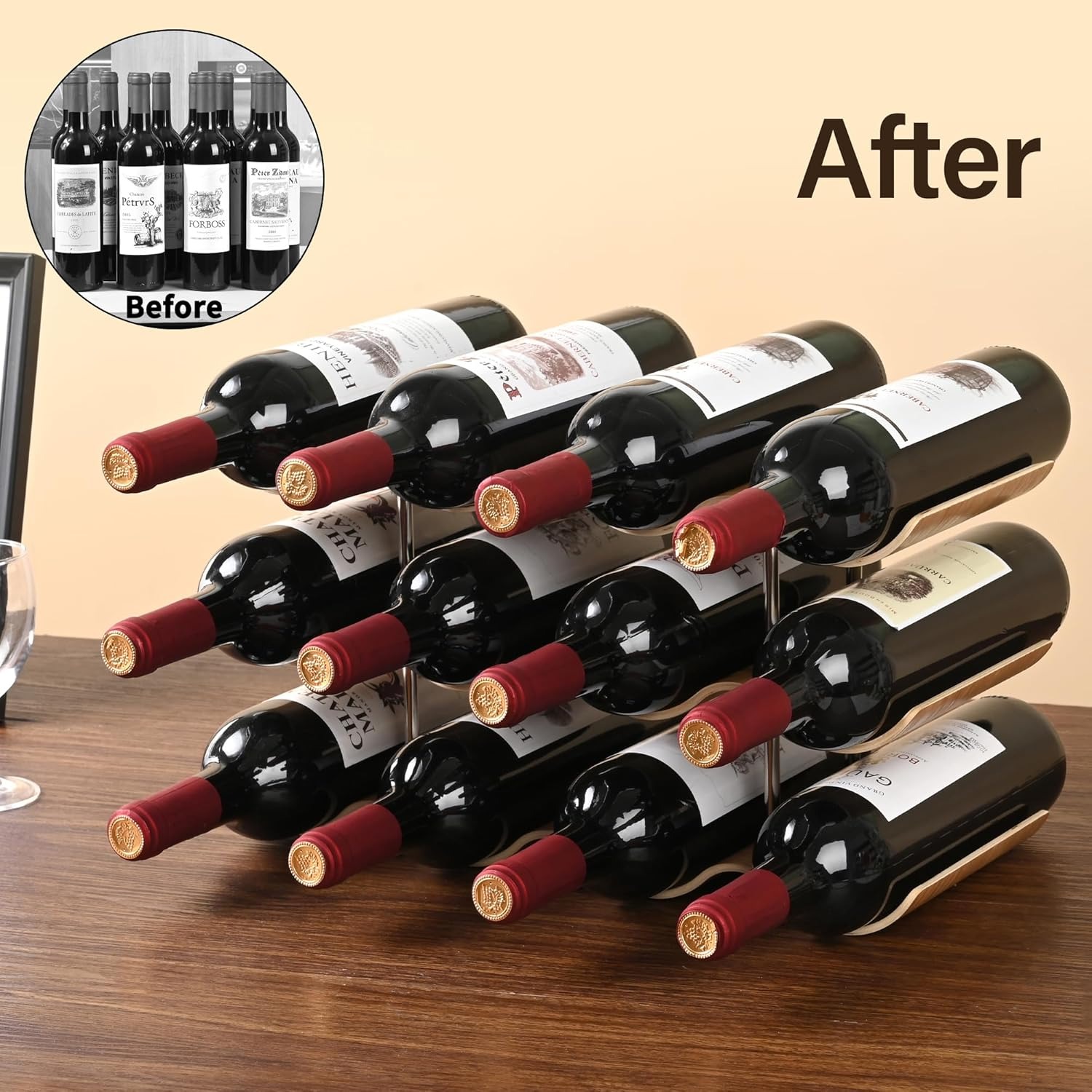
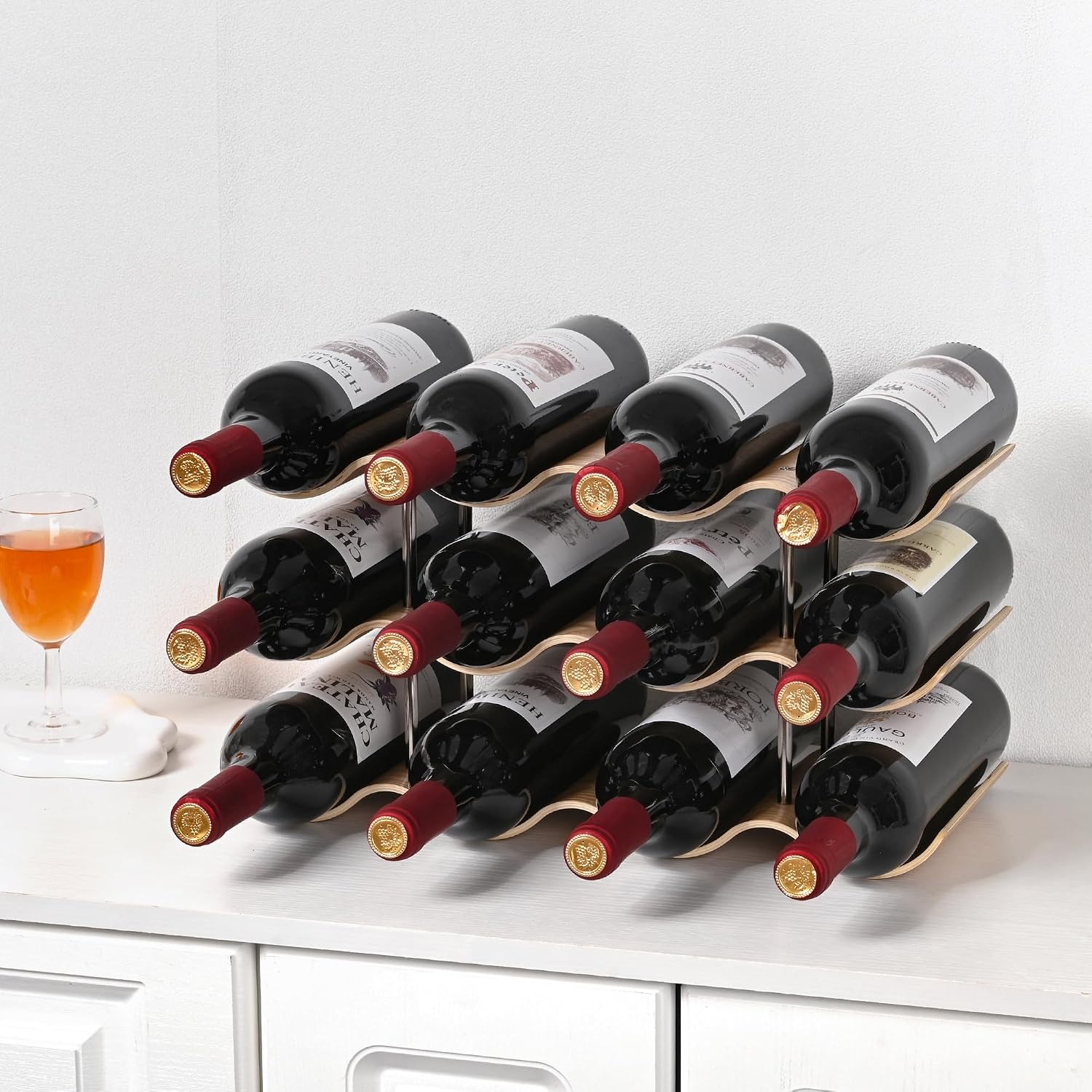
A countertop rack fixes all of that with very little effort. It takes the bottles off the flat surface, puts them in a line you can read at a glance, and holds them still. The only real question is which rack suits your space, because they are not all built the same way.
How a wavy tiered rack works
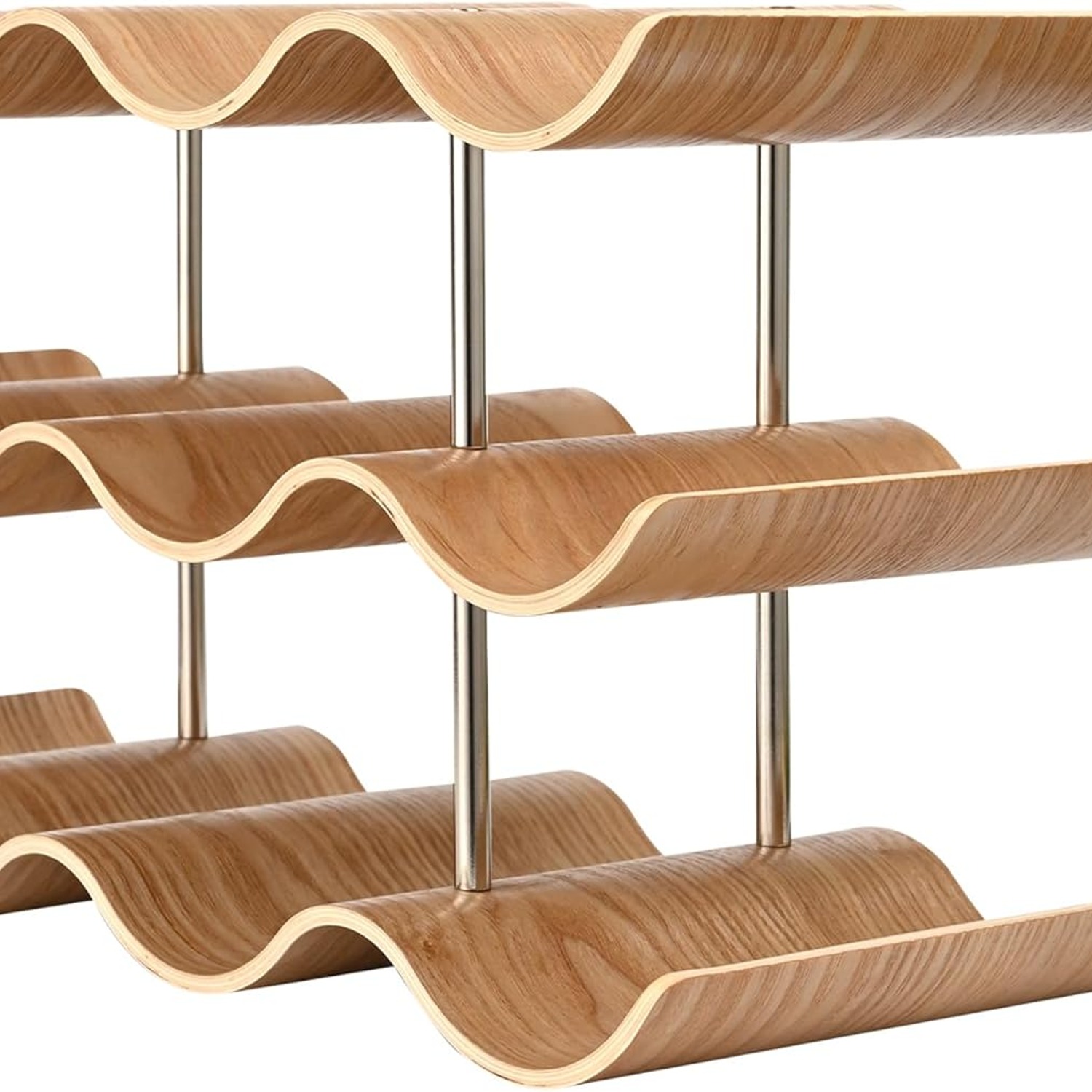
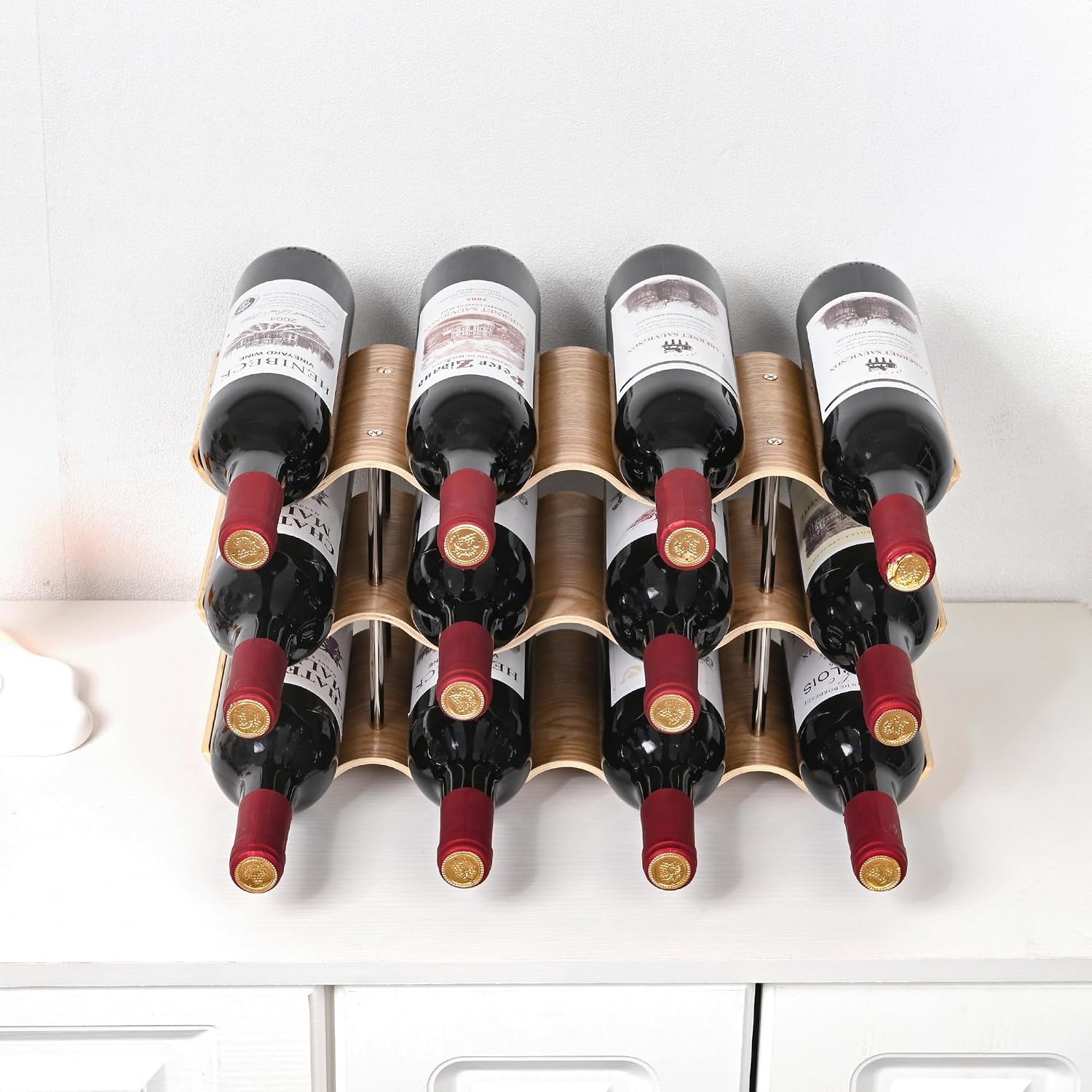
The design here is simple once you see it. Three timber boards are shaped under heat into a series of waves. Stand them one above the other, hold them apart with metal struts, and each wave becomes a cradle. Lay a bottle in and it sits in the dip, body supported, neck pointing out.
Compare that to a flat shelf rack. On a flat shelf, nothing stops a bottle rolling except the bottle next to it. Pull one out and the rest shift. The curved troughs solve that mechanically, no clips, no foam, no straps.
The three tiers on this rack are not identical, which is worth knowing. The lower two tiers carry eight slots sized for ordinary 750ml bottles. The top tier has four wider slots meant for oversized bottles, the heavy Champagne shapes and the thick-shouldered sparkling bottles that refuse to sit anywhere else. Twelve bottles total.
The frame is wood plus metal struts, with a polished finish and a natural wood colour. Empty it weighs about 1kg, so it is easy to move when you want the worktop back.
Does it fit? The measurements that matter
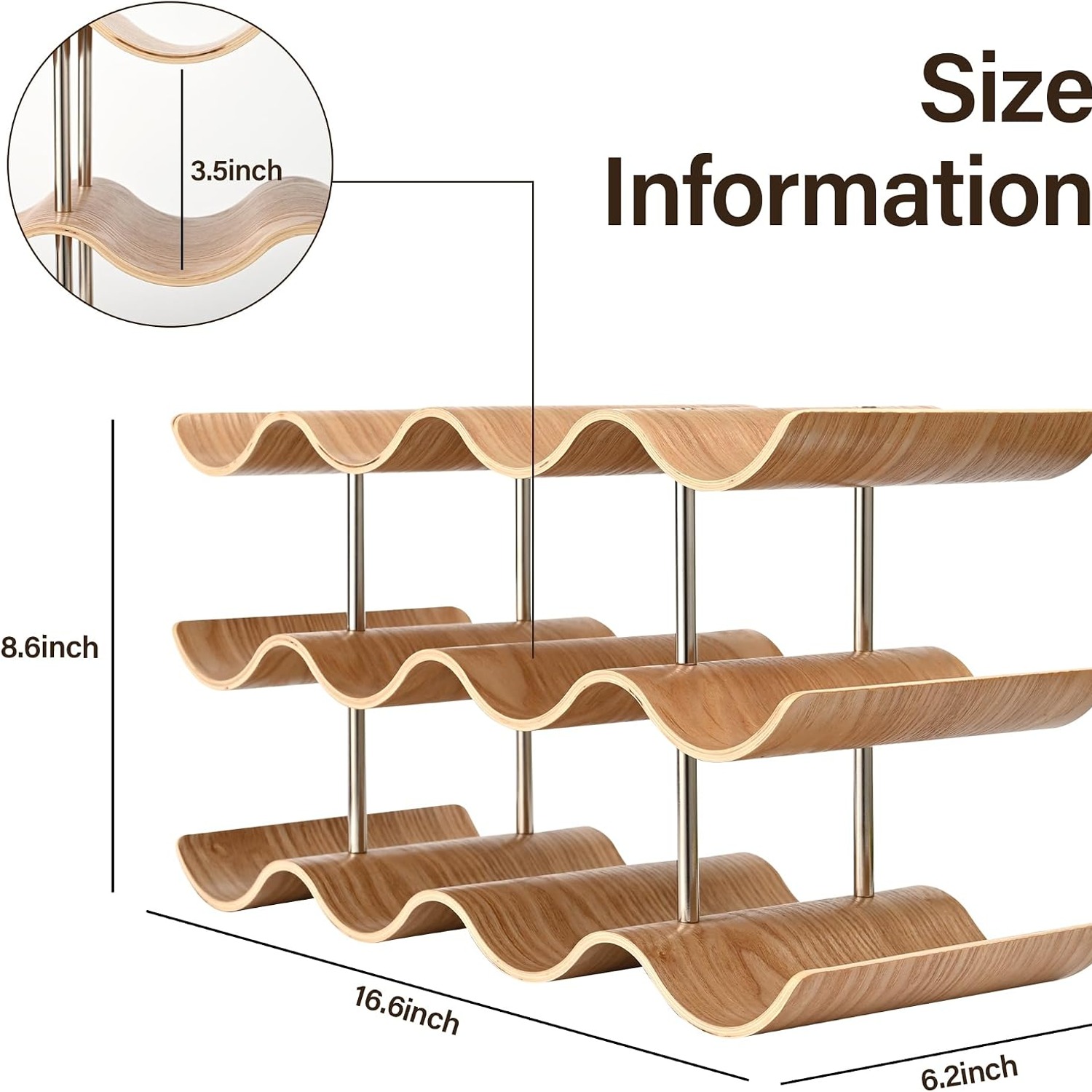
The rack is 42.2cm wide, 15.7cm deep and 21.8cm high.
Three numbers to check against your space.
Width first. Measure the clear run of worktop you can give up. Forty-two centimetres is roughly the width of a small microwave, so it is modest, but kitchens are tight and it is worth putting a tape measure down rather than guessing.
Then height. If you are putting it under an overhead cupboard, you need the 21.8cm plus a little clearance to lift bottles in and out of the top tier. Inside a cabinet, the same rule applies. People who buy the best 12 bottle wine rack for their budget and then find it does not clear the shelf above are usually the ones who skipped this step.
Depth is the easy one. At 15.7cm it will sit on most worktops without poking into walking space, and bottle necks do not extend much past the timber.
Who this suits, and who it does not
This is a good match if you keep a working collection rather than an investment cellar. People who buy a mixed half dozen, drink through it over a month or two, and want it all in one visible place. It also suits renters, since nothing is fixed to a wall and the whole thing disassembles for a move.
It works well on a kitchen worktop, a sideboard, a bar cart shelf, a pantry shelf or inside a deep cupboard. Anywhere flat, level and strong enough. A full load of twelve bottles is around 15kg, which no normal worktop will mind, but a flimsy shelf might.
It is not the right choice if you are ageing serious bottles. A kitchen gets warm, and it gets light. Both are hard on wine over years. For that you want a cool, dark, stable spot, ideally a temperature controlled unit. Use a countertop rack for the bottles you will open soon and keep the long term stock somewhere else.
It is also not for very large format bottles. Magnums and oversized novelty shapes are outside what the twelve slots are designed to take.
Choosing between rack types
A few comparisons that help.
Wood versus metal. Metal racks are usually cheaper and thinner, but bare metal can mark labels and they tend to look industrial. Timber is warmer, kinder on glass, and sits better in a domestic kitchen. The tradeoff is that wood does not love steam, so position matters.
Horizontal versus vertical storage. Bottles lying down keep corks wet, which stops them drying and letting air in. That matters for anything you hold more than a few months. Screwcap bottles do not care. A tiered rack like this stores horizontally by default, so it covers both.
Freestanding versus wall mounted. A wall rack frees the worktop entirely, but you are drilling into someone's wall and committing to that spot forever. A freestanding kitchen worktop wine rack moves with you. For most people, especially renters, freestanding wins.
Capacity. Be honest about how much wine is actually in the house at once. A twelve bottle rack that is half full looks fine. A six bottle rack with four bottles stacked on top of it does not.
Putting it together
Assembly is short. The box contains three wavy boards, eight double-pass nut struts, eight Phillips screws and a printed instruction sheet. You supply the Phillips screwdriver.
Work on a soft surface, a towel or the flattened box, so the timber does not pick up scratches. Line the struts up with the holes before you drive anything, start all the screws loosely, then tighten them once everything is square. If you fully tighten one corner first, the last holes never quite line up. That is true of almost all flat pack.
Hand tighten rather than reaching for a drill. Over-driving a screw into timber strips the hole, and then that corner never holds properly again.
Looking after it
Care is genuinely simple. Wipe the timber with a dry cloth, or a barely damp one if something sticky has dripped on it, then dry it straight away. Do not soak it, and keep solvents and scouring pads away from the finish.
Position matters more than cleaning. Keep it clear of the kettle, the dishwasher vent and the sink, because repeated steam is what damages timber over time. Direct afternoon sun is worth avoiding too, both for the wood and for the wine inside it.
Every few months, run the screwdriver over the eight screws. Things loosen with handling, and a snug frame is a stable frame. If you ever move house, take the three boards apart and bag the struts and screws together.
Loading it sensibly
Heaviest bottles go on the bottom tier. That keeps the centre of gravity low and the rack planted. Save the four wide slots on top for the sparkling and the oversized shapes, which is what they are there for.
If you want a rough system, put the bottles you will open soonest at one end and work backwards. It sounds fussy but it stops the same two bottles sitting at the back for a year. A wine bottle organiser only helps if you can read it at a glance.
Leave a bit of clearance in front so you are not reaching over the toaster to get a bottle out.
The short version
This is a compact, three tier wooden rack that holds twelve bottles, eight standard and four oversized, in curved timber troughs that stop them rolling. It is 42.2cm wide, 15.7cm deep, 21.8cm high, weighs 1kg empty, and goes together in minutes with a Phillips screwdriver.
Buy it if you want your everyday wine visible, tidy and off the worktop surface, and you are working with limited space. Measure your spot first, keep it away from steam and direct sun, and wipe it with a dry cloth now and then.
If you are cellaring bottles for years, this is not the answer, and we would rather say so. For the wine that is actually in rotation in your house right now, it does the job neatly.