



The complete guide
How to Choose and Install a Wall Mounted Wine Bottle Rack
The problem with storing wine on the worktop
Wine has a habit of ending up wherever there is space. A couple of bottles by the kettle, one behind the fruit bowl, a few more lying on their side in the bottom of a cupboard where the labels face the wrong way. None of it is storage, exactly. It is just stuff that has not been put away, and it quietly eats the worktop space you need for cooking.
The other problem is that you stop seeing what you own. A bottle at the back of a low cupboard might sit there for two years. You buy something similar because you forgot it was there, and now you have three of the same red and nothing to go with fish.
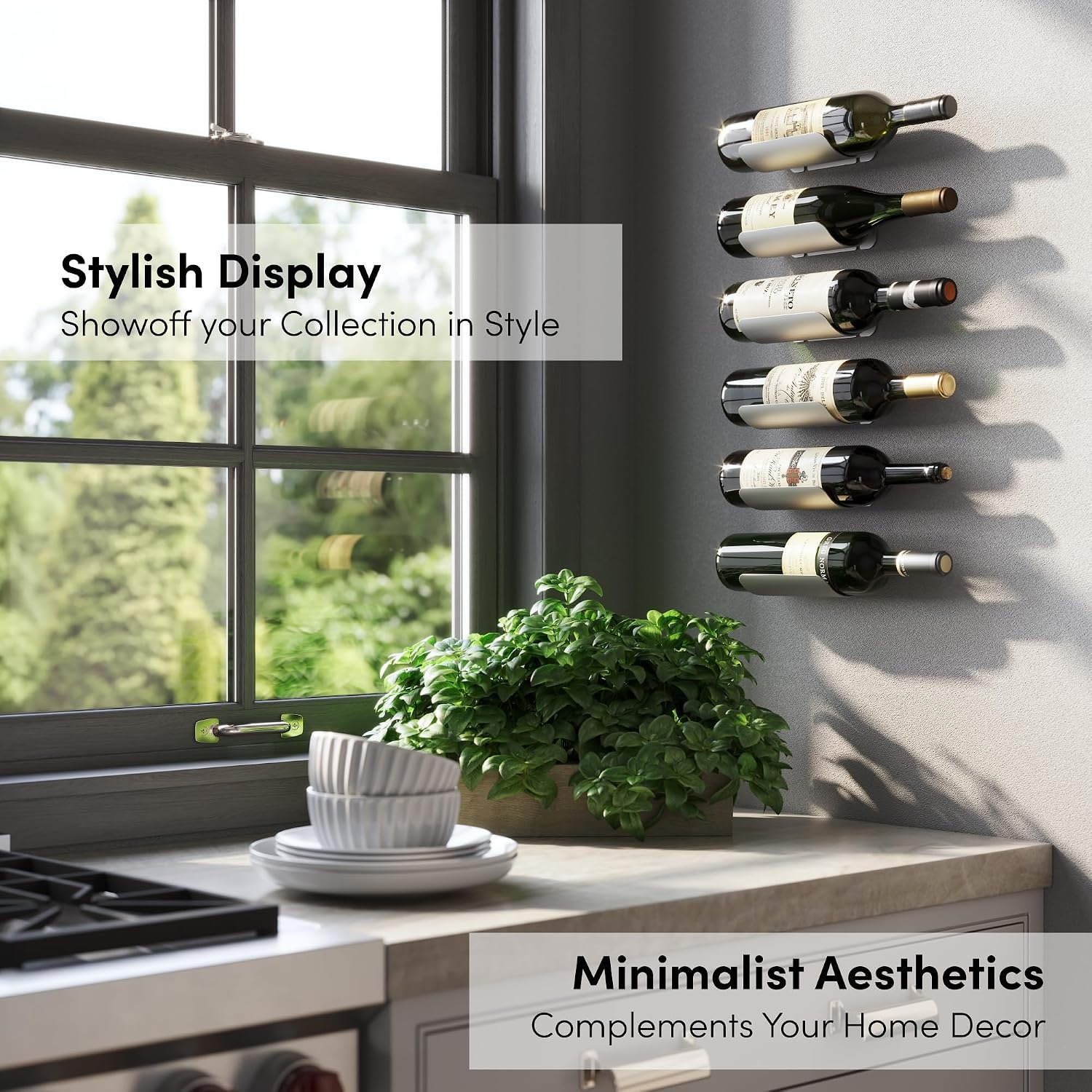
A wall mounted wine rack fixes both issues at once. It moves the bottles off horizontal surfaces and puts them somewhere you look every day. Suddenly your wine is visible, countable and easy to grab.
How this style of rack works
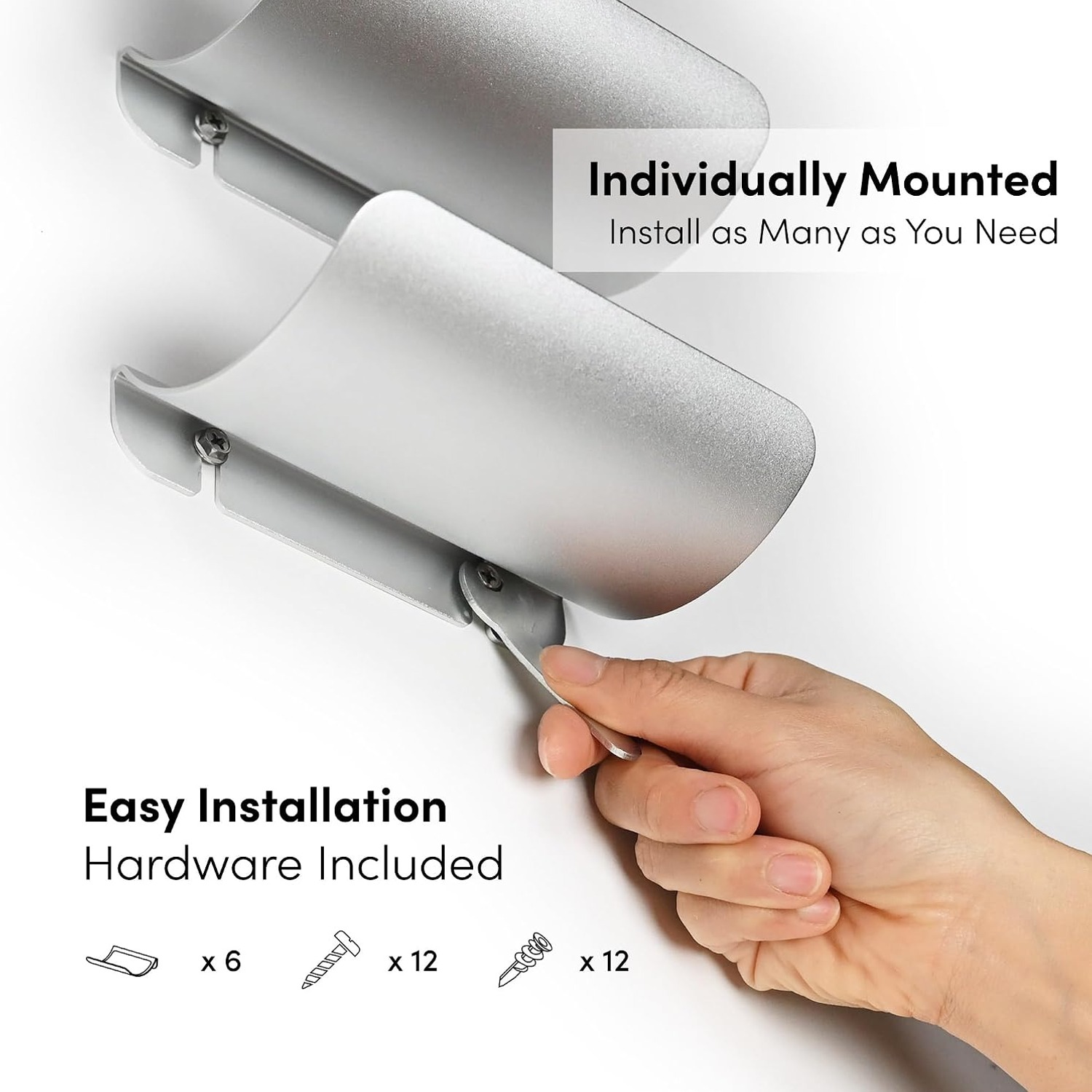
This set takes the simplest possible approach. Instead of one big frame, you get six separate holders. Each one screws to the wall and cradles a single bottle in a shallow semicircular rest. The bottle lies roughly horizontal, which is how corked wine is usually stored anyway, since it keeps the cork damp and swollen against the neck of the bottle.
The holders are aluminium with an anodised finish. Anodising is an electrochemical process that thickens and hardens the natural oxide layer on the surface of the metal. The practical effect is a finish that is part of the aluminium rather than a layer of paint sitting on top. It does not peel, and it copes with being handled.
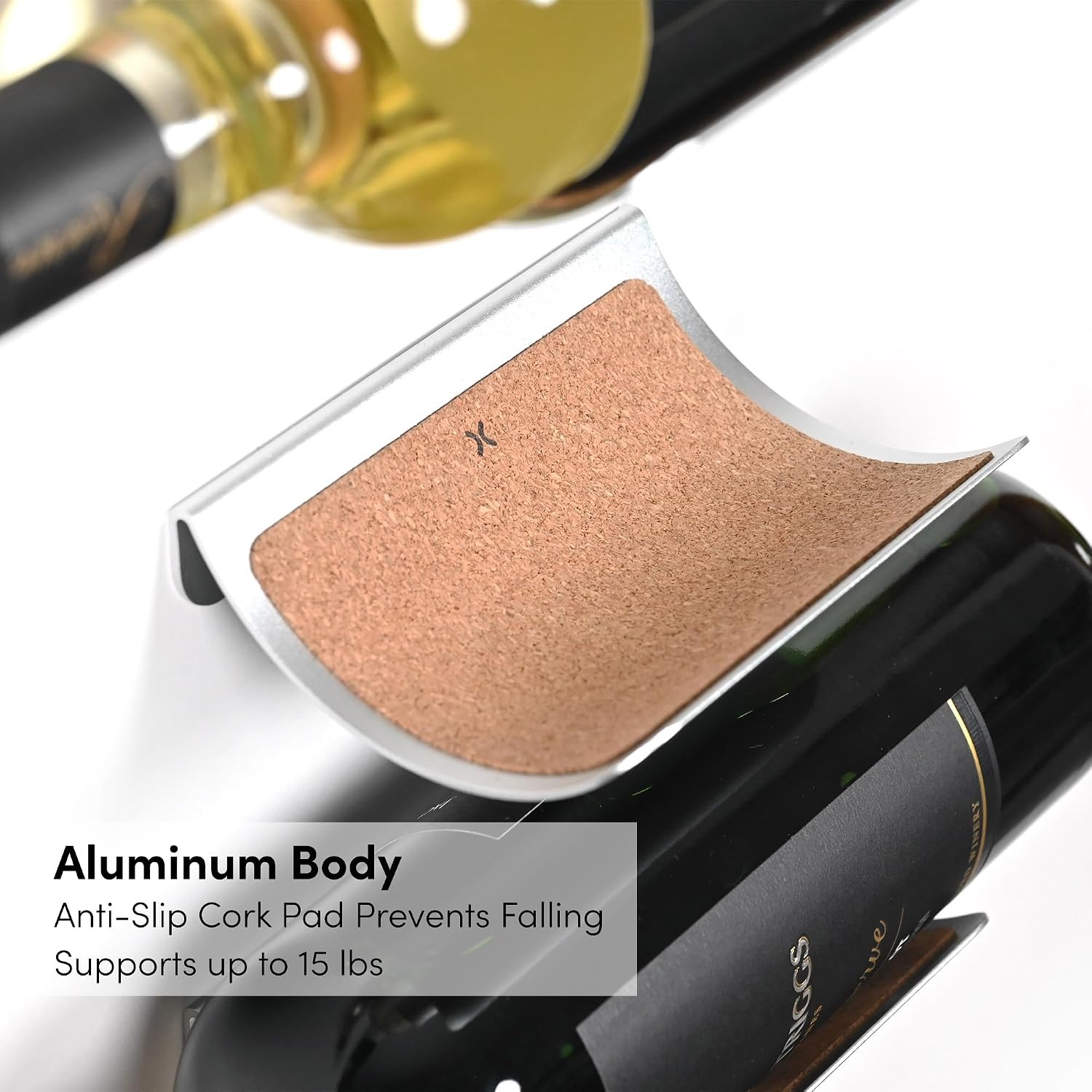
Inside each cradle there is a non-slip cork pad. This does two jobs. It adds friction so the bottle does not want to slide, and it keeps glass away from metal so labels and the bottle surface stay intact. Cork is a sensible choice here because it is slightly compressible, so it adapts to small differences in bottle diameter.
Each unit measures 9.1 cm deep, 12.7 cm wide and 2.8 cm high. That is small. When the rack is loaded, you mostly see the bottles, not the hardware, which is the point of a minimalist wine rack.
Who this suits
If you keep somewhere between four and ten bottles at a time and you want them on display, this format works well. Six holders covers an everyday collection with a bit of breathing room.
It also suits people with awkward walls. Because the holders mount individually, you are not trying to fit a 60 cm frame into a 45 cm gap. You can put two beside a window, four along a splashback, or run a single column down a narrow strip of plaster between two cabinets.
Renters sometimes worry about the holes. Six small screw holes in plasterboard are a ten minute repair with filler and a dab of paint. Compare that with a full wine display rack bolted into studs and the difference is obvious.
It is less suited to serious cellaring. If you are laying down cases for years, you want a cool dark space with stable temperature, not a kitchen wall. Think of this as the shelf for what you are drinking now, not long term storage.
Choosing your layout before you drill
The best part of a modular system is also the part most people rush. Spend twenty minutes deciding on your layout and the finished job looks deliberate instead of accidental.
Start by laying the bottles on the floor in the arrangement you are considering. Measure the gap between bottle centres that feels right to you. You want enough clearance to lift one out without clipping its neighbour, and enough visual space that the row does not look crowded.
A few layouts that tend to work:
A single horizontal row at roughly chest height reads calm and tidy. It suits a splashback, a hallway, or the wall above a sideboard.
A vertical column uses dead space beside a doorway, fridge or pantry. Six bottles stacked upwards makes a surprising amount of impact in a narrow slot.
A staggered grid of two columns of three, offset slightly, turns the bottles into something closer to art. This one needs careful measuring, so mark everything out and check with a level before any drilling happens.
A split set is perfectly valid too. Three in the kitchen, three by the bar cart or in the dining room. Nothing forces the six to live together.
Whatever you choose, mark all positions in pencil first, step back, and look at it from where you normally stand in the room. Lines that look level on a ladder often do not from the sofa.
Mounting it properly
Drywall anchors, screws and a wrench come in the box, along with instructions, so plasterboard walls are handled out of the pack. Drill the pilot hole, tap the anchor in flush, then drive the screw and tighten with the supplied wrench.
If you can land a screw in a timber stud, do it. A stud fixing is stronger than any anchor and it costs nothing extra. Use a stud finder, or tap along the wall and listen for the change from hollow to solid.
Brick, concrete and tile need different hardware. You will want a masonry bit and plugs rated for the wall type, which are not supplied. Tile also needs care at the drilling stage. Start slow, use masking tape over the spot to stop the bit wandering, and avoid hammer mode until you are through the glaze and into the substrate behind.
Check the fixing is firm before you trust it with a full bottle. Give each holder a gentle pull once it is in. A little flex in plasterboard is normal, but movement at the anchor itself is not.
Living with it
A wall mounted bottle holder needs almost no maintenance, but a couple of habits keep it looking sharp.
Wipe the aluminium with a soft damp cloth whenever you notice fingerprints or kitchen film, then dry it so water does not mark the surface. Avoid scouring pads, cream cleansers and solvent based sprays. These can dull an anodised finish and once the sheen is gone it does not come back.
Keep the cork pad dry. Brush dust off rather than scrubbing it. Cork is resilient but it does not love being soaked repeatedly.
Every few months, give each holder a quick check. Walls move slightly with temperature and humidity, and screws occasionally need a half turn. It takes a minute with the supplied wrench.
One sensible rule, keep the rack out of direct sunlight if you can. Strong light is not kind to wine, and a row of bottles roasting in an afternoon sunbeam will not thank you for it. A shaded wall, an internal hallway or a spot away from the oven all work better.
A note on bottle shapes
The design is built around cylindrical bottles, which covers most wine, champagne and spirits. Bordeaux and Burgundy shapes both work, though Burgundy bottles are wider at the shoulder, so factor that into your spacing if your collection leans that way.
Plenty of people use this kind of single bottle wine holder for olive oil and vinegar on a kitchen wall, which is a neat use of the same hardware. Square gin bottles and heavily embossed novelty shapes are the exception. If a bottle is not round where it would meet the cradle, it will not sit right.
The short version
This is six separate aluminium holders, anodised silver, each cradling one bottle on a non-slip cork pad. Anchors, screws, a wrench and instructions are included. Each unit is 9.1 by 12.7 by 2.8 cm and the set weighs 68 grams.
The value is in the flexibility. Because every holder mounts on its own, you decide the layout instead of the rack deciding it for you. Plan the spacing carefully, fix into something solid, and you get your worktop back while your wine finally becomes something worth looking at.