
The complete guide
How to Choose and Fit an Under-Cabinet Wine Glass Rack
The problem with storing wine glasses
Wine glasses are the most awkward thing in a kitchen cupboard. They are tall, so they eat vertical space that nothing else can use. They are fragile, so they cannot be stacked. And they are wide at the bowl but narrow at the foot, which means they never pack neatly next to each other. A set of six good glasses can swallow an entire shelf that could otherwise hold plates, bowls and a food processor.
Then there is the dust. Glasses stored upright collect whatever drifts through the kitchen, straight into the bowl. Glasses stored upside down on a shelf sit with the rim pressed against the timber, which traps a stale smell and leaves a ring. Either way, most people end up rinsing a glass before they use it.
An under-cabinet rack fixes both problems at once. It moves the glasses out of the cupboard, hangs them bowl-down so dust lands on the foot, and lets air move around them. The space it uses, the few centimetres between the bottom of a cabinet and the worktop, was doing nothing before.
How a hanging stemware rack works
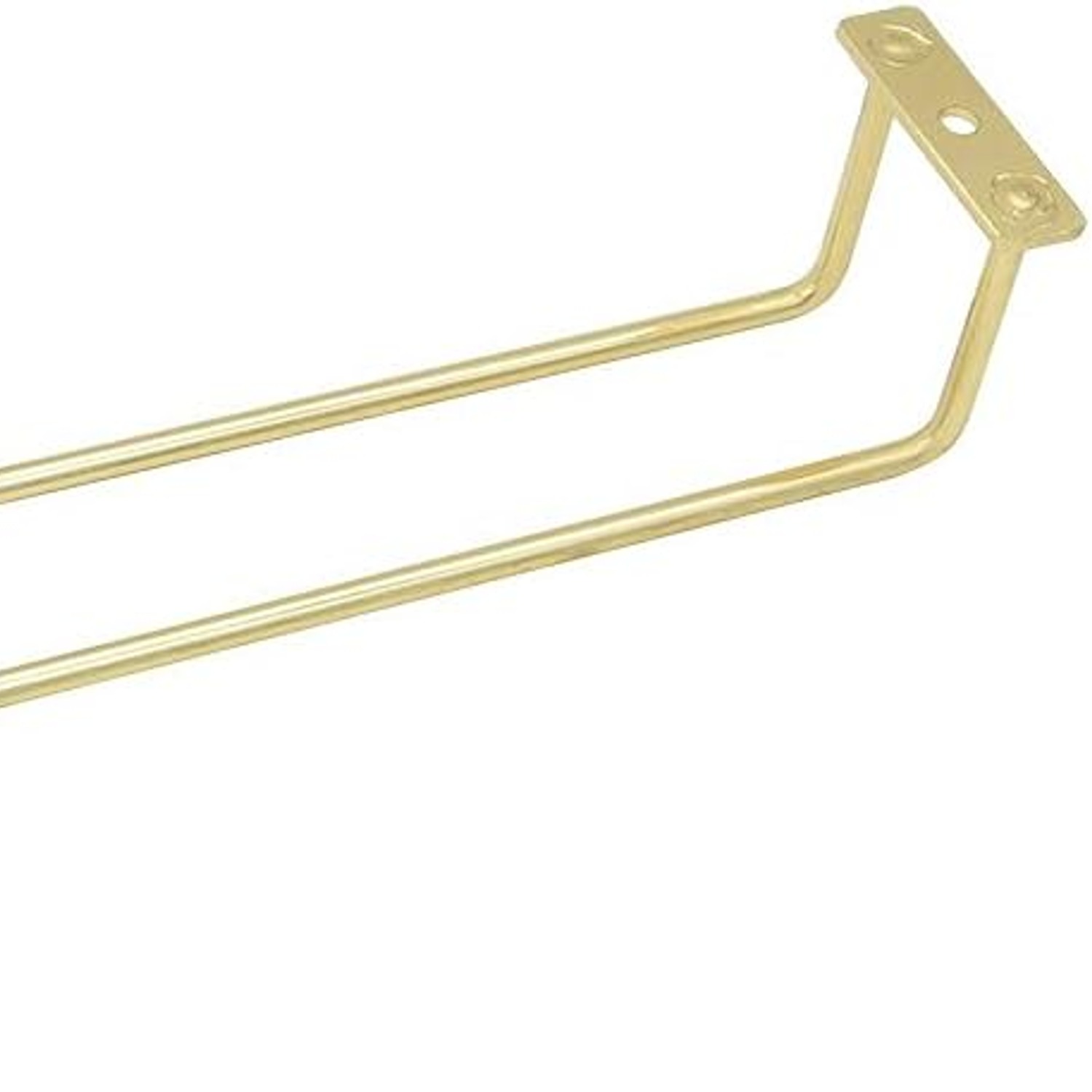
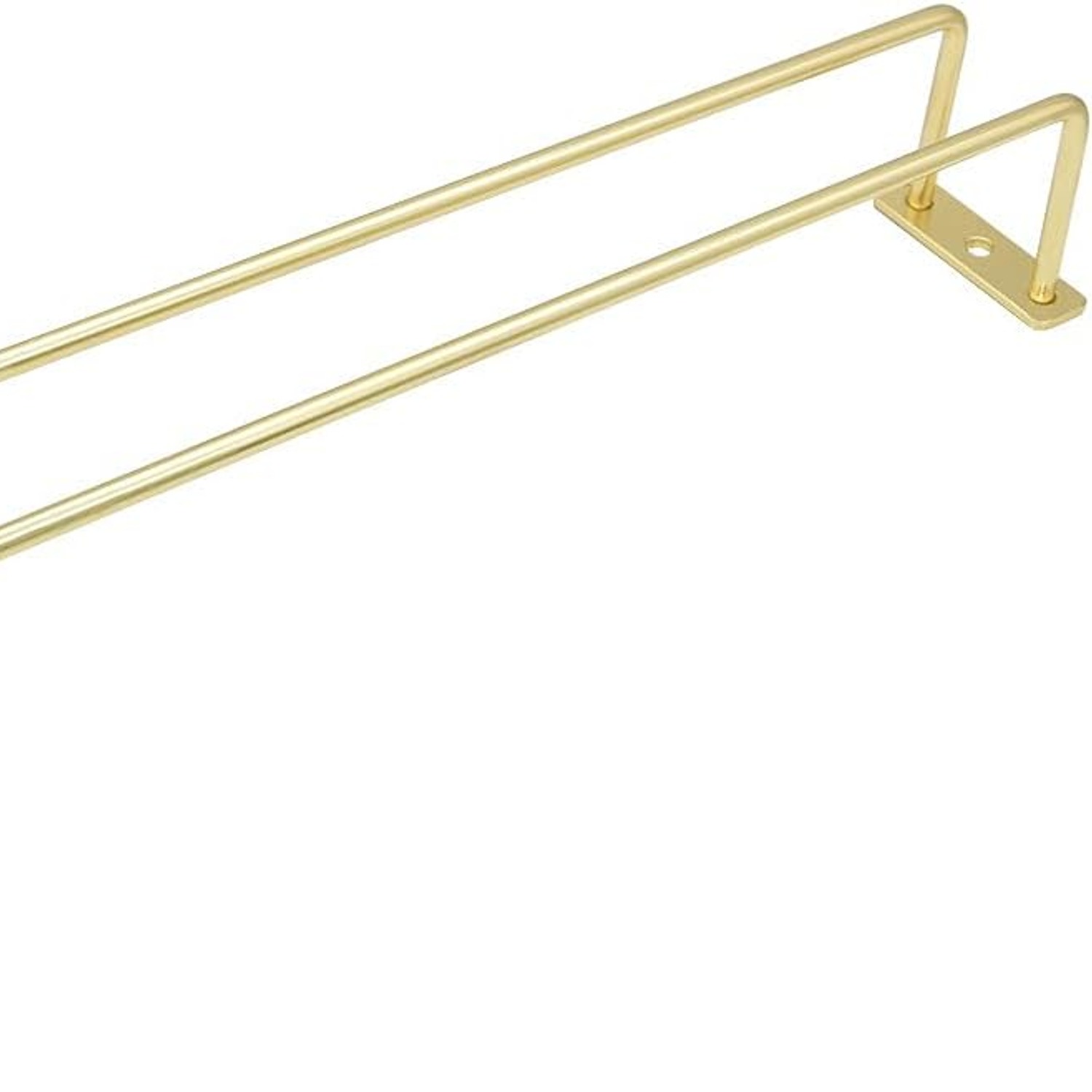
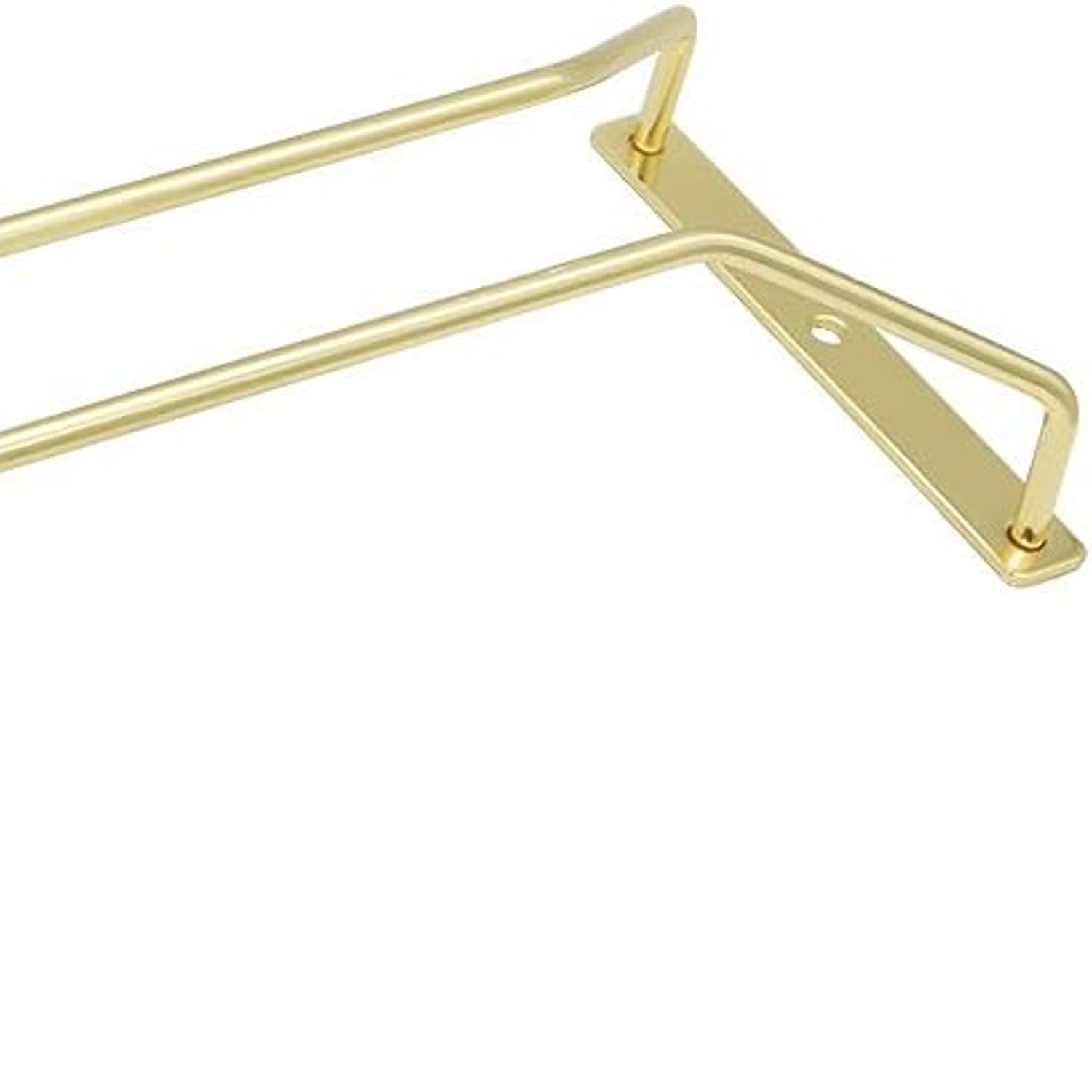
The mechanism is simple. A rail with one or more open channels screws to the underside of a cabinet or shelf. You tilt a glass, slide its stem into the channel from the open end, and let the foot rest against the rail. The bowl hangs clear below. Gravity does the rest.
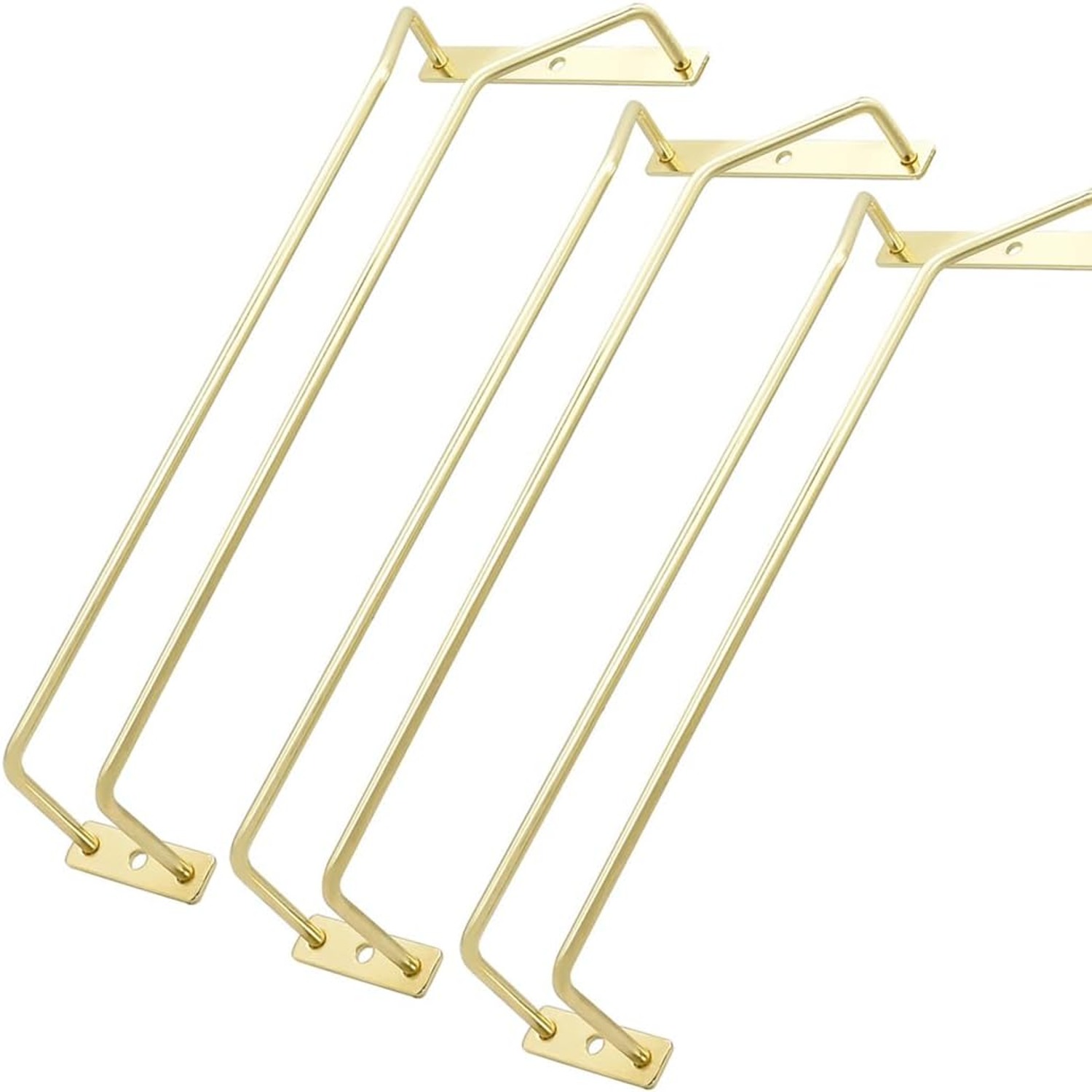
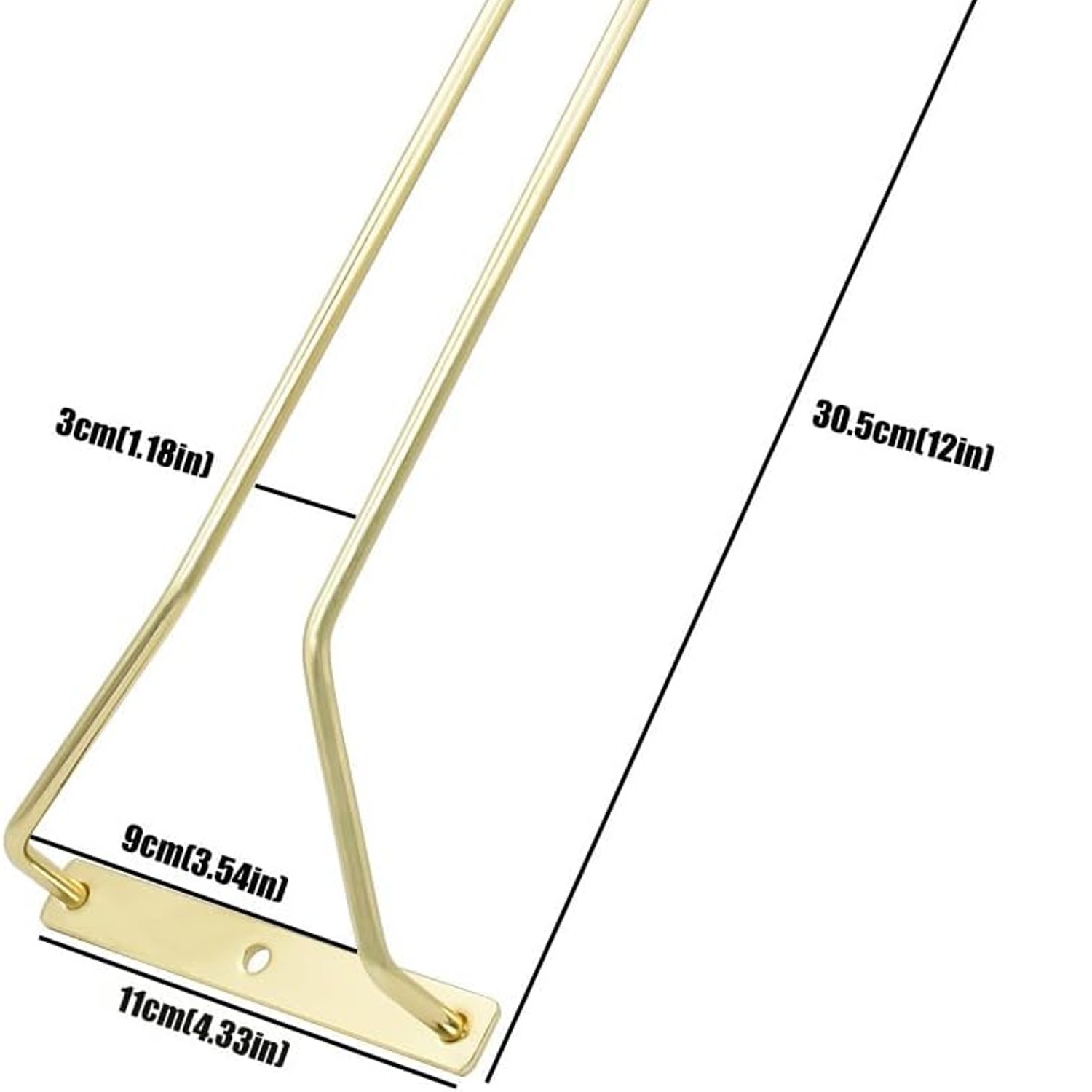
This gold wine glass rack 30cm set uses three separate single-row rails. Each rail is 30.5cm deep, 10.8cm wide and 5.1cm high. The depth is the important number, because that is the direction the glasses load in. Thirty centimetres of channel takes around three to four glasses, depending on how wide their bases are. Slim flutes pack tighter. Wide burgundy bowls need more room.
Having three separate rails instead of one wide unit is worth noting. You can run them parallel across a wide cabinet, line them up end to end for a long single row of roughly 91cm, or split them between two spots in the house. If your cabinet has an obstruction, a rangehood duct or a wiring run, you can simply skip that section and fit two rails instead of three.
The build is alloy steel with a brushed gold finish. Steel matters because a loaded rail needs to stay rigid. A flexible rail lets glasses rock and knock together. The brushed finish matters for a different reason: this is a piece of hardware at eye level that people touch constantly, and brushed metal hides fingerprints far better than a mirror polish does.
Who this suits
If you own more than four wine glasses and your cupboards are full, this is an easy win. It also suits anyone building a small bar area in a dining room, where hanging glassware does half the decorating work on its own.
It is a good fit for people with open shelving, where a run of stemware underneath looks deliberate rather than cluttered. It works in a kitchen with an island or a peninsula, where the overhang above the worktop is usually wasted. And it suits renters who are allowed small fixings, since the only trace left behind is a couple of screw holes that fill in a minute.
It is less suitable in a few situations. If your cabinet bases are thin particle board or veneer over hollow panel, screws will not hold reliably under the weight of full glasses. If you have very low clearance between the cabinet and the worktop, hanging glasses will get in the way of the workspace. And if small children can reach the glasses, hanging them within arm's length is not the best plan.
Measuring before you buy
Three measurements decide whether this works in your kitchen.
First, the clearance. Measure from the underside of the cabinet down to the worktop. Then measure your tallest wine glass from foot to rim. Add the 5.1cm height of the rail to the glass height and compare. You want a comfortable gap left over, not a glass that grazes the worktop.
Second, the depth of the cabinet base. The rail is 30.5cm deep, so the mounting surface needs to be at least that from front to back. Most standard upper cabinets are around 30 to 35cm deep, so it usually works, but check rather than assume. If your cabinet is shallower, the rail will overhang at the front, which looks untidy and reduces the usable channel.
Third, the width you have available. Hold two of your widest glasses side by side at the stem and measure across. That tells you the minimum spacing between parallel rails. Multiply by three to see whether all three rails fit in the space you have in mind.
Fitting it properly
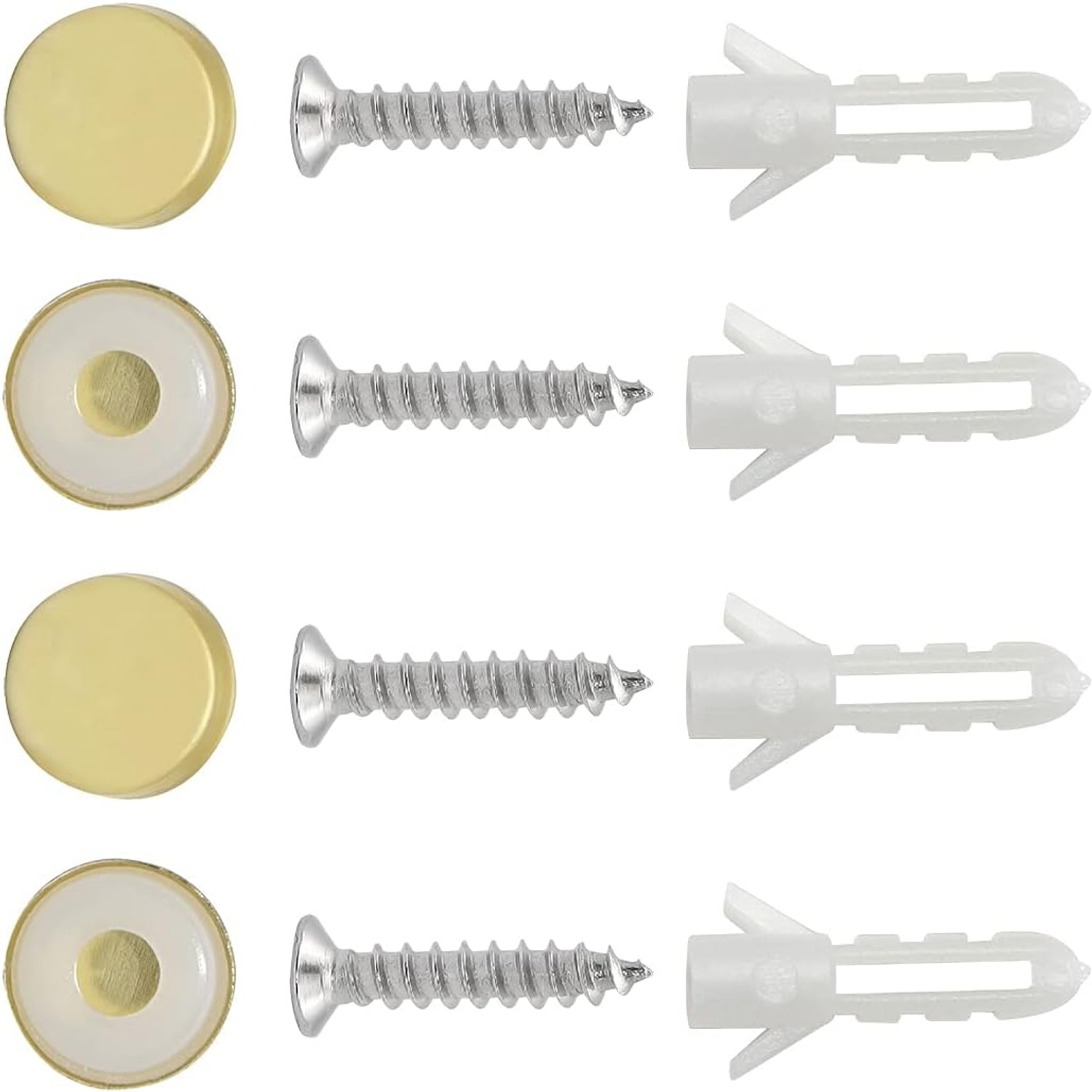
The install needs a screwdriver, the six supplied screws, a pencil and ideally a short spirit level. Nothing exotic.
Start by holding a rail in position under the cabinet and marking the screw points with a pencil. Check the marks are level before you drive anything. A rail that sits even slightly off true shows immediately once glasses hang from it, because the feet all tilt the same way.
If the cabinet timber is hard, a small pilot hole makes driving the screws much easier and reduces the chance of splitting the wood. This is optional but worth the extra minute. Drive the screws until the rail sits flush and firm, then give it a gentle tug downwards to confirm it has bitten properly.
Fit the first rail, then use it as the reference for the other two. Measure the gap at both ends so the spacing stays parallel. Load the rack gradually rather than filling it in one go, and check after a day or two that nothing has loosened.
One more point: get the first rail right and the rest is easy. Most install problems trace back to a crooked first rail that everything else was matched to.
Looking after it
Maintenance is minimal. Wipe the rails with a soft damp cloth and dry them straight away so water does not sit on the finish. Avoid scouring pads, abrasive powders and bleach-based sprays, all of which will dull a brushed surface permanently.
Every few months, run a screwdriver over the mounting screws and snug up anything that has worked loose. Timber moves with humidity and screws can back out a fraction over a year. Thirty seconds of checking prevents a much worse morning.
Keep the rack indoors. It is rated for indoor use, and steady humidity or salt air will take a toll on any finished metal over time.
As for the glasses themselves, hanging them bowl-down keeps them cleaner than any cupboard will, but open storage is still open storage. If a glass has hung untouched for a month, a quick rinse before pouring is sensible.
The short version
This is a three-pack of brushed gold rails, each 30.5cm deep, that screw to the underside of a cabinet and hold roughly three to four wine glasses apiece by the stem. Alloy steel construction, 454 grams for the set, six screws included, screwdriver install, indoor use.
Before you order, measure three things: the clearance between cabinet and worktop, the depth of the cabinet base, and the width of your widest glass. If the clearance beats your tallest glass plus 5.1cm, and the base is solid timber at least 30.5cm deep, you are good.
What you get back is a shelf you did not know you had, glasses that stay cleaner, and a small gold detail that makes a kitchen look more considered than it did yesterday.