


The complete guide
Choosing a 20 Bottle Timber Wine Rack That Actually Fits Your Home
The problem with keeping wine "somewhere"
Wine has a way of spreading out. One bottle sits on the worktop because you might open it tonight. Three more stay in the box they came in, shoved against the pantry wall. A couple stand upright in a cupboard behind the pasta, and nobody remembers they are there until a stocktake happens during a house move.
None of that is a disaster. But it does two annoying things. It eats worktop space you actually need for cooking, and it hides what you own. Hidden wine gets forgotten, and forgotten wine either sits too long or gets opened on a Tuesday because it was the only bottle you could find.
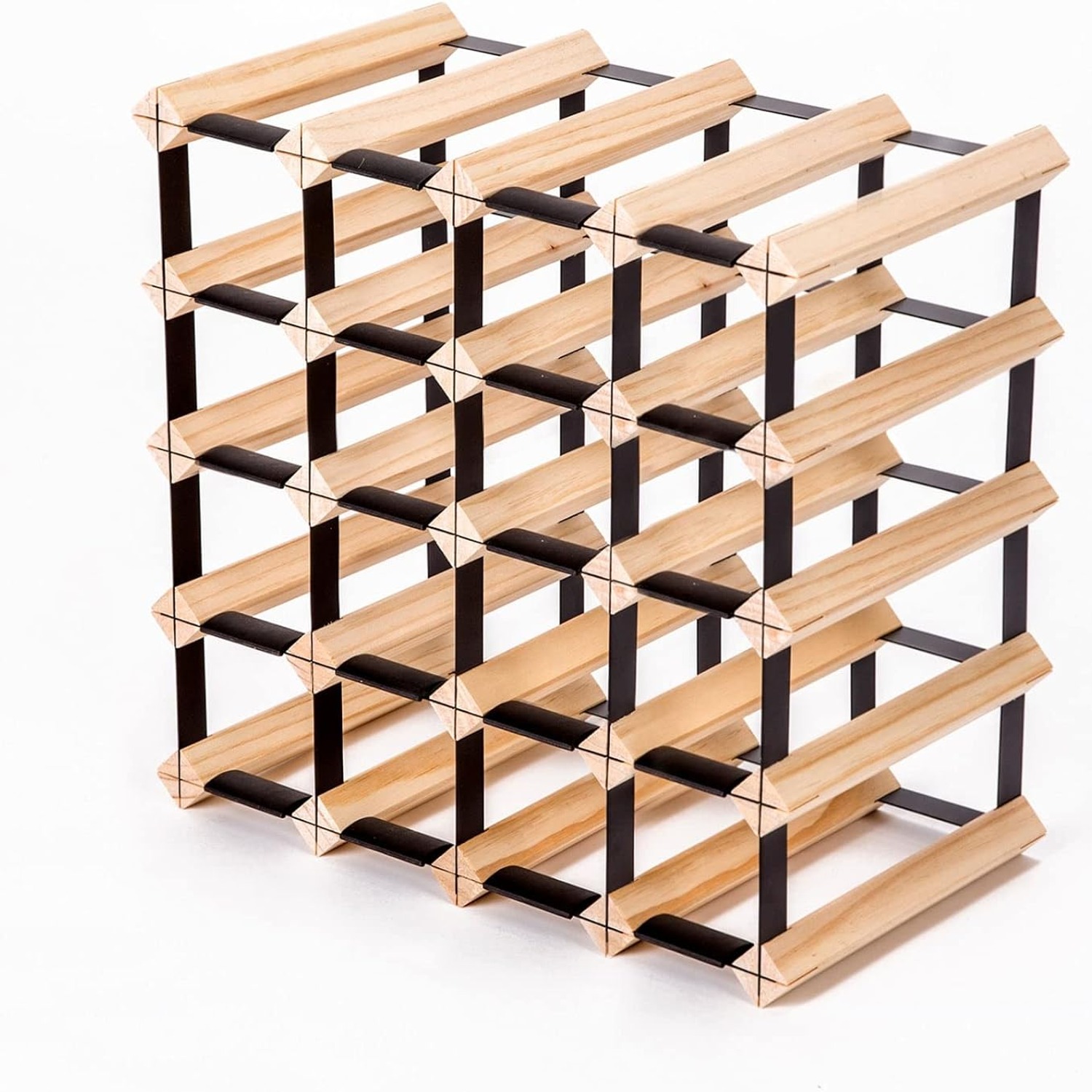
A single rack fixes both problems at once. Twenty bottles, one place, labels facing you. That is the whole idea behind a timber wine rack 20 bottle unit, and it is why this size has stayed popular while fancier wine furniture has come and gone.
How a timber rack works
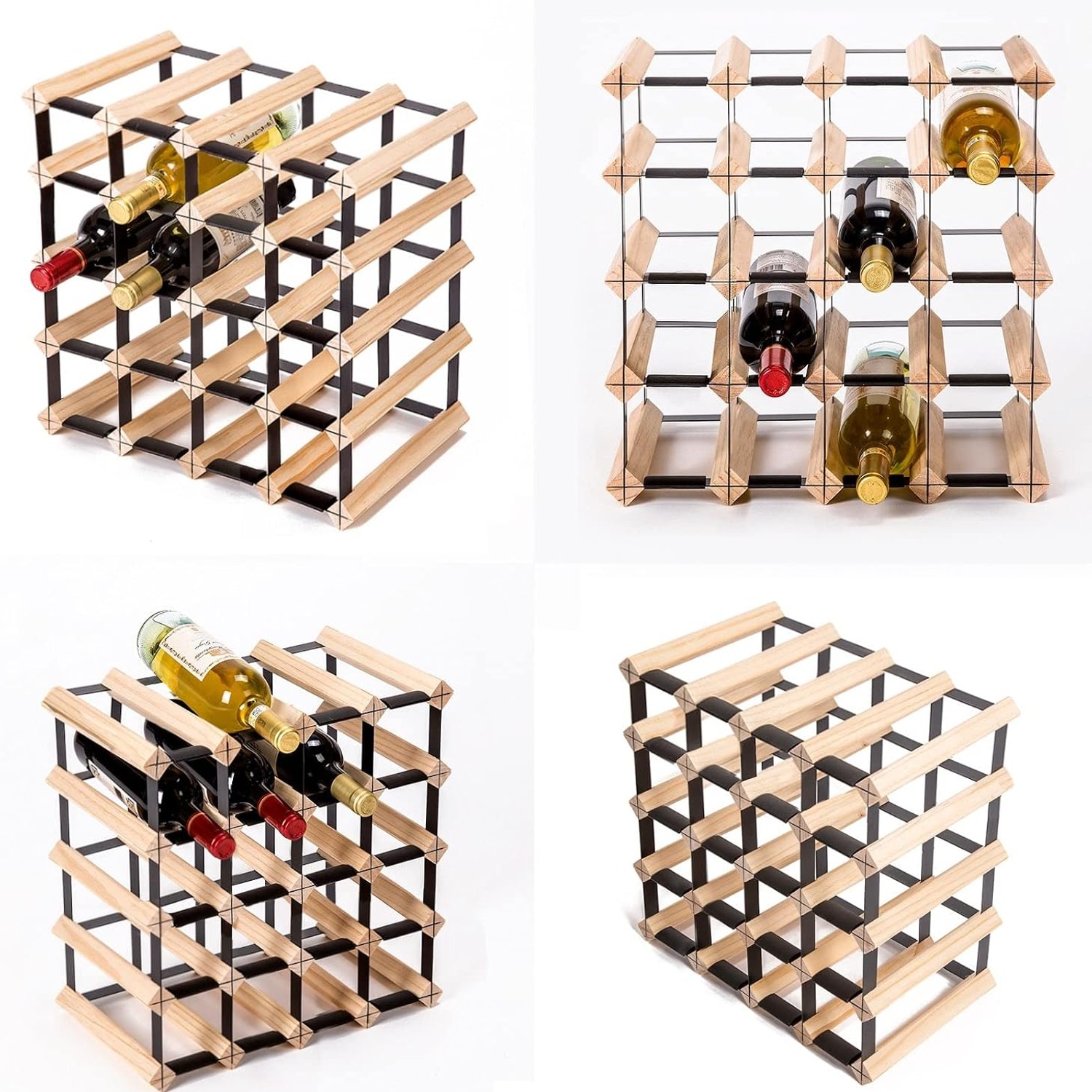
The mechanics are simple, which is the point. The rack holds bottles horizontally in a grid of openings. Each bottle rests on its side, supported along its length rather than balanced on its base.
Lying bottles down matters most for anything sealed with a natural cork. A cork needs to stay slightly damp to hold its seal. Stand a corked bottle upright for months and the cork can dry, shrink and let air creep in. Air is what turns good wine into something you tip down the sink. Horizontal storage keeps the wine in contact with the cork and the seal intact.
For screw caps, none of that applies. But lying bottles flat is still the better habit, because it makes the whole rack readable. You can scan labels in one pass instead of pulling bottles out one at a time.
This particular rack is built from pine in a natural finish, with a square profile the supplier describes as industrial. In real rooms it reads as plain and quiet. It does not shout, which is useful if your kitchen already has a lot going on.
Size is the thing most people get wrong
Here is where orders go sideways. People buy on capacity and ignore footprint, then discover the rack does not fit under the overhead cupboards or sticks out past the edge of the sideboard.
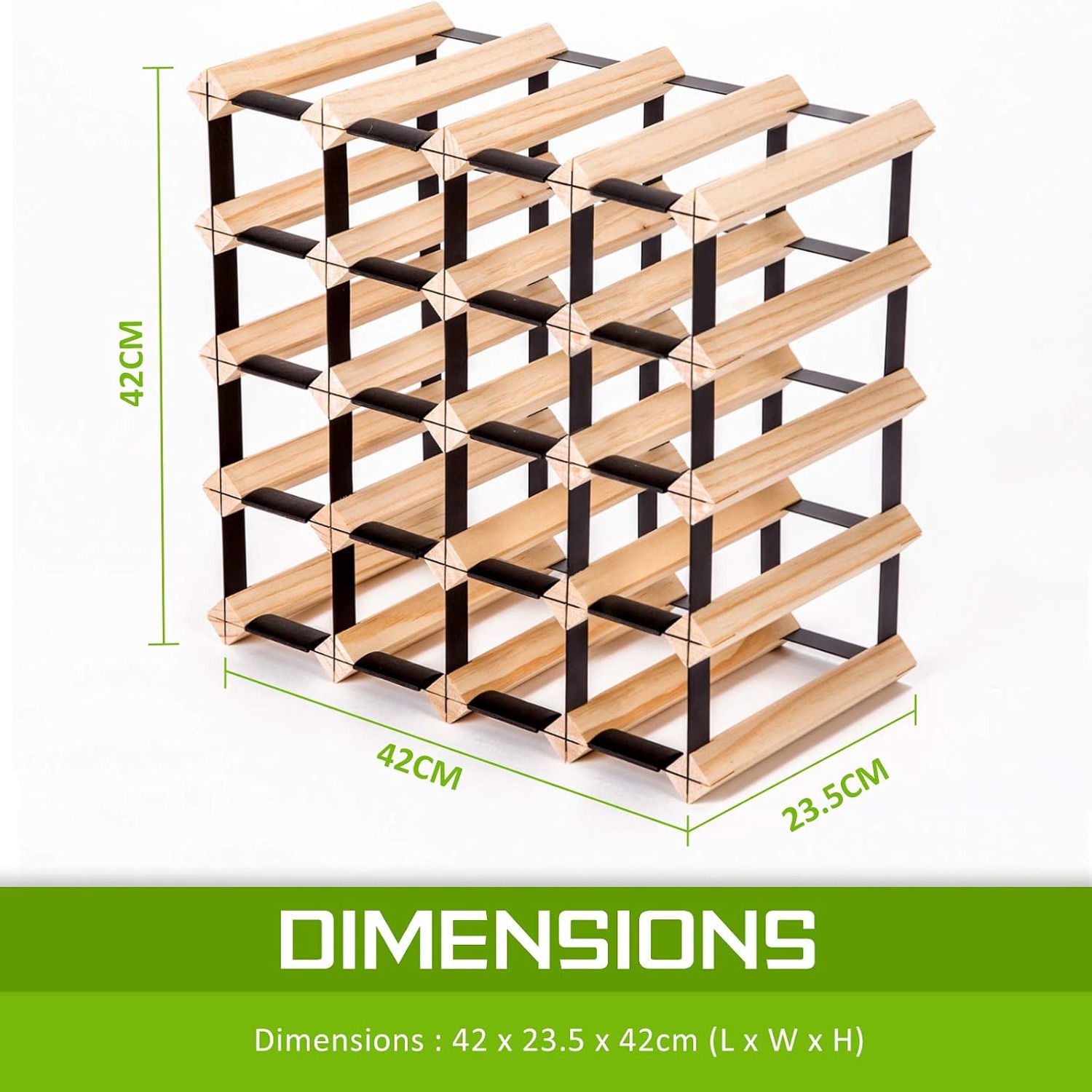
This rack measures 42 cm wide, 23.5 cm deep and 42 cm high. Write those three numbers down before you shop anything else.
The depth figure usually decides it. At 23.5 cm, the rack is shallow enough for most hallway consoles, sideboards and open shelving units, which tend to run 30 to 40 cm deep. A deeper rack would overhang and look wrong. The 42 cm height is the other number to check, especially on a worktop under cupboards, where you often have less clearance than you think.
Take a tape measure to the spot you have in mind. Measure the available width, the depth of the surface, and the vertical clearance above it. If all three numbers beat 42, 23.5 and 42, you are fine.
Who this size suits
Twenty bottles is a working collection, not a cellar. It is the right number if you buy a mixed case now and then, pick up a bottle or two on weekends, and drink what you buy over months rather than decades.
It suits renters and apartment dwellers particularly well, because the footprint is small and the rack weighs 3.6 kg empty. You can move it on your own and it will not dominate a small room.
It suits people setting up a home bar corner, where the rack sits beside glassware and a few spirits. It also works as a gift for someone who likes wine and has clearly never organised it, since a compact rack is useful without being a statement about their taste.
Who it does not suit: serious collectors. If you are holding bottles for years and tracking vintages, you want climate control, not a rack in the kitchen. The rack keeps bottles tidy and correctly positioned, but it cannot control temperature or humidity.
Choosing between racks
A few things separate a rack you keep from one you replace in a year.
Material. Timber racks like this one feel warmer than wire or metal and tend to blend into furniture rather than standing out. Pine is light, which keeps the rack easy to shift. Metal racks are usually slimmer but can look clinical in a kitchen.
Capacity versus growth. Buying far more capacity than you need often backfires, because a half-empty rack looks sad and takes up space for nothing. Twenty is a sensible middle. If your collection grows, adding a second compact unit beside the first is easier and cheaper than replacing a big cabinet.
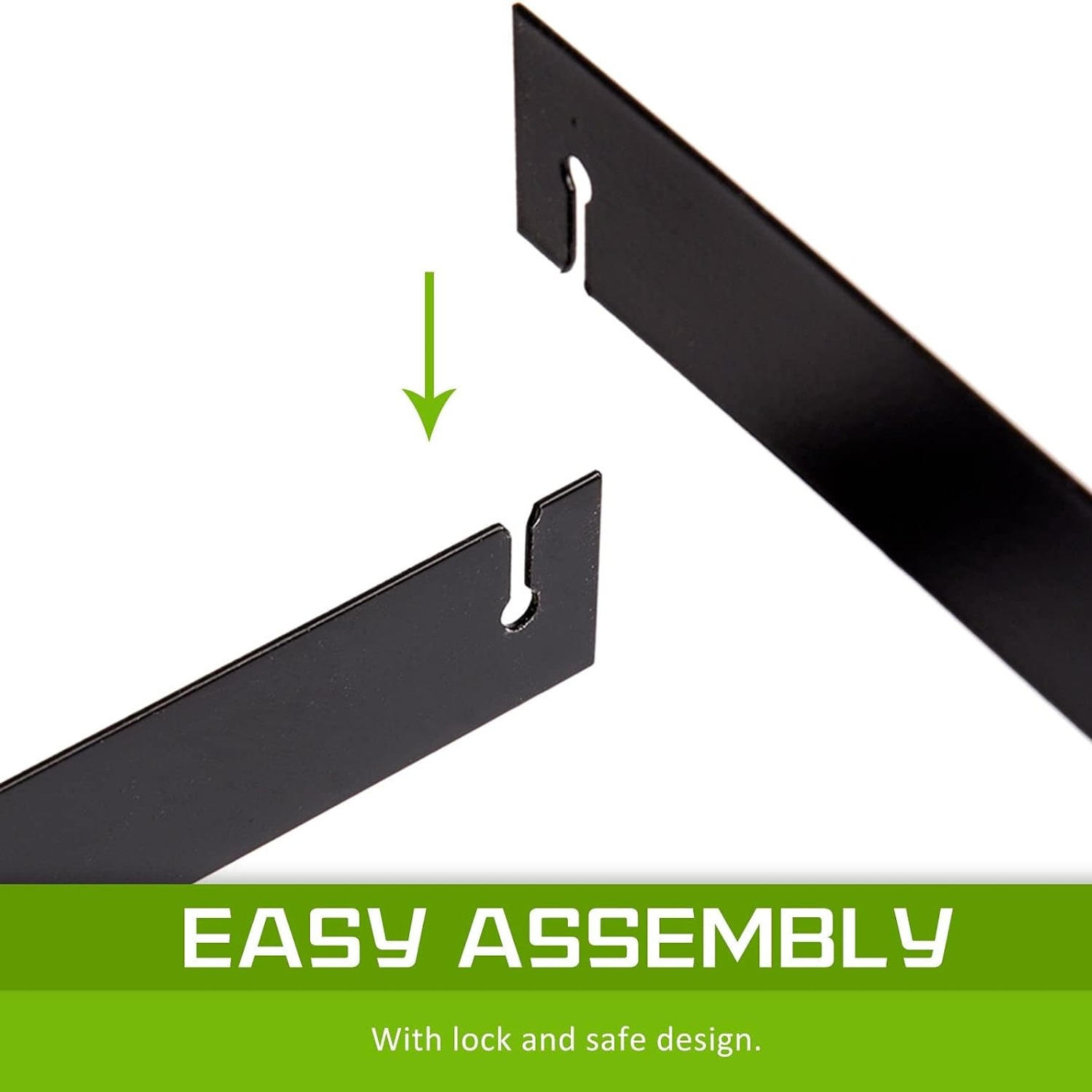
Assembly. This rack ships flat and needs putting together, with a user manual included. Flat-pack keeps the box small, which matters if your delivery involves stairs or a narrow doorway. Set aside some clear floor space, lay out the parts, and work through the manual in order.
Stability under load. An empty rack tells you nothing. Twenty full bottles add roughly 24 to 26 kg, so the rack needs to sit on something flat and level. Load the bottom rows first so the weight sits low, and keep the rack fully on the surface rather than hanging over an edge.
Where to put it
Cool, dim and still. Those are the three conditions wine likes, and they happen to suit timber too.
Avoid direct sunlight. UV light degrades wine through the glass and fades timber over time. Avoid heat sources, so not beside the oven, not on top of the fridge, not next to a dishwasher that vents steam. Heat cycling is harder on wine than steady warmth.
Vibration is the quiet one people miss. Constant shaking disturbs sediment and is not great for anything ageing. A rack sitting on a washing machine or against a wall shared with laundry equipment is not ideal.
A pantry corner, a dining room sideboard, a shaded shelf in a study. All good spots. The bottom of a cupboard works too if you can see the labels.
Looking after it
Care here is genuinely easy. The supplied instruction is to wipe the rack with a dry cloth, and that is most of the job done. Dust settles on horizontal timber, so a quick pass every couple of weeks keeps it looking fresh.
For a stubborn mark, use a barely damp cloth and dry the timber straight away. Standing moisture is the enemy of any wooden wine rack. Skip bleach, solvents and abrasive pads, since they strip finish and leave the grain rough.
Check the fixings every few months. Flat-pack furniture under load can work slightly loose over time, and a half-turn on a bolt now prevents a wobble later. If you spill wine, clean it quickly, because pine will take a stain if red sits on it.
The short version
This is a 20-bottle pine rack measuring 42 cm wide, 23.5 cm deep and 42 cm high, weighing 3.6 kg empty. It ships flat, comes with a user manual and needs assembly. Bottles store horizontally, which keeps corks sealed and labels readable.
Buy it if you have wine scattered around the house and want it in one visible place. Measure your spot against those three dimensions first. Put it somewhere cool and out of the sun, load the bottom rows first, and wipe it down now and then.
That is really all there is to it. Simple storage, done properly, so you can stop wondering what is in the cupboard behind the pasta.