
The complete guide
How to Choose a Countertop Wine Rack That Actually Fits Your Kitchen
The problem with bottles on the floor
Most people do not set out to store wine badly. It just happens. You buy a couple of bottles, then someone brings one to dinner, then there is a case you split with a friend because it was cheaper that way. Before long there are bottles standing upright behind the kettle, bottles lying on their side in the bottom of a cupboard, and one in the pantry you have genuinely forgotten about.
Standing bottles up is the part that quietly costs you. A cork sitting in dry air shrinks a little over the months. When it shrinks, air gets in, and the wine starts going flat and dull long before you planned to open it. That is not a problem for the bottle you are drinking tonight. It matters for anything you intend to keep.
The other cost is space. Worktop space in most kitchens is the most contested real estate in the house. Giving a permanent chunk of it to a wine rack you only half need feels like a bad trade, which is why so many racks get bought, used for a month, and then relegated to a garage shelf.
How a foldable rack solves both problems
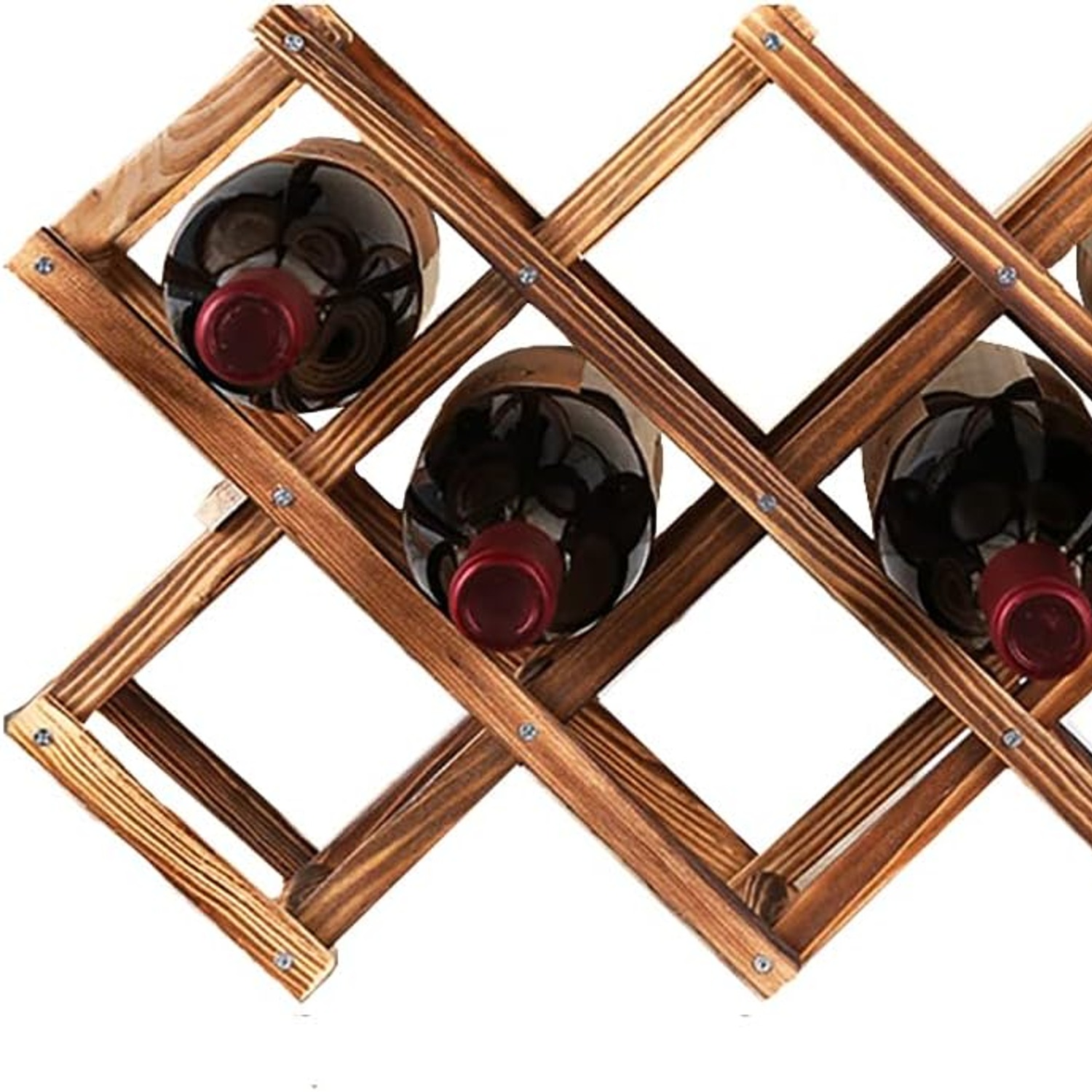
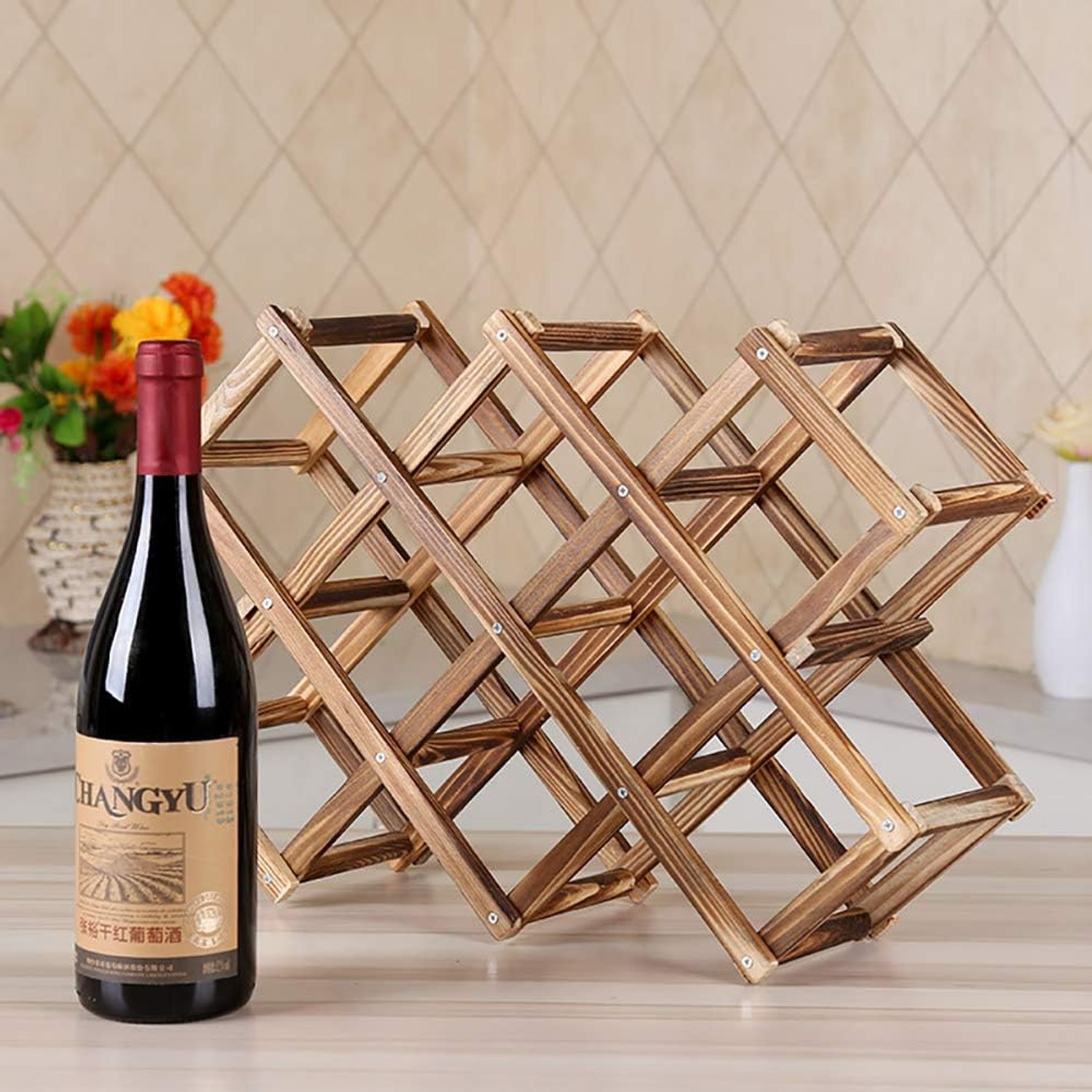
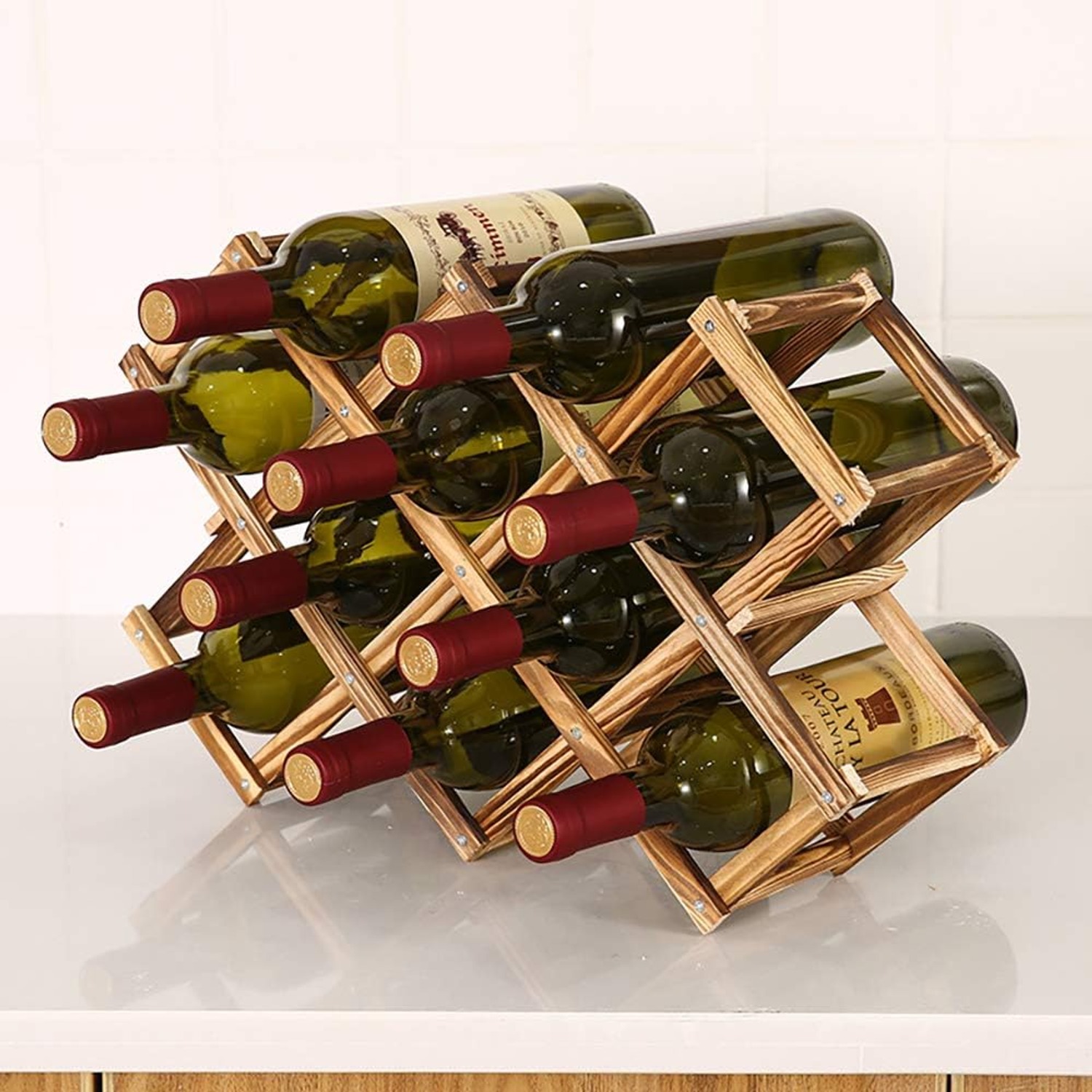
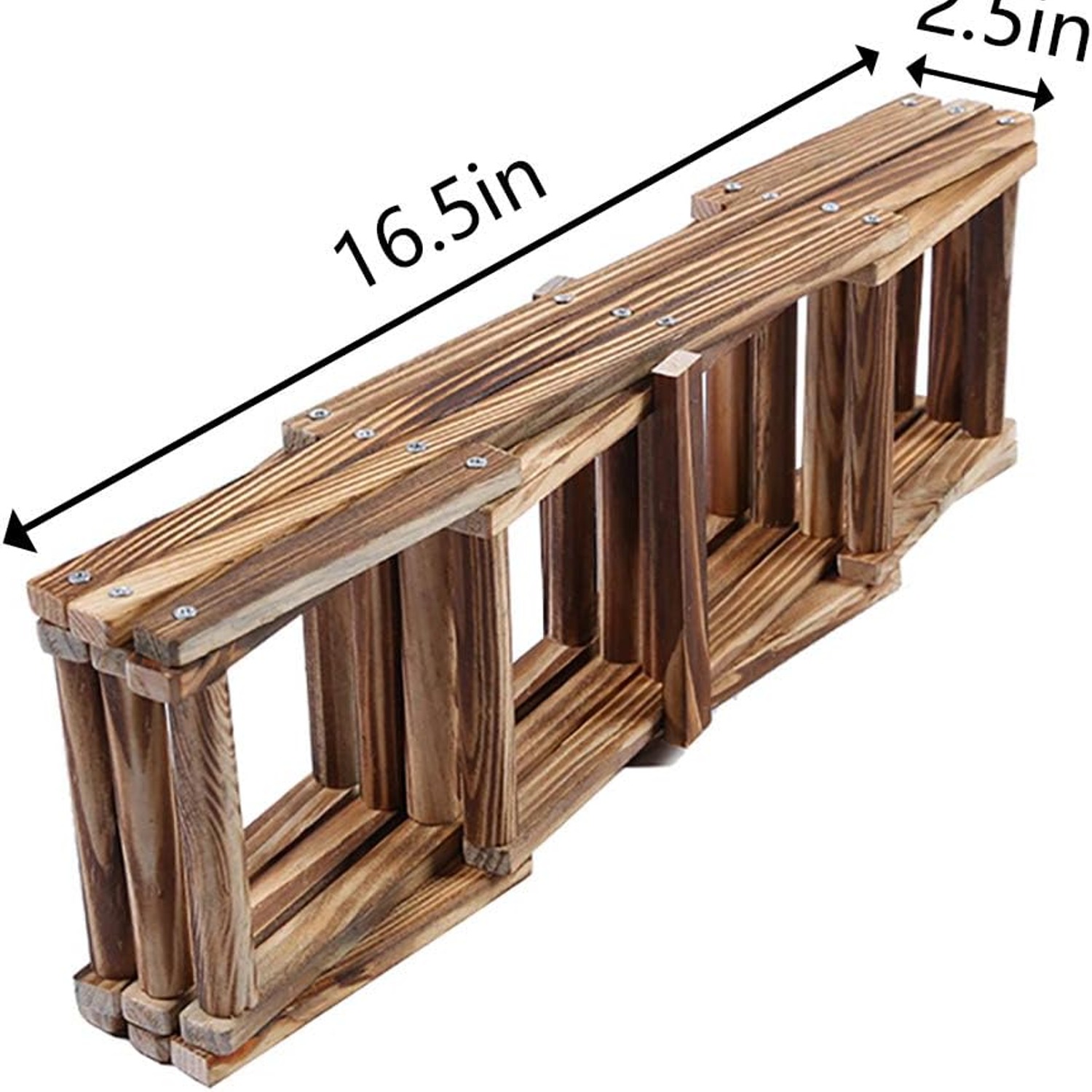
A foldable wooden wine rack sidesteps the trade-off. When it is open it is a proper rack, with eight timber slots that take up to ten bottles, all lying horizontally the way a cellar would store them. When you need the worktop back, it folds down and goes on a cupboard shelf.
That flexibility is what makes it useful in real homes rather than idealised ones. You can set it up on the counter for a dinner party, use it as a back-bar display for a weekend, fold it away during a kitchen reno, and bring it out again. It is not furniture you have to design a room around.
The horizontal storage is doing the real work for the wine itself. The bottles sit on their side, the wine touches the cork, the cork stays moist and stays sealed. It is a very old idea and it still works. If you drink everything within a fortnight it will not change your life, but if you hold bottles for a season or a year, it is the single easiest thing you can do for them.
Who this suits
Apartment dwellers get the most out of it. If your kitchen is a galley and your cupboards are already full, a rack that collapses is worth more than one that holds twenty bottles but never moves. The same goes for share houses, where nothing is permanent and furniture has a habit of needing to fit in a car.
It also suits people who entertain in bursts. If you host four times a year and the rest of the time you keep two bottles in the house, a big floor-standing rack is mostly empty furniture. A foldable one comes out when it is needed.
Small venues use these too. Cafes, pop-up bars, a hotel room service setup, a stall at a market. It is light at 540 g, it looks tidy, and it does not require a carpenter.
Where it is less suitable is serious collecting. If you have sixty bottles and plans for more, you want a dedicated rack or a wine fridge with temperature control. This is a working rack for the bottles you are actually going to drink in the next year, not a cellar substitute.
Getting the size right
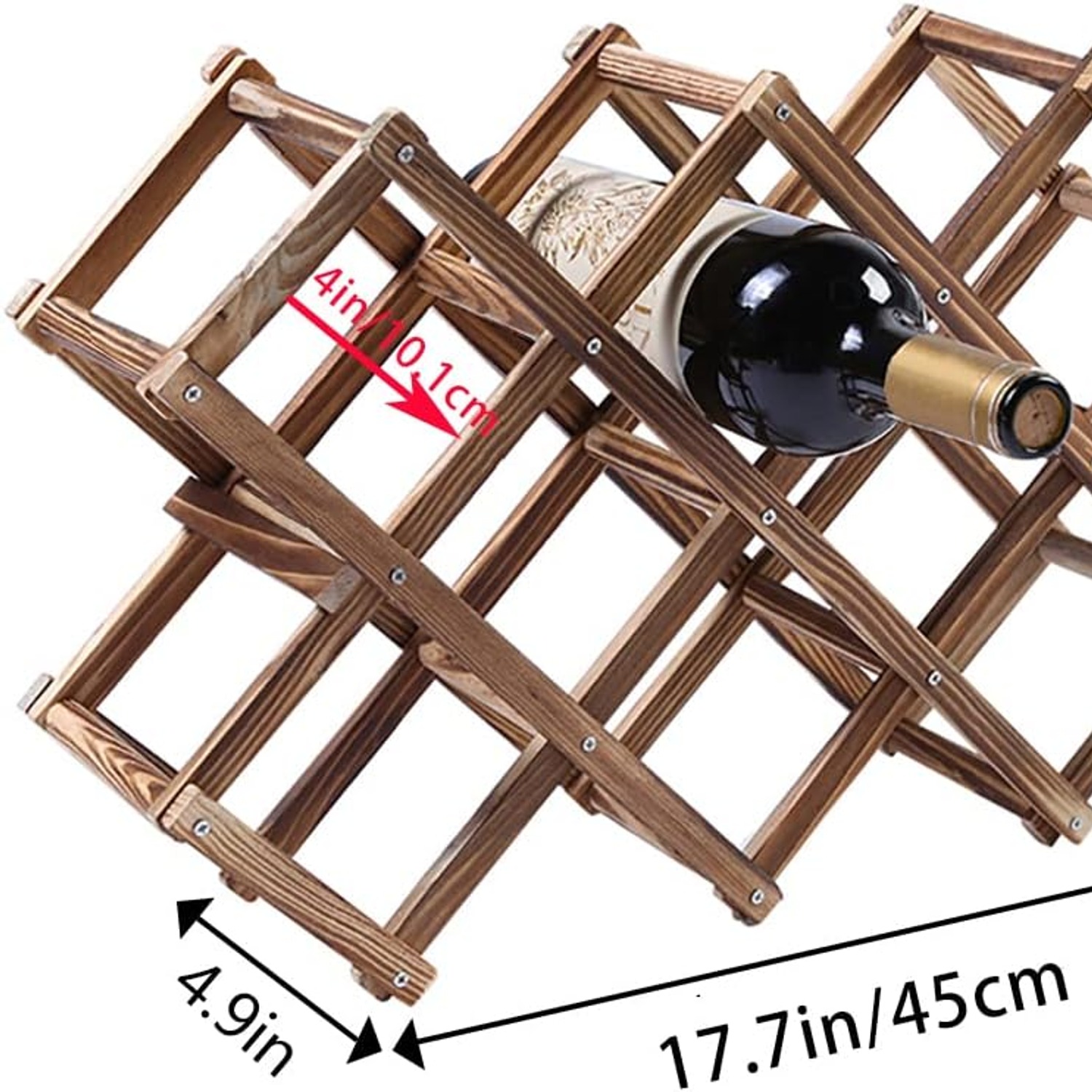
Measure before you order. The supplier record gives the product dimensions as 12.7 cm deep by 30.5 cm wide by 44.5 cm high, and also lists the item as 38 x 13 x 31 cm, with a size of 12.2 x 17.7 x 4.9 inches. Those are not all the same number, which usually means some figures describe the rack folded and some describe it open. Treat the largest set as your planning figure and give yourself a few centimetres of clearance.
The depth matters more than people expect. Bottles stick out past the frame, so the actual footprint on your worktop is deeper than the rack itself. If you are putting it under a wall cabinet, check the height clearance too. Nothing is more annoying than a rack that fits the worktop but not the space above it.
If you are shopping for the best small wine rack for a tight spot, the folded dimensions are the ones that tell you whether you can store it. A rack that folds to roughly the size of a chopping board goes in a cupboard. One that does not fold goes on the floor of the laundry and stays there.
Loading it properly
Build from the bottom. Put the heaviest bottles in the lowest slots so the weight sits low and the rack stays planted. If you are filling it to capacity, that load-order makes a real difference to how stable it feels.
Keep it on a flat, level surface. A worktop with a slight slope near the sink, or a bar cart with a wobbly castor, will make even a well-built rack feel unsteady. And do not let it overhang the edge of a counter, because all it takes is one knock.
Labels facing out is a small habit worth forming. You can see what you have, you stop buying duplicates, and you do not pull three bottles out to find the one you wanted.
Looking after the timber
The care instruction is simple. Wipe with a dry cloth. Timber does not want to be soaked, and it does not want to live next to a running tap.
If a bottle drips or a glass spills, dry the area straight away rather than letting it sit. Avoid putting the rack directly beside a stove or a dishwasher vent, where repeated heat and steam will dry out and then swell the wood over time.
When you fold it away, make sure it is dry first and store it somewhere with normal household humidity. A damp garage or an outdoor shed will do a timber rack no favours. A cupboard, a wardrobe shelf, or under a bed is fine.
Dust it occasionally. Horizontal timber edges collect dust and it shows against a brushed finish more than you would expect.
A few things to check before you buy any rack
Bottle shape is the quiet variable. Burgundy and champagne bottles are wider than a standard Bordeaux bottle, so a rack rated for ten standard bottles will hold fewer of the wide ones. If most of your drinking is sparkling or Burgundy-style, plan for less than the headline number.
Assembly is worth checking too. Plenty of cheap racks arrive as a bag of dowels and a diagram. This one is listed as requiring no assembly, which removes an entire category of weekend frustration.
And think about whether you actually want permanence. A fixed rack looks great in a photo of a kitchen that nobody cooks in. A collapsible one survives real life, where the worktop gets commandeered for a birthday cake and a rack has to move.
The short version
This is a wooden rack with eight slots that holds up to ten bottles, weighs 540 g, needs no assembly, and folds flat when you are done with it. Bottles lie horizontally so corks stay moist. It sits on a worktop, a sideboard, a bar cart, or the floor.
It will not replace a wine fridge and it is not built for a serious collection. For the ten or so bottles most households actually have on hand, it does the job neatly, looks fine doing it, and gets out of the way when you ask it to.