
The complete guide
Choosing a 12-Bottle Wine Rack That Actually Fits Your Home
The bottles have outgrown the cupboard
There is a point most wine drinkers hit where the collection stops being a few bottles and starts being a logistics problem. Six bottles fit in a cupboard. Twelve do not, at least not in a way that lets you see what you own. They end up standing upright at the back of a pantry, lying in a cardboard box by the laundry door, or taking over a whole shelf you needed for something else.
Standing bottles up is the habit most of us fall into, and it causes two problems. It eats worktop and shelf space, since a wine bottle is roughly 30 cm tall and needs clearance above it. It also leaves the cork dry. Over weeks and months a dry cork shrinks slightly, which lets air creep in and dulls the wine. If you drink everything within a fortnight that hardly matters. If you are holding bottles for a few months, it does.
A dedicated rack fixes both at once. It lays the bottles flat so the corks stay wet, and it stacks them vertically so twelve bottles take up about the floor area of a kitchen bin.
How a freestanding rack works
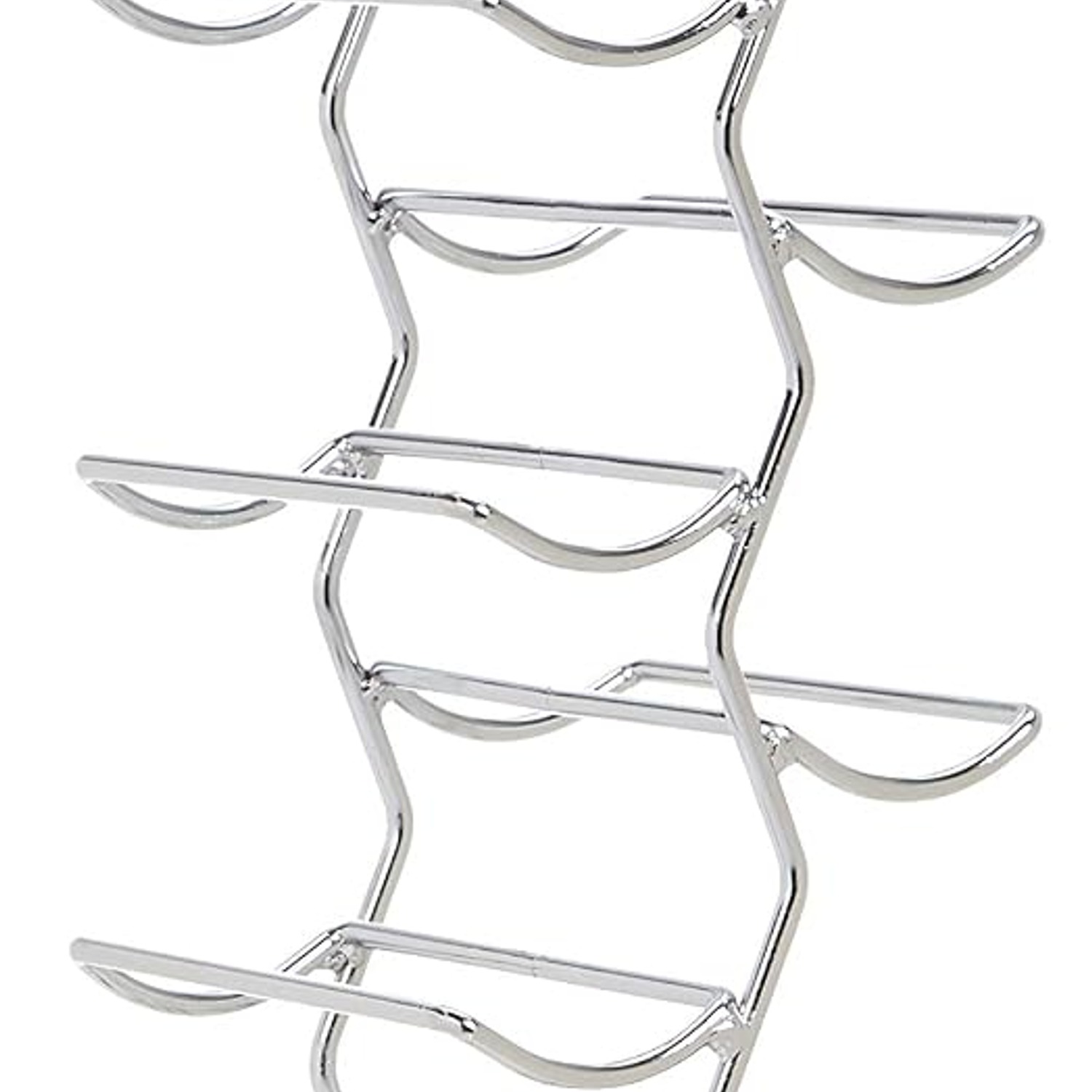
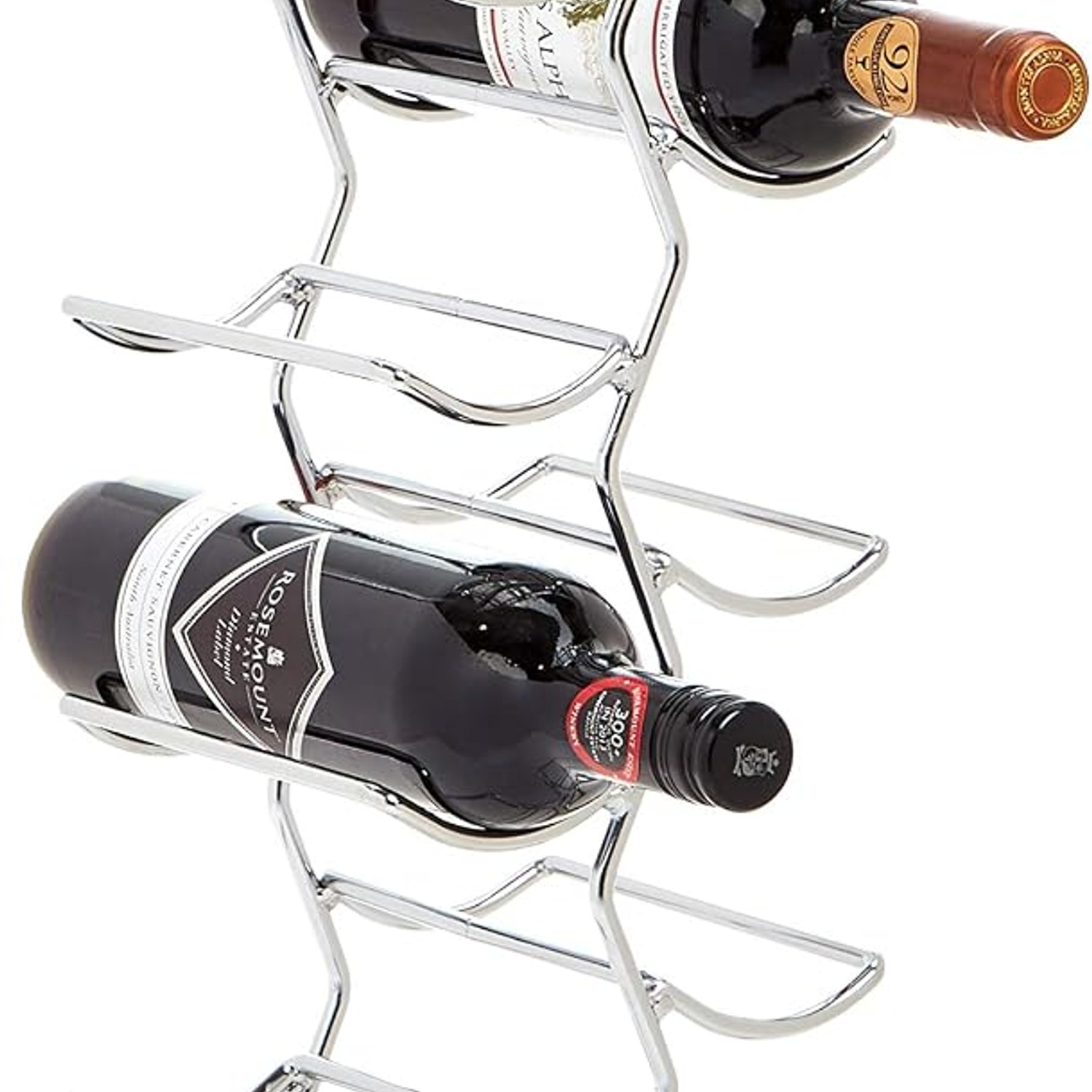
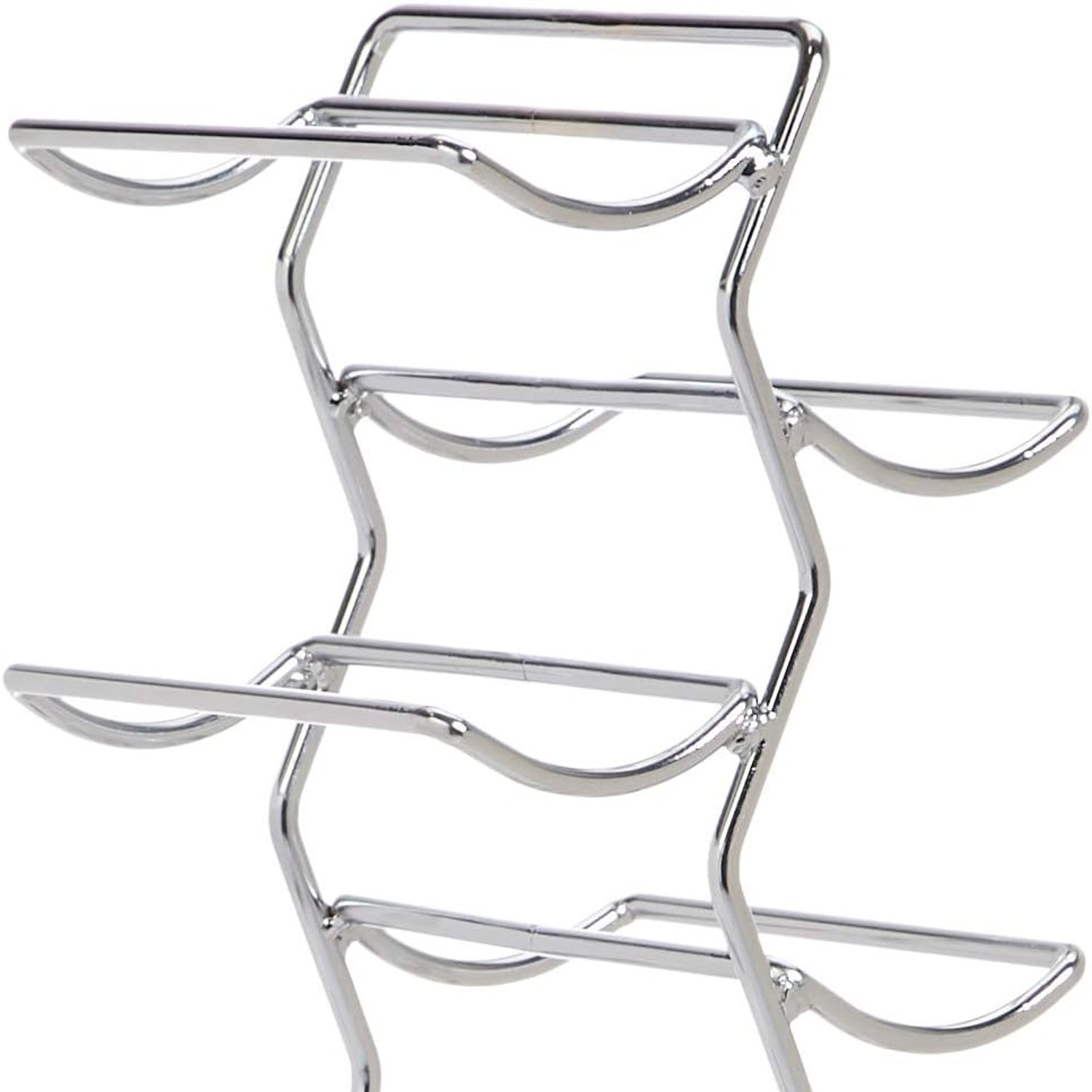
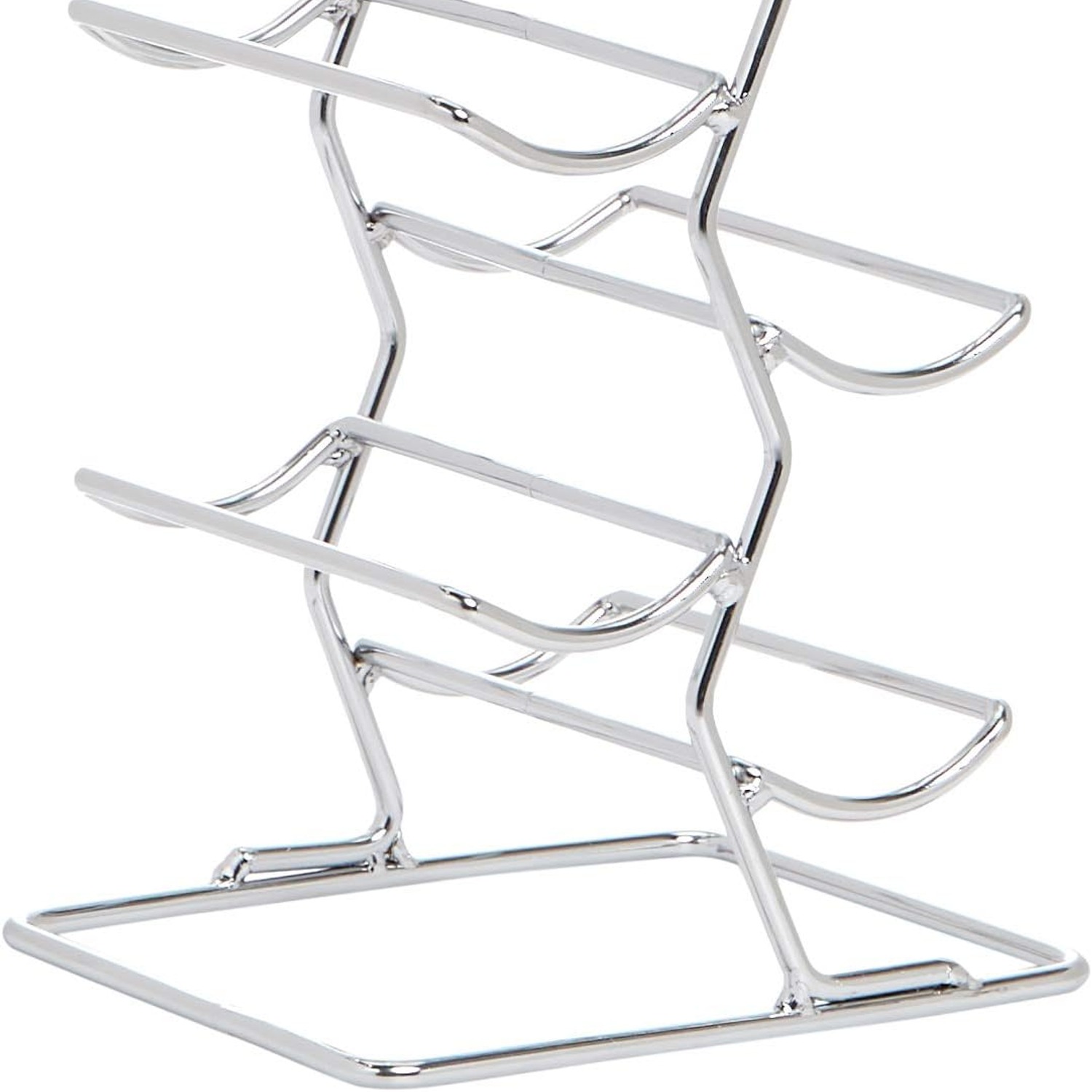
The idea is simple. A metal frame holds a series of cradles, each shaped to catch a bottle near its base and again near its neck. The bottle rests across the frame and stays put under its own weight. Nothing clamps, nothing clips, and you can pull a bottle out one-handed.
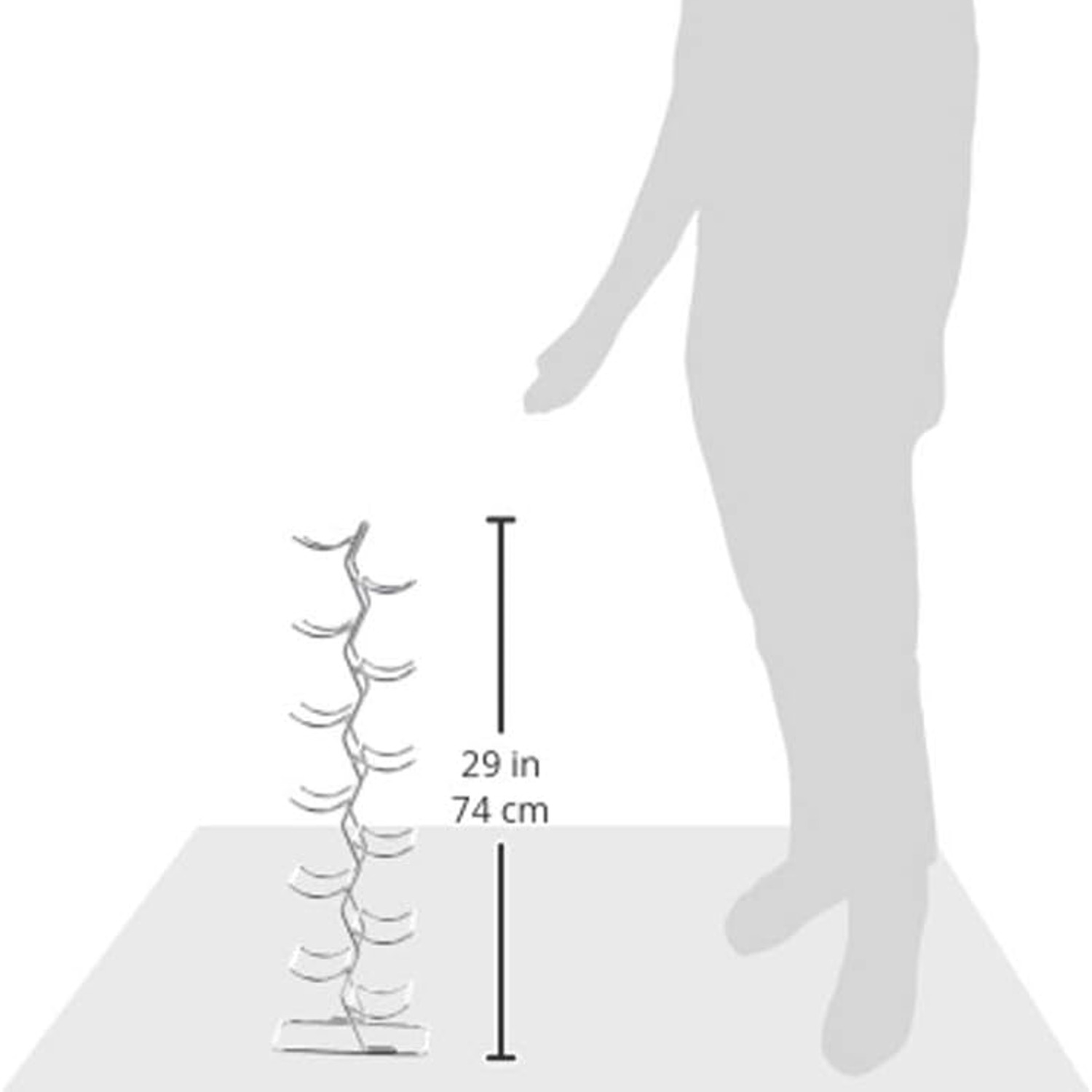
This particular rack is 21 cm wide, 17 cm deep, and 69.9 cm tall, with a twelve-bottle capacity. The small width is the number that matters most in practice, because that is what decides whether it fits in the gap you have. A 21 cm gap turns up in a lot of homes, beside a fridge, between a cabinet and a wall, or at the end of a run of kitchen units.
Height is the other number worth checking. At just under 70 cm, the rack sits below standard worktop height, so it slides under an overhang without catching. It also stays low enough that you are not reaching above shoulder level for the top bottles.
The frame weighs 2.24 kg on its own, which is light. Once there are twelve full bottles in it, the weight climbs to something closer to 17 kg, nearly all of it distributed up the frame. That is why loading from the bottom shelf upward is a sensible habit. Keeping the heaviest part low makes the whole thing steadier.
Who this suits
Apartment dwellers get the most obvious benefit. If you do not have a cellar, a pantry, or a spare cupboard, a slim floor-standing rack gives you organised storage without sacrificing a shelf. It is one of the more practical options among freestanding wine rack designs purely because of that footprint.
It also suits people who entertain and want the bottles visible. Labels face outward, so guests can see what is on offer and you can grab the right one without reading six foils. Some people like that. Others would rather their wine was tucked away. If you fall into the second camp, this rack still works, it just lives in the pantry instead of the dining room.
Renters do well with it too. Nothing screws into a wall, so there is no patching when you move out. You pick it up, carry it to the car, and set it down in the next place.
Serious collectors ageing wine for years need something different. Long-term ageing wants steady temperature and humidity, which usually means a wine fridge or a proper cellar. A rack like this is for the working collection, the wine you will drink over the next few months.
Choosing the right rack
Start with the gap, not the rack. Measure the width, depth, and height of the space you have in mind, then subtract a couple of centimetres for comfortable clearance. A rack that technically fits but scrapes the wall every time you load it gets annoying fast.
Then think about capacity honestly. Twelve bottles sounds like a lot until you buy a case. If you regularly buy by the dozen, you might want two racks side by side rather than one. Two of these in a row gives twenty-four bottles across 42 cm of wall, which is still less than half a metre.
Material affects both look and upkeep. Chrome reads as neutral metal rather than a colour, which is why it coordinates with so many kitchens. It sits comfortably next to stainless steel appliances, works against white or dark cabinetry, and does not fight timber. The trade-off is that chrome shows fingerprints and water marks more readily than a matte or powder-coated finish. They wipe off in seconds, but you will notice them.
Assembly is worth checking before you buy anything. This model requires none, which removes the most common source of frustration with flat-pack storage. No missing hardware, no stripped screw, no diagram that makes sense only after you have done it wrong.
Finally, think about bottle shape. Standard Bordeaux bottles are the narrowest and fit most easily. Burgundy and Pinot bottles have wider shoulders, and champagne bottles are wider and heavier again. Most people run a mix and it works fine, but if your entire collection is wide-bodied, expect to fit slightly fewer than twelve.
Where to put it
Three things matter for wine, and only one of them is about the rack. Keep it cool, keep it dark, and keep the temperature steady.
Cool means away from the oven, the dishwasher, the heater, and the sunniest window. Heat ages wine faster and not in a good way. Dark matters because UV light breaks down compounds in wine, which is why so many bottles are green or brown glass in the first place.
Steady is the one people miss. A spot that swings from cold at night to warm in the afternoon is worse than a spot that stays slightly warm all the time. Repeated expansion and contraction pushes against the cork. An interior wall, a hallway, or a pantry usually beats a kitchen corner that catches afternoon sun.
Floor surface counts for stability. A hard, level floor is ideal. On thick carpet the feet can sink unevenly, so check the frame sits flat before you load it. If it rocks, a thin board underneath sorts it out.
Keeping it looking good
Care takes about thirty seconds a month. Wipe the frame with a soft damp cloth, then dry it. That is the manufacturer's instruction for this model and there is no reason to do more.
What to avoid is more important than what to do. Abrasive pads, scouring powders, and harsh chemical sprays all scratch or dull chrome plating, and once that happens it does not come back. Stick to water, or water with a drop of mild dish soap if something sticky has dried on.
Lift bottles in and out rather than sliding them. Dragging glass across metal is how cradles pick up fine scratches over time. Wipe up spills when they happen instead of letting them sit, since standing moisture is the enemy of any plated finish.
The short version
If you have twelve bottles and nowhere sensible to put them, a slim floor-standing rack is the simplest fix available. This one is 21 cm wide and 17 cm deep, holds twelve bottles on their side, stands 69.9 cm tall, and needs no assembly at all.
Measure your gap first. Load from the bottom up. Keep it out of the sun and away from the oven. Wipe it with a damp cloth when it needs it, and skip anything abrasive.
Do that and you get organised, visible wine bottle storage that takes up almost no room and still looks tidy when the rack is half empty.