
The complete guide
How to Choose and Fit an Under Cabinet Wine Glass Rack
The problem with storing wine glasses
Wine glasses are the most annoying thing in the kitchen to store. They are tall, so they eat a whole shelf. They are top-heavy, so they tip. And the thinner and nicer they are, the more likely one is to chip when you shuffle the cupboard around looking for a mug.
Most people end up doing one of two things. Either the glasses live in a cupboard where they take up a disproportionate amount of room, or they live on the worktop, where they collect dust and get knocked. Neither feels like a solution. It feels like a compromise you stopped noticing.
An under cabinet rack sidesteps the whole problem. It uses the gap beneath a cabinet, which is space nobody is using for anything. The glasses hang upside down out of the way, they stay clear of the worktop, and you can see exactly what you have at a glance. For a kitchen where every shelf counts, that is a meaningful change for a small bit of hardware.
How a hanging stemware rack works
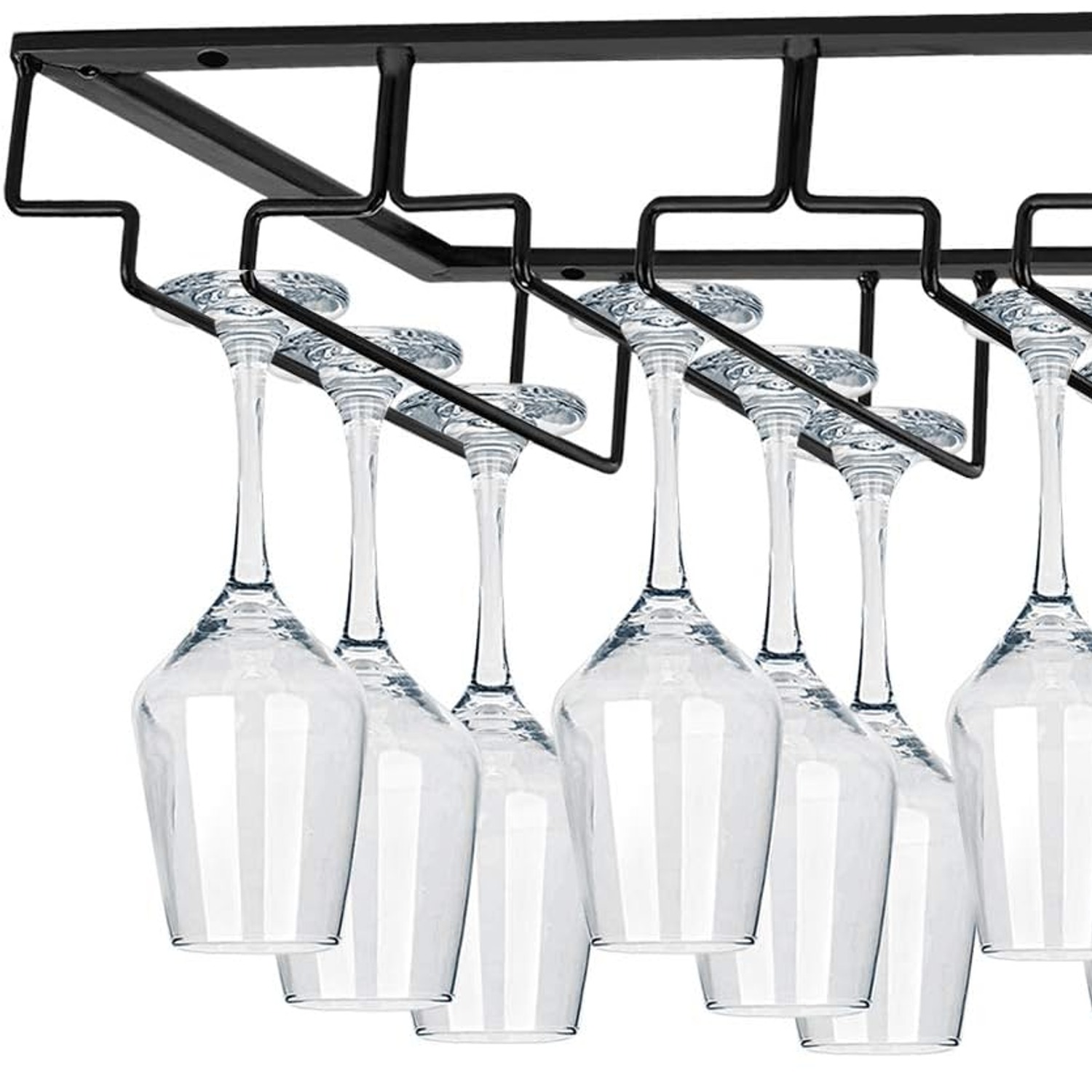
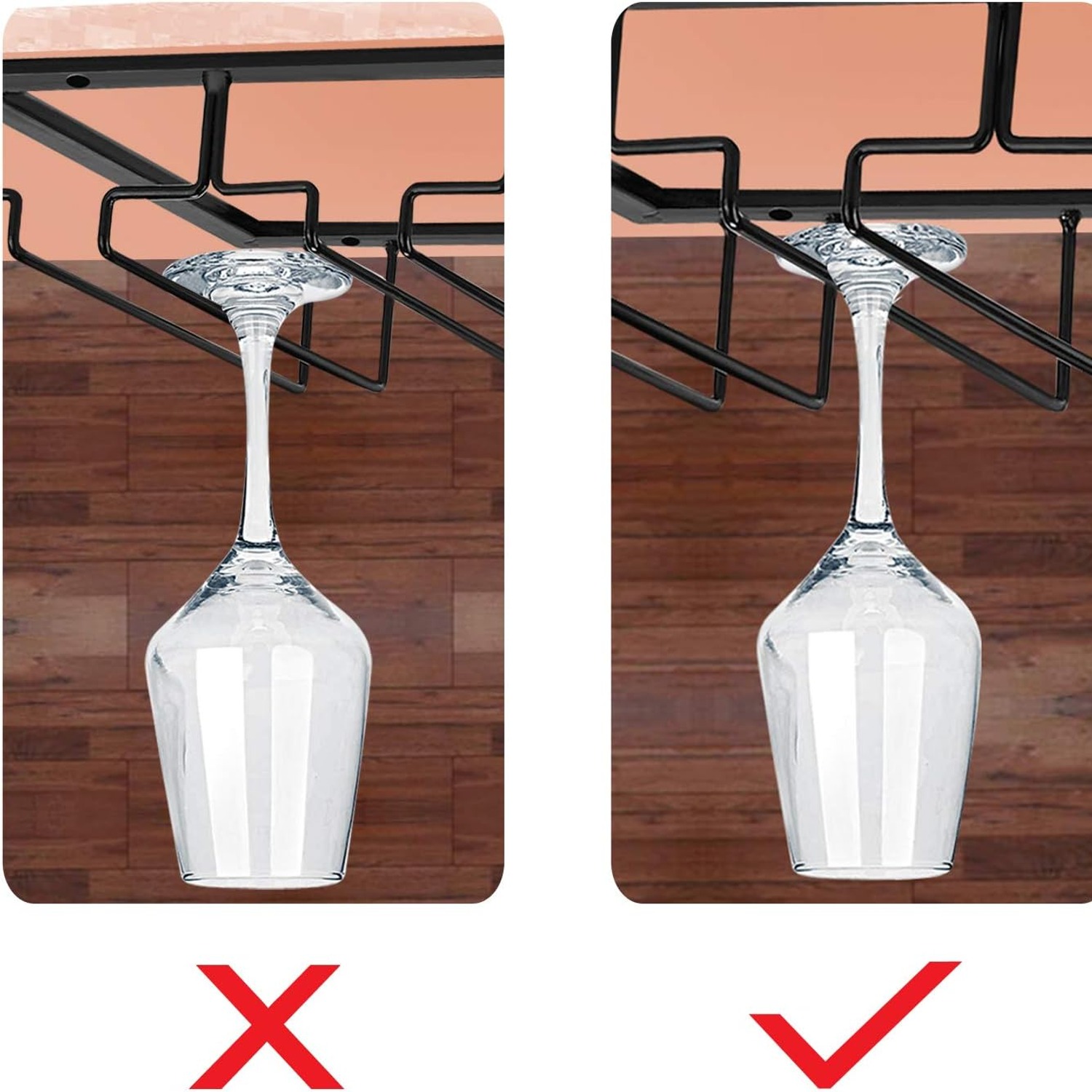
The mechanism is about as simple as it gets. The rack has four parallel rails with gaps between them. You tilt a glass, slide the foot in from the open end, and let it sit so the foot rests across two rails while the stem drops through the gap. The bowl hangs below, rim down.
Because each glass hangs on its own section of rail, nothing touches anything else. There is no stacking, no nesting, no rim pressing against rim. That alone removes most of the ways glasses get damaged in storage.
Hanging bowl-down also keeps the inside of the glass clean. Dust settles on the foot instead of in the bowl, which is where you would otherwise be rinsing before every pour. If you only use your good glasses occasionally, this matters more than it sounds.
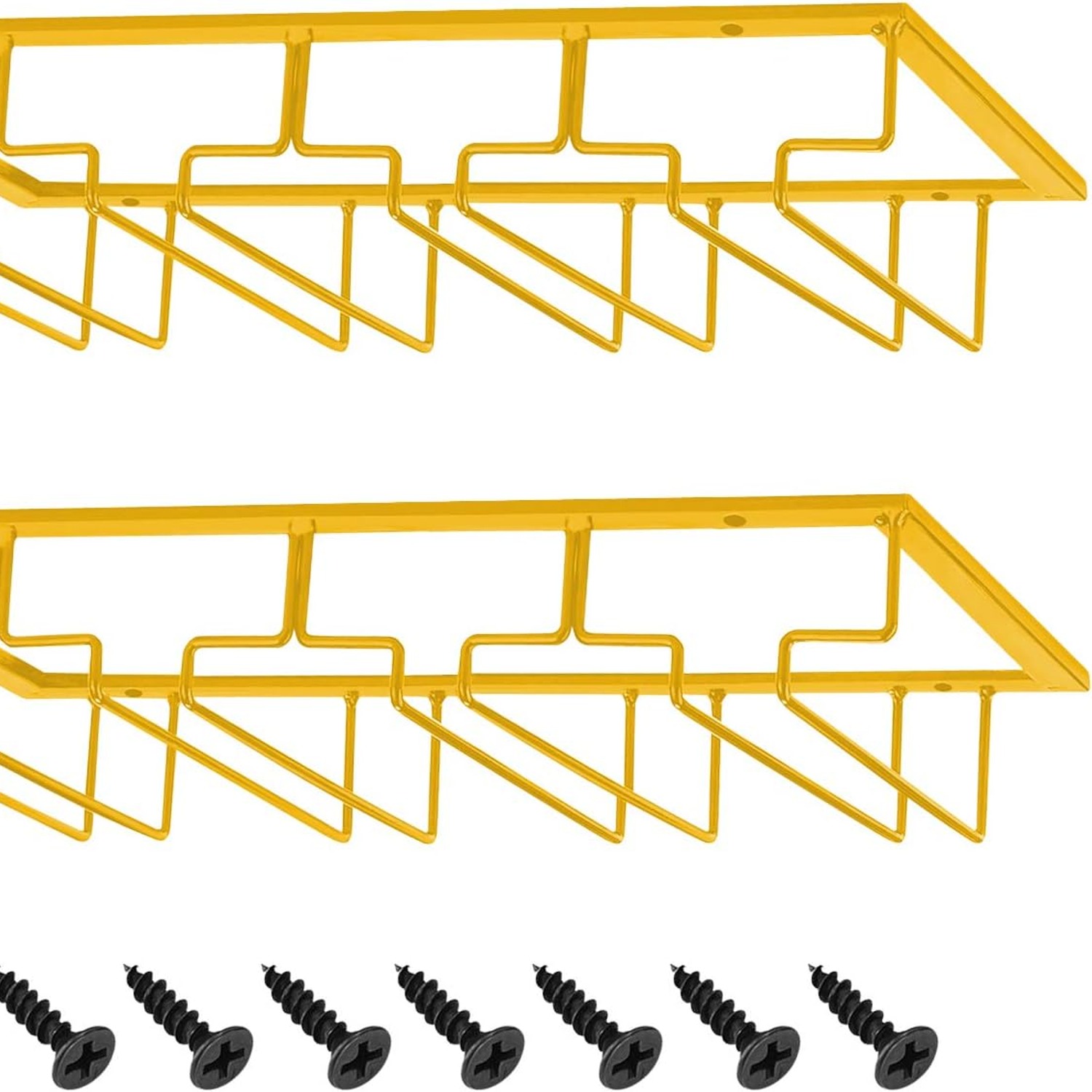
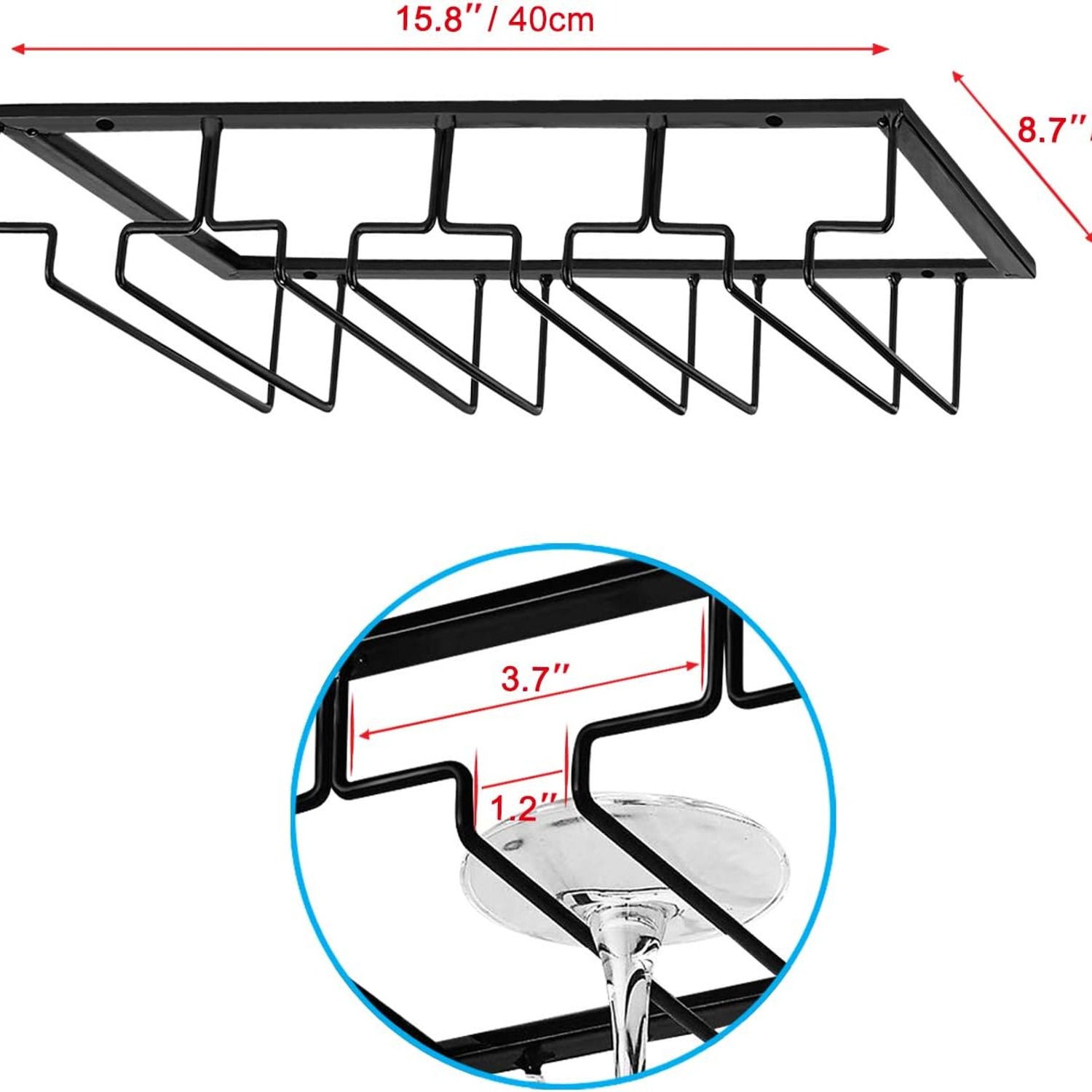
This particular rack is 6 cm deep, 22.1 cm wide and 6 cm high, with a listed weight of 454 g. The finish is powder coating in white. It arrives fully assembled with screws in the box, so the whole job is marking, drilling and driving four screws.
Who it suits
Small kitchens. If you are fighting for cupboard space, moving stemware out of the cupboard entirely is one of the biggest single wins available. A compact rack at 22.1 cm wide fits under almost any wall cabinet.
Home bars and drinks corners. A home bar wine rack mounted under the bottle shelf keeps everything in one vertical column. Glasses below, bottles above, nothing on the worktop.
People who entertain. When friends turn up unannounced, pulling four clean glasses off a rail takes about three seconds. No digging through a cupboard, no rinsing dust out of bowls.
Renters who can live with four small screw holes. The holes face down into the underside of a cabinet, so they are easy to fill and almost never visible. Check your lease, but it is a far smaller mark than a wall shelf.
Caravans, boats and tiny kitchens. Anywhere storage is tight, hanging storage pays for itself. Just secure your glasses before you move.
It is less suitable if you only own stemless glasses, since there is nothing for the rails to grip. It is also not the right pick if you have no overhang anywhere, in which case a freestanding rack or a shelf insert will serve you better.
Measuring before you buy
Two measurements decide whether this works in your kitchen.
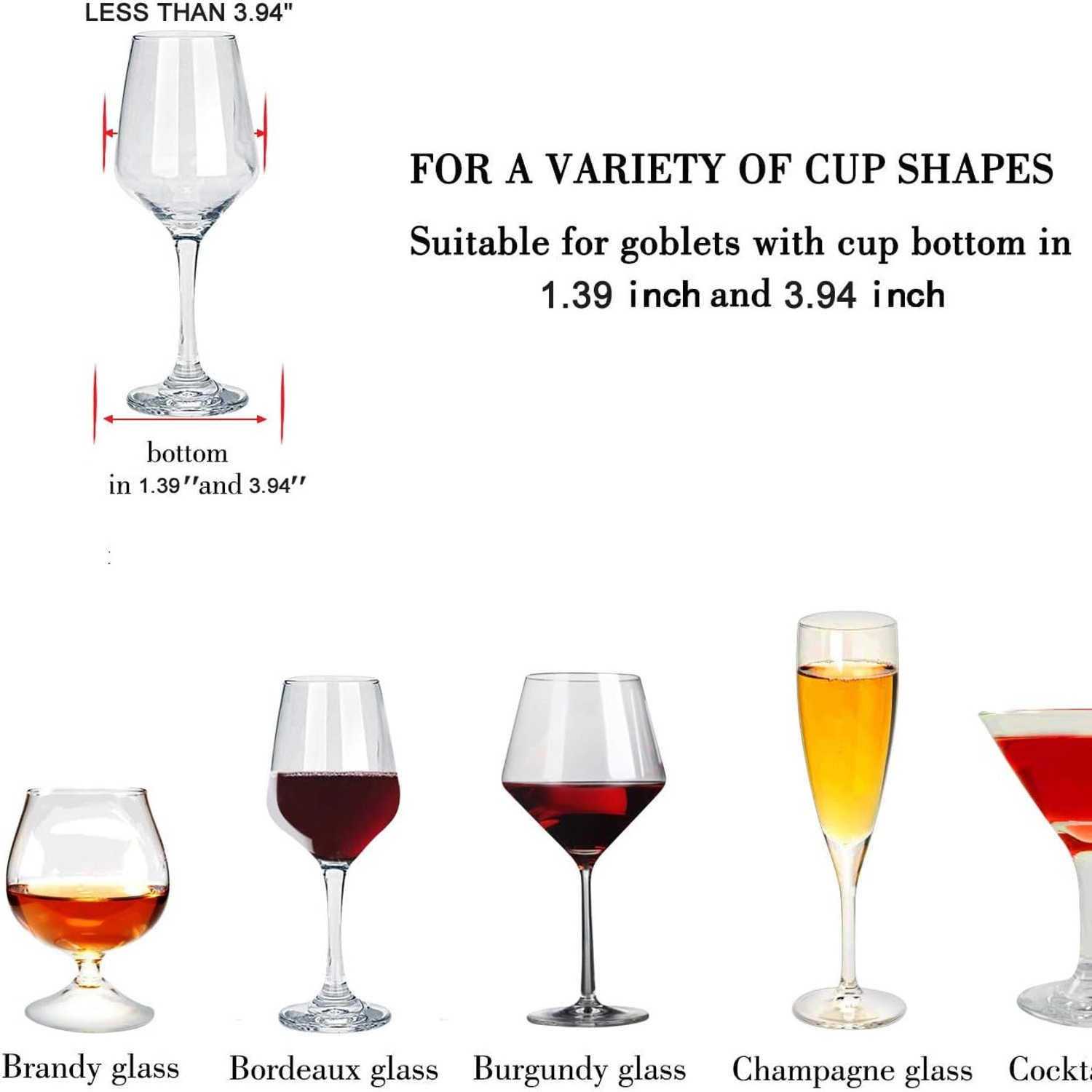
The first is clearance. Stand your tallest wine glass on the worktop and measure from the top of the worktop to the underside of your cabinet. Then measure your glass from foot to rim. You want the glass height plus a few centimetres of lifting room to be less than the clearance. If the gap is tight, you can still use the rack for flutes or shorter glasses and keep the big burgundy bowls in the cupboard.
The second is width. The rack is 22.1 cm wide. Check that your cabinet base has a clear run of at least that much, and that nothing like a rangehood, a light fitting or a cabinet edge gets in the way. If you have more room, two racks side by side with a small gap between them doubles your capacity.
While you are measuring, look at the thickness of the cabinet base. Most are plywood or particle board around 16 to 18 mm, which takes a screw easily. If yours is unusually thin, use shorter screws so nothing breaks through to the shelf above.
Fitting it in about ten minutes
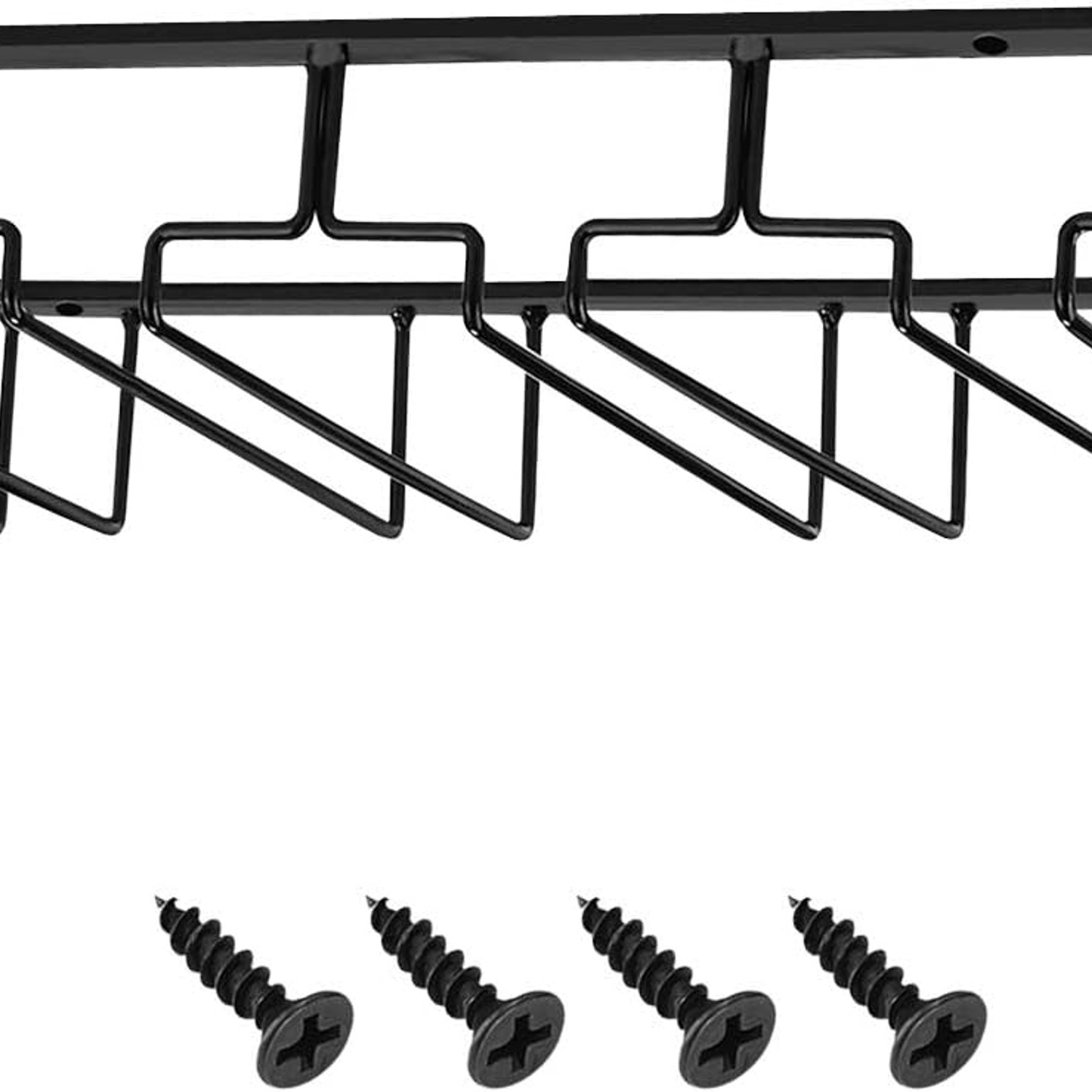
Hold the rack against the underside of the cabinet where you want it and mark the screw positions with a pencil. Pull the rack away and drill small pilot holes, which stops timber splitting and makes driving much easier. Then hold the rack back in place and drive the supplied screws home.
A few things worth doing while you are there. Keep the rack parallel to the front edge of the cabinet, otherwise your glasses will hang at a slight angle and it will bother you forever. Set it far enough back that the glass bowls do not stick out past the cabinet face where people walk. And give each screw a final check by hand rather than over-tightening with a drill, since a stripped hole in chipboard is a nuisance to fix.
Load it gently the first time. Hang two or three glasses, give the rack a light tug, and if nothing moves, fill it up.
Looking after it
Care is minimal. Wipe the rails with a soft damp cloth whenever they look grubby, then dry them. Kitchen air carries a fine film of cooking oil, and if you leave that on the rails long enough it turns sticky. A wipe every few weeks avoids that completely.
Avoid scourers, steel wool and strong solvents. Powder coating is tough but it is still a surface layer, and abrasives will dull it. Mild soapy water on a cloth handles anything a kitchen throws at it.
Lift glasses straight down when you take them out rather than sliding them along the rails. It is a small habit that keeps the coating smooth and stops the foot of the glass picking up marks.
Every few months, put a hand on the rack and check it has not worked loose. Cabinets move slightly with humidity and temperature, and a quarter turn on each screw now and then is all the maintenance it will ever need.
Getting the most out of it
Group glasses by type across the rows so you are not hunting. Reds in one row, whites in the next, flutes and cocktail glasses after that. If you only use certain glasses at Christmas, keep those in the cupboard and reserve the rack for the ones you reach for weekly.
Think about where the light falls, too. Glasses hanging under a cabinet catch any under-cabinet lighting nicely, which is part of why a hanging wine glass holder looks good as well as being practical.
If you find you need more space, a second rack beside the first is cheaper and tidier than switching to a bigger freestanding unit. Keep a small gap between them so there is room for your fingers when sliding glasses in.
The short version
This is a 22.1 cm wide, four-row stemware rack that screws to the underside of a cabinet or shelf. It is powder coated white, weighs 454 g, arrives assembled and comes with its screws. There is nothing clever about it, and that is the point.
Measure your clearance and your cabinet width before ordering. If your tallest glass fits under the cabinet with room to lift, and you have 22.1 cm of clear run, you are set. Ten minutes with a screwdriver and your glasses finally have a home that is not a cupboard shelf.